Natural remedies for back pain: Evidence, safety, and practical expectations
Natural remedies for back pain can include movement, exercise, heat or cold, massage, acupuncture, mindfulness, yoga, and tai chi. Research generally supports active approaches for uncomplicated pain, while evidence for herbal products and dietary supplements remains limited and safety concerns can arise from interactions with medicines.1
Start with the cause and duration of pain
Most uncomplicated acute low back pain improves over several days or weeks, even without intensive treatment, but pain lasting longer than 12 weeks is considered chronic.3 A clinical assessment is important when symptoms persist, recur frequently, or interfere substantially with normal activities because back pain may involve muscles, joints, discs, bones, or nerves. Harvard Health describes evaluation as potentially including a physical examination and, when appropriate, imaging, blood tests, or nerve testing.1
Self-care is most appropriate when pain follows a minor strain or awkward movement and there are no warning signs. Prolonged bed rest is generally discouraged because continued activity improves pain intensity and function more than resting in people with nonspecific acute low back pain.2 The practical objective is not to force painful movement, but to maintain tolerable activity and gradually resume ordinary tasks as symptoms permit.3
Movement and exercise
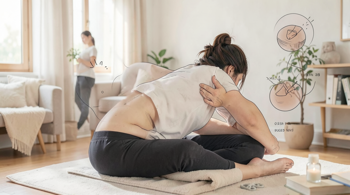
Exercise-based care is among the most consistently supported natural approaches for chronic low back pain. Strengthening, stretching, aerobic activity, yoga, and targeted physical therapy can improve pain and function, particularly when exercises are adjusted to a person’s symptoms and physical capacity.2 Harvard Health also identifies regular exercise and mind-body practices such as yoga or tai chi as approaches that may support symptom management and daily function.1
Exercise should be progressed rather than treated as a single universal routine. A movement that helps one person may aggravate another, especially when pain radiates into a leg or is associated with weakness or numbness. Evidence from a 2026 systematic review found that multidisciplinary care and exercise therapy reduce pain intensity in subacute and chronic low back pain compared with no treatment or usual care.2 Professional guidance can help identify suitable strengthening, mobility, and activity targets.
Heat, cold, and hands-on care
Superficial heat can provide short-term relief for acute or subacute low back pain, while cold packs may be useful for some people during the first days after an injury.4 These methods address symptoms rather than the underlying cause, and their effects are generally temporary. Skin protection is important because direct or prolonged exposure to very hot or cold surfaces can cause injury, particularly for people with reduced sensation.
Massage may offer short-term improvement in pain and function, especially when combined with exercise or another active treatment.8 The evidence is less certain for lasting improvement, so massage is better understood as one component of a broader plan rather than a stand-alone correction for spinal problems. Spinal manipulation may produce small improvements for some adults, although evidence on short-term function is inconsistent and it should be performed by an appropriately trained professional.4
Acupuncture and traditional movement practices
Acupuncture can provide modest short-term pain relief for some people with chronic low back pain, although results vary and evidence quality is mixed.4 A 2026 evidence review similarly reported that acupuncture moderately reduced pain intensity and improved function compared with no treatment.2 Potential risks include soreness, bruising, dizziness, and, when improper technique is used, more serious complications. Practitioner training, sterile procedures, and disclosure of medical conditions are therefore relevant safety considerations.
Tai chi and related traditional Chinese exercises combine controlled movement, balance, breathing, and attention. A 2026 meta-analysis evaluated randomized controlled trials involving chronic nonspecific low back pain and examined pain, functional disability, and sleep outcomes.6 Another 2026 meta-analysis included 38 studies involving 3,054 patients and assessed traditional Chinese exercise for pain intensity, disability, quality of life, and overall treatment response.7 These findings support further consideration of structured movement, while individual results may depend on consistency and suitability.
Mindfulness, sleep, and behavioral strategies
Chronic pain is influenced by sleep, stress, mood, fear of movement, and the ability to maintain daily activities. Mindfulness-based stress reduction and cognitive behavioral approaches may help some people manage pain, improve coping, support sleep, and preserve function.4 In the evidence summarized by the American Academy of Family Physicians, psychological therapies using progressive muscle relaxation and behavioral techniques reduced pain but did not clearly improve function compared with usual care.2
Behavioral approaches are not evidence that pain is imaginary or solely psychological. They address the way persistent pain affects attention, muscle tension, sleep, activity levels, and recovery behavior. A structured plan may combine relaxation practice with gradual activity and exercise, particularly when fear or poor sleep makes movement difficult. Harvard Health notes that chronic pain often requires a tailored process because its exact cause can be difficult to identify.1
Herbs, supplements, and safety limits
Evidence for herbal products and dietary supplements specifically for back pain is limited, and supplements can interact with medicines or create safety risks.4 A small 2025 randomized controlled trial involving 66 participants examined a herbal preparation, Thai massage, and their combination over seven days; the combined group showed the greatest reported improvements, but the study was small and short-term.10 One study cannot establish broad effectiveness or long-term safety for all products.
Natural does not mean risk-free, particularly for people who are pregnant, have liver or kidney disease, take anticoagulants, or use several prescription medicines. Painkillers, when used, are generally recommended as additions to active treatments and not for prolonged use because of possible adverse effects.3 Back pain that includes new bowel or bladder problems, saddle numbness, progressive leg weakness, fever, major trauma, or unexplained weight loss requires urgent medical evaluation rather than home treatment.5
Sources
- Harvard Health, Create a plan to relieve your back pain and Managing chronic back pain
- American Academy of Family Physicians, Nonpharmacologic and Nonsurgical Treatment of Low Back Pain in Adults
- NCBI Bookshelf, Low back pain: Medication for the treatment of chronic back pain
- National Center for Complementary and Integrative Health, Back Pain
- National Health Service, Back pain
- Frontiers in Pain Research, Effects of Tai Chi on pain, functional dysfunction, and sleep
- Frontiers in Pain Research, Moving for relief: a meta-analysis on traditional Chinese exercise
- Cochrane, Massage for low back pain
- Journal of Complementary and Integrative Medicine, Assessing the impact of massage and herbal therapies on chronic low back pain
Authored by 24Trendz team