Warning Signs of Breast Cancer: A Clinical Guide to Changes That Merit Evaluation
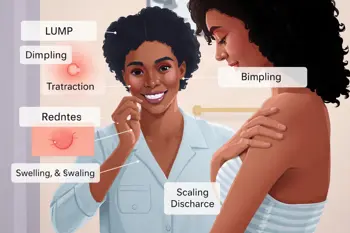
Warning signs of breast cancer include more than a noticeable lump. A new mass or thickened area, changes in breast shape, skin dimpling, nipple retraction, redness, scaling, swelling, or unexpected discharge can all warrant medical evaluation, although these findings are often caused by conditions other than cancer. 1
New lumps and areas of thickening
The symptom most people notice first is a new lump or thickening in the breast, chest, or underarm. Breast cancer can begin in the milk ducts, milk-producing lobules, or tissue between them, so a concerning area may occur within the breast or near lymph nodes in the armpit. Knowing how the breasts normally look and feel can help identify a change that is new for that individual. 1
A lump does not automatically indicate cancer. Breast cysts, hormonal fluctuations, infections, and benign growths can produce similar findings. Nevertheless, a new or persistent lump should be assessed by a qualified healthcare professional rather than classified through self-examination alone. Clinical assessment may include a physical examination, breast imaging, and, when indicated, a biopsy to determine the cause. 3
Visible changes in breast shape or skin
Changes in breast size, shape, contour, or overall feel are recognized warning signs, especially when they affect one breast or persist outside expected hormonal changes. Skin that appears puckered, dimpled, depressed, or pulled inward may reflect changes in tissue beneath the surface. Swelling involving all or part of a breast is another reported symptom, even when a distinct lump cannot be felt. 2
Skin changes may include redness, irritation, thickening, dryness, flaking, or a rash on the breast or around the nipple. A rare and aggressive form called inflammatory breast cancer may develop rapidly with unilateral redness, edema, and a peau d'orange, or orange-peel, texture across a substantial portion of the breast. Rapidly progressive inflammatory-type changes require prompt medical assessment. 56
Nipple changes and unusual discharge
A nipple that newly turns inward, becomes flattened, changes direction, or appears pulled into the breast is a clinically important change. Scaling or flaking on or around the nipple is also included among reported symptoms and may occur in conditions affecting the nipple skin, including Paget's disease of the breast. The significance depends on whether the change is new, one-sided, persistent, and different from the person's usual anatomy. 2
Nipple fluid that is not breast milk, particularly discharge that occurs without pregnancy or breastfeeding, should be discussed with a healthcare professional. Spontaneous discharge from one breast, especially when clear or bloody and associated with a single duct, is a potential warning sign that may lead to targeted imaging or additional duct evaluation. Discharge can have non-cancerous causes, so its presence does not establish a diagnosis. 46
Pain, swelling, and other less familiar symptoms
Breast or nipple pain can occur with breast cancer, although pain also has many other explanations. Pain or tenderness that is persistent, localized, or unrelated to a person's usual menstrual or hormonal pattern deserves clinical discussion, particularly when it occurs alongside a lump, skin change, nipple retraction, or discharge. A symptom's duration and pattern provide useful context, but they cannot determine the diagnosis by themselves. 4
Some people first notice swelling, firmness, thickening, or a difference in texture rather than a defined mass. Underarm swelling or a visible lump in the armpit may also be relevant because breast cancer can involve nearby lymph nodes. These signs can occur with infections, inflammation, cysts, or other benign conditions, but a new, one-sided, worsening, or unexplained change should not be dismissed. 15
Why symptoms require evaluation, not self-diagnosis
Many breast symptoms listed in clinical and cancer-information resources are more often caused by conditions other than cancer. Menstrual changes, hormonal variation, cysts, infections, and benign breast growths can all alter breast appearance or sensation. That overlap explains why a symptom cannot be judged reliably by whether it feels painful, hard, mild, or severe. Medical evaluation is needed to identify the underlying reason. 23
Breast cancer can affect people assigned female at birth and, less commonly, people assigned male at birth. Symptoms can also look different across skin colors, making attention to changes in texture, swelling, contour, and nipple appearance important alongside visible redness. A clinician may compare both breasts, review personal and family history, and decide whether mammography, ultrasound, or tissue sampling is appropriate. 23
Screening and early detection considerations
Some breast cancers are discovered through routine screening before noticeable symptoms arise. Mammography is a common breast screening test, and screening can help identify cancer early, when treatment may be easier. Screening recommendations vary according to age, personal risk, family history, genetics, and local medical guidance. A normal screening result does not mean that a later new change should be ignored. 13
Family history can affect risk, particularly when a mother, sister, or daughter has had breast cancer, and this history may influence discussions about when and how screening should occur. Awareness of normal breast appearance and feel complements, but does not replace, recommended screening. Any new lump, persistent thickening, unexplained swelling, skin or nipple change, or unusual discharge should be documented and raised with a healthcare professional. 34
Sources
- Memorial Sloan Kettering Cancer Center, Breast Cancer: Signs & Symptoms, Causes & Prevention, Anatomy & More
- Cancer Research UK, Symptoms of breast cancer
- MSD Manual Consumer Version, Quick Facts: Breast Cancer
- Sharp HealthCare, How to recognize the signs of breast cancer
- Prevent Breast Cancer, Breast Cancer Signs and Symptoms
- Medscape, Fast Five Quiz: Red Flags for Breast Cancer
Authored by 24Trendz team