How to choose a scenic train route in the US: A comprehensive guide to planning, classes, and regional journeys
Choosing the right scenic train route in the United States requires balancing geographical interests, scheduling parameters, and operational expectations. A well-planned train journey offers an immersive alternative to highways and air travel, allowing travelers to observe transitioning landscapes directly from observation cars. To successfully navigate how to choose a scenic train route in the US, travelers must assess the balance between multi-day transcontinental journeys and short regional loops. By understanding route distance, seasonal weather changes, and ticket configurations, rail travelers can design an itinerary that satisfies their expectations for both landscape exposure and onboard comfort.
Evaluating Route Geography and Regional Highlights
The United States passenger rail system operates more than 30 train routes across the country, connecting over 500 destinations 1 2. When choosing a route, geography is the primary deciding factor. For mountain landscapes, the California Zephyr is widely regarded as one of the most picturesque options. Running daily between Chicago and Emeryville, California, the route spans 2,438 miles and requires approximately 51 hours of travel time 3. This journey traverses the Great Plains, climbs the Rocky Mountains, and crosses the Sierra Nevada range, providing views of deep river gorges and canyons 3 4.
For coastal views, the Coast Starlight operates daily between Seattle and Los Angeles, covering 1,377 miles in approximately 35 hours 5. This route highlights the Pacific Coastline, Puget Sound, the Cascade Range, and the Santa Barbara shorelines 5. Alternatively, travelers seeking northern wilderness can select the Empire Builder, a 2,198-mile route connecting Chicago to Seattle or Portland in 52 hours 6 7. This northern corridor traverses Glacier National Park, showing big-sky prairies, wetlands, and mountain passes 7 8.
Selecting the Optimal Season and Weather Conditions
Timing a rail journey significantly influences visibility and total daylight hours. Summer travel maximizes daylight for sightseeing but coincides with peak tourist seasons, resulting in more crowded cars and higher historical pricing 1. Late spring, specifically May through June, and early fall, from September through October, are frequently recommended for ideal weather conditions and balanced crowds 3 9. For those interested in regional winter travel, certain corridors offer access to ski destinations and snow-capped peaks 1.
Autumn foliage is another major driver for route selection. The Adirondack route, running from New York City to Montreal, is highly regarded for autumn leaf-viewing in the Northeast 10. On a regional scale, the Cuyahoga Valley Scenic Railroad in Ohio, operating since 1880, provides dome-car views of vibrant maples and oaks in Cuyahoga Valley National Park during October 10. In New Hampshire, the Mount Washington Cog Railway offers early autumn excursions up the highest peak in the Northeast to view transitioning forest colors 10.
Comparing Booking Accommodations and Onboard Service Classes
Travelers must select an appropriate service class, especially for overnight itineraries. Standard ticket types include unassigned coach seats, business class, high-speed Acela first class, and private sleeper accommodations 1. While coach class represents the base fare, it requires sleeping in a reclining seat with no included dining 11. In contrast, private rooms, including roomettes and full bedrooms, include all meals, coffee, bottled water, and access to private lounges at major station hubs around the country 1 2.
For solo travelers, roomettes provide compact, converting daytime seats that transition into upper and lower beds 1 12. Roomettes on long-distance routes historically start around 300 dollars per night depending on seasonal demand 2. Selecting double-decker Superliner trains on long-distance Western routes provides access to upper-level observation cars with floor-to-ceiling windows, which are highly recommended for capturing unobstructed landscape photography 3 12.
Operational Realities and Navigating Shared Freight Tracks
A critical aspect of passenger rail travel in the United States is the infrastructure configuration. Unlike highly optimized passenger networks in Europe or Japan, long-distance routes in the US often share tracks with commercial freight trains 2 13. Because freight operators own the vast majority of these tracks, passenger trains are frequently deprioritized, leading to unscheduled delays 2. Travelers must approach long-distance rail trips with flexible schedules, treating the transit itself as the vacation rather than a time-sensitive commute 12.
To manage these schedule fluctuations, choosing the right ticket policy is essential. Flexible fares are fully refundable and changeable, providing security for unpredictable itineraries 2. Value fares offer a lower price point but forfeit 25 percent of the ticket cost upon cancellation 2. Checking real-time performance historical averages for specific routes can help set realistic expectations regarding arrival times and missed connections at key destinations 14.
Integrating Heritage Railroads and Luxury Rail Operators
In addition to national passenger rail, travelers can choose specialized heritage and luxury tourist lines. Heritage railroads use historic steam or diesel equipment over short mountain routes that are inaccessible by highway. The Durango and Silverton Narrow Gauge Railroad in Colorado has operated continuously since 1882, taking passengers through the San Juan Mountains along the Animas River Gorge 15. Similarly, the Great Smoky Mountains Railroad in North Carolina offers vintage excursions through Appalachian forests and river valleys 16.
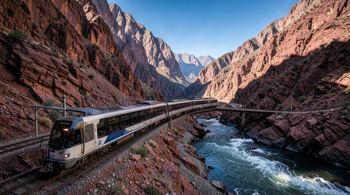
For premium comfort, private operators provide specialized luxury daytime journeys. The Canyon Spirit Rockies to the Red Rocks route is a daylight-only luxury train operating between Denver, Colorado, and Salt Lake City, Utah 13 17. This service features glass-dome observation cars and curated dining, allowing guests to stay in hotels overnight rather than sleeping on the train 17. Another historic option is the Napa Valley Wine Train, running 36 miles on vintage Pullman cars with gourmet meals and vineyard views 18.
Analyzing Costs, Passes, and Logistics Planning
Managing the financial aspects of scenic train travel involves comparing individual ticketing with multi-segment passes. The national rail service offers a USA Rail Pass for 499 dollars, allowing ten coach segments within a 30-day window 2. This pass is highly economical for travelers intending to cross multiple states with multiple stops 11. However, pass segments cannot be upgraded to sleeper cars, meaning travelers must remain in coach class for the duration of those trips 11.
To choose the most efficient option, travelers should compare the relative advantages of rail, air, and road transit:
| Transit Method | Scenic Exposure | Baggage Fees | Primary Disadvantage |
|---|---|---|---|
| Passenger Rail | Continuous, panoramic landscapes | No standard fees | Frequent freight delays |
| Air Travel | Limited high-altitude views | Variable per-bag fees | High airport stress |
| Road Travel | Highway-constrained views | None | Driver fatigue |
Sources
- amtrakguide.com
- roamvisa.com
- planetware.com
- amtrakdeals.us
- going.com
- bikesonrent.in
- amtrakdeals.com
- divextop.com
- bikesonrent.in (What Is...)
- travelandleisure.com
- goworldtravel.com
- meadowbrooktravel.com
- nationalgeographic.com
- danielgregson.com
- galvestonrrmuseum.com
- backroadplanet.com
- luxurycheckin.com
- artisan.accel.com
Authored by 24Trendz team