How to exercise with sciatica safely: A Clinical Perspective on Symptom Management
When sciatica manifests as a sharp or radiating sensation extending from the lower back into the leg, the instinct to avoid all movement is common; however, research consistently indicates that prolonged bed rest is ineffective for recovery 1. Instead, maintaining gentle, consistent activity is widely regarded as a superior approach for managing symptoms 3. This guide explores the principles of safe exercise modification, evidence-based movement strategies, and the critical thresholds for seeking professional medical intervention to ensure physical activity supports rather than hinders recovery 5.
The Physiological Rationale for Movement
Sciatica typically arises from irritation or compression of the sciatic nerve roots, leading to localized inflammation 1, 5. Complete inactivity can exacerbate the condition by allowing scar tissue, or adhesions, to form around the nerve, further restricting its natural gliding ability through surrounding tissues 10. Appropriate movement promotes blood circulation, which facilitates the delivery of oxygen and essential nutrients to the inflamed nerve root while simultaneously clearing metabolic waste products that contribute to persistent pain 10. Consequently, physical therapy often emphasizes gradual mobilization to restore this nerve-gliding function 4, 6.
Identifying Symptoms and Red Flags
Safe exercise begins with a clear understanding of when to proceed and when to pause. A primary principle in managing sciatica is the concept of centralization, where exercises are considered beneficial if they cause pain to move from the leg toward the lower back 1, 5. Conversely, any activity that increases numbness, causes pain to spread further down the limb, or introduces significant weakness requires an immediate change in the chosen movement 1, 7. Urgent medical assessment is mandatory if symptoms include bowel or bladder dysfunction, saddle numbness in the groin or buttock area, or sudden, progressive leg weakness 1, 5.
Low-Impact Cardio for Nerve Health
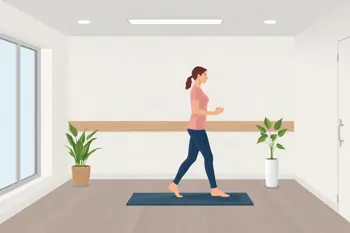
Cardiovascular activity is frequently recommended to keep the body mobile without placing excessive strain on the lumbar spine. Low-impact options, such as short, flat-surface walking, swimming, and utilizing a recumbent stationary cycle, are often better tolerated during an acute flare-up than high-impact exercises like running or jumping 3. The primary goal of these activities is to boost circulation and release endorphins, which act as natural pain modulators, while avoiding the repetitive jarring force that often aggravates sensitive nerve roots 3.
Common Movements to Monitor or Modify
Not all exercises carry the same risk profile, and their suitability often depends on the specific diagnosis, such as a lumbar herniated disc versus spinal stenosis 2. Exercises involving significant forward flexion, such as traditional toe touches, deep seated forward folds in yoga, and repeated sit-ups, can increase intradiscal pressure 2, 9. This pressure may push disc material backward, potentially increasing nerve compression 2. Additionally, straight-leg hamstring stretches can create intense tension on an already sensitive nerve pathway and are frequently modified or deferred until the acute symptoms have stabilized 2, 9.
| Activity Type | Considerations for Sciatica |
|---|---|
| Walking | Perform on flat ground; prioritize well-cushioned footwear 3. |
| Flexion Exercises | Often discouraged if pain originates from disc-related irritation 2. |
| Extension Movements | May be recommended by therapists if they help centralize pain 5. |
| Core/Hip Training | Essential for long-term stability and reducing nerve pressure 3, 5. |
Establishing a Personalized Routine
Because sciatica is a symptom of various potential underlying conditions, there is no universal exercise plan; the most effective approach is often tailored to an individual’s directional preference 1, 5. A typical home-based routine may focus on building strength in the core and hip muscles, which helps redistribute the mechanical load on the lower back 3, 5. Clinical guidelines suggest that consistency at a tolerable, low-intensity level is superior to sporadic, high-exertion sessions 7. Progression should be measured by symptom response over several days rather than by the intensity of any single workout 7.
The Role of Clinical Guidance
Patients experiencing persistent or worsening sciatica should consult a healthcare professional to identify the driver of their nerve irritation 3. Physical therapists can provide diagnostic-specific movements, such as posture training or nerve-mobility exercises, that are specifically designed to address an individual's mobility limitations 4, 5. Relying on professional oversight is particularly important for individuals whose symptoms have not improved after several weeks, as this may indicate a need for a more specialized or conservative management strategy to prevent chronic recurrence 3.
Sources
- Acibadem Hospitals Group: Sciatica And Exercises: A Patient Guide
- Spine-Health: Avoid These 7 Exercises If You Have Sciatica
- Intecore Physical Therapy: Low-Impact Cardio and Strength Training for Sciatica
- Limitless Physical Therapy: Sciatica Exercises Physical Therapists Recommend
- OrthoNJ: Sciatica: A step-by-step plan you can follow at home
- Popular Science: 7 sciatica stretches and exercises for pain relief
- Adam Vital Physio: Exercise Modifications for Sciatica
- Ponte Vedra Spine & Pain Center: 5 Steps to Safely Exercise After Sciatica Recovery
- Chiro Studio: How to Modify Exercises Safely With Sciatica Symptoms
- Kynetex Sports Care: Movement Is Medicine: Why Exercise Is Essential for Sciatica
Authored by 24Trendz team