How to Treat an Ingrown Toenail Safely: Clinical Guidance for Home Care and Medical Evaluation
Recognizing an Ingrown Toenail
An ingrown toenail occurs when the side or corner of a nail presses into, irritates, or penetrates the nearby skin. The big toe is affected most often, although any toe can develop the condition. Early symptoms commonly include tenderness, redness, swelling, and pain that becomes more noticeable in shoes. In longer-lasting cases, excess or granulation tissue may form beside the nail. Diagnosis is usually based on a physical examination rather than laboratory testing. 1
Several factors can contribute, including trimming nails too short, rounding the corners, tight footwear, repeated pressure during sports, injury, sweating, naturally curved nails, and inherited nail or toe shape. A sharp barb left after aggressive cutting can press into the nail fold and begin the inflammatory process. The condition can affect children, adolescents, athletes, and adults, so age alone does not determine whether symptoms require attention. 2
When Home Care May Be Reasonable
Conservative care is generally limited to early symptoms, such as mild tenderness or redness without pus, spreading inflammation, or substantial tissue overgrowth. The purpose is to soften the surrounding skin, reduce friction and swelling, maintain cleanliness, and allow the nail to grow forward. Home care does not remove a deeply embedded nail edge, and worsening symptoms indicate that self-treatment is no longer an appropriate approach. 3
A warm-water soak can be used for about 15 to 20 minutes, several times daily, to soften the skin and reduce tenderness. Afterward, the toe should be dried carefully, particularly around the nail fold, and covered with a clean dressing if the area is rubbing against footwear. Mild soap or Epsom salt may be included in soaking routines described by clinical sources, but soaking should not replace medical assessment when infection is suspected. 4
Reducing Pressure and Protecting the Toe
Footwear changes address one of the mechanical causes of an ingrown nail. Shoes and socks that crowd the toes can push the nail border farther into the skin, while wider footwear or open-toed sandals can reduce direct pressure during healing. Activities that repeatedly strike or compress the toe may also aggravate symptoms. Keeping the foot clean and dry helps limit irritation around broken skin, although dryness alone cannot correct an embedded nail. 5
Over-the-counter pain relievers may help with discomfort when used according to the product label and a person’s individual health considerations. A thin layer of topical antibiotic ointment and a bandage are sometimes used to protect irritated skin, but topical treatment is supportive rather than curative. Persistent pain despite these measures suggests that the nail edge remains mechanically involved and may require examination by a clinician or podiatrist. 6
Practices to Avoid
Cutting deeply into the corner, carving a V into the nail, pulling out a visible barb, or digging into the skin can create additional trauma and introduce bacteria. These actions may briefly change the nail edge while leaving the underlying mechanical problem unresolved. Clinical guidance cautions against “bathroom surgery,” particularly when swelling, drainage, or fragile tissue is present. Cotton or dental floss placed beneath the nail should also be approached cautiously because home manipulation can worsen injury or contamination. 7
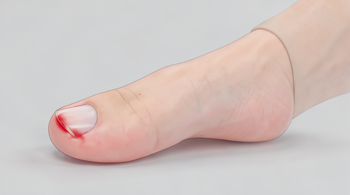
Toenails should not be repeatedly shortened while the area is inflamed. Once the toe has healed, prevention guidance generally recommends trimming straight across and leaving enough length to avoid exposing or injuring the nail fold. Rounding the corners or cutting below the edge can encourage the nail to grow into adjacent skin. Professional nail care is especially important when a person cannot see or reach the toe safely. 8
Signs That Medical Assessment Is Needed
Increasing redness, warmth, swelling, throbbing pain, drainage, or pus can indicate infection along the nail margin. Worsening symptoms, difficulty walking, or skin overgrowth beside the nail also warrant clinical evaluation rather than continued home experimentation. Infection can spread from the broken skin and may become more serious if untreated. A clinician can determine whether the problem is an ingrown nail, another nail disorder, or a condition requiring different treatment. 9
People with diabetes, reduced circulation, nerve damage, weakened immunity, or significant foot swelling should seek professional advice early for a toenail problem. Reduced sensation can make injury harder to detect, while circulation or immune problems can complicate healing and infection control. Diabetes-specific patient guidance advises against attempting home treatment for foot issues. These risk factors lower the threshold for evaluation even when redness and pain initially appear limited. 10
Clinical Treatment and Recurrence Prevention
When conservative care fails or the nail is recurrent, painful, infected, or associated with substantial granulation tissue, a podiatrist or other qualified clinician may treat the problem in an office setting. A common approach is partial nail avulsion, which removes the portion of the nail pressing into the skin. For recurring cases, treatment may also target the corresponding nail matrix so that the problematic edge is less likely to grow back. 11
Clinical treatment still requires attention to footwear, nail trimming, hygiene, and pressure after the procedure because recurrence can result from both nail shape and repeated mechanical irritation. Naturally curved or unusually wide nails may make recurrence more likely, and some people need continued professional monitoring. Prevention focuses on straight-across trimming, avoiding excessive cutting, choosing footwear that does not compress the toes, and addressing trauma or sport-related pressure. 12
Sources
- Cedars-Sinai, “How to Treat and Prevent Ingrown Toenails”
- LMH Health, “Ingrown Toenail Treatment & Removal”
- MSD Manual Professional Edition, “Ingrown Toenail”
- Acibadem Hospitals Group, “Ingrown Toenail Home Treatment”
- Acibadem Hospitals Group, “Ingrown Toenail Treatment: Diagnosis, Outlook, and Modern Treatment Approaches”
- Foot and Ankle Group, “How to Treat Ingrown Toenails”
- Cleveland Clinic, “Ingrown Toenails”
- American Podiatric Medical Association, “Foot Health”
- Mayo Clinic, “Ingrown Toenails: Diagnosis and Treatment”
- WebMD, “Understanding Ingrown Toenail Basics”
- NHS, “Ingrown Toenail”
- American Academy of Dermatology, “Toenail Care”
Authored by 24Trendz team