Best natural solutions for leg cramps at night: Evidence-based guidance
Natural solutions for leg cramps at night are often centered on stretching, massage, heat, hydration, and balanced nutrition. A nocturnal leg cramp is a sudden, involuntary tightening, commonly in the calf, that can last from several seconds to several minutes and may wake a person from sleep. Exercise, heat, muscle fatigue, dehydration, electrolyte disturbances, nerve problems, vascular disease, and medication effects are among the documented associations. 1 3
What to do during a nighttime cramp
Gentle stretching is a primary non-drug response when a cramp begins. For a calf cramp, straightening the leg and gradually drawing the toes toward the body can lengthen the contracted muscle. A standing calf stretch can also be used by placing the affected leg behind the other, keeping the heel on the floor, and leaning forward carefully. Walking slowly or shaking the leg may help restore normal movement, but forceful stretching should be avoided because an intensely contracted muscle can be injured. 5 6
Massage is another commonly recommended physical measure. Rubbing the cramped area may help the muscle relax, while gentle movement can reduce the sense of tightness after the contraction ends. Heat from a warm towel, heating pad, or bath is used to loosen tight muscles and soothe discomfort. Some guidance also lists cold application for residual pain, although heat is the more directly described relaxation measure. Skin should be protected from excessive temperature, particularly during sleep or when sensation is reduced. 5 9
Stretching and movement before bed
A regular calf-stretching routine before bedtime is a conservative strategy recommended in clinical guidance for nocturnal cramps. The objective is not to force flexibility, but to maintain a comfortable length in the calf and foot muscles before lying down. Stretching may be especially relevant when cramps follow unusual exertion, prolonged standing, or intense exercise. Exercise-related cramps are associated with muscle fatigue, and tired muscles are more likely to become irritated and contract involuntarily. 1 6
Daytime activity patterns can also influence nighttime symptoms. High-intensity or prolonged exercise, especially in hot conditions, is identified as a common trigger, while sitting or standing for long periods may also be associated with leg pain and cramping. A gradual warm-up, recovery after exertion, and comfortable movement during the day are reasonable preventive considerations. Supportive footwear has also been cited as a way to limit daily muscle strain, although footwear alone is not established as a universal treatment. 1 12
Hydration and electrolyte-rich foods
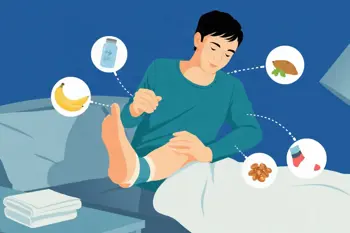
Maintaining adequate fluid intake is relevant because dehydrated muscles may become more prone to cramping, particularly after exercise or heat exposure. Hydration needs vary with activity, climate, health status, and medical advice, so excessive fluid intake is not a general solution. Sodium, potassium, calcium, and magnesium are electrolytes involved in nerve and muscle function. Dietary sources include bananas, potatoes, sweet potatoes, avocados, beans, lentils, and other nutrient-dense foods. 1 4 8
Food-based nutrition is generally more appropriate than assuming every cramp reflects a mineral deficiency. WebMD identifies bananas as sources of potassium, magnesium, and calcium, while sweet potatoes provide all three and contain substantial water. Cooked lentils provide about 71 milligrams of magnesium per cup, and cooked black beans provide almost 120 milligrams per cup. These figures describe food composition, not proof that eating a particular food will prevent cramps in every person. 4
How strong is the evidence for magnesium?
Magnesium is frequently suggested because it participates in muscle contraction and nerve signaling, and deficiency can contribute to cramping. However, the evidence is less supportive for routine supplementation in older adults with unexplained nighttime cramps. In a randomized clinical trial of 121 adults aged 50 to 85, participants received compression stockings, magnesium hydrochloride, or placebo for four weeks. At week eight, magnesium did not significantly reduce cramp frequency compared with placebo. 2
The same trial reported median weekly cramp frequencies of two in the compression-stocking group, three in the magnesium group, and three in the placebo group. The adjusted difference between magnesium and placebo was minus 0.20, with a 95% confidence interval from minus 1.49 to 1.09 and a P value of .929. This result does not establish magnesium as an effective general treatment. People with suspected deficiency, restricted diets, pregnancy, kidney disease, or medication interactions should obtain individualized medical guidance before supplementation. 2 7
Compression and other non-drug options
Compression stockings have more specific recent trial evidence than magnesium for some older adults with frequent cramps. In the Finnish randomized trial, the compression group had a median of two weekly cramps at week eight, compared with three in both the magnesium and placebo groups. The baseline-adjusted difference between compression stockings and placebo was minus 1.43 cramps, with a 95% confidence interval from minus 2.36 to minus 0.50 and a P value of .001. 2
Compression is not suitable for everyone and should not be treated as a universal natural remedy. Four participants in the trial discontinued stockings because of adverse reactions. Leg cramps can also be linked with vascular disorders, neurologic disease, metabolic problems, or medication side effects, so compression may be inappropriate when circulation is impaired or symptoms have not been assessed. The intervention should therefore be considered in the context of a person’s medical history rather than adopted solely because it helped participants in one study. 2 3
When recurring cramps need medical assessment
Occasional cramps are often self-managed, but recurring, severe, or progressively worsening episodes deserve clinical attention. Sleep-related cramps may occur alongside daytime cramps and can be associated with electrolyte disturbances, vascular disease, nerve disorders, Parkinson disease, metabolic muscle conditions, or toxic and medication effects. Blood-pressure medicines, diuretics, and statins are among the medication categories reported in connection with leg cramps. Medication should not be stopped without professional advice. 3 11
Evaluation is particularly important when cramps are frequent enough to disrupt sleep, begin after a medication change, occur with weakness or numbness, or appear with signs of circulation problems. The clinical diagnosis of sleep-related leg cramps requires consideration of secondary causes and differentiation from other sleep-related movement disorders, including restless legs syndrome. A practical prevention plan can combine gentle stretching, appropriate hydration, balanced food intake, and review of triggers, while persistent symptoms require attention to the underlying cause rather than reliance on a single supplement or home remedy. 3 6
Sources
- Harvard Health Publishing, How to get rid of muscle cramps in your legs
- PubMed, Secondary prevention of leg cramps using compression stockings or magnesium supplements
- MedLink Neurology, Sleep-related leg cramps
- WebMD, Foods That May Help With Muscle Cramps
- Ubie Doctor's Note, What are some home remedies to stop leg cramps immediately?
- Mayo Clinic, Muscle cramp diagnosis and treatment
- Cleveland Clinic, Leg cramps
- Healthline, Leg cramps at night
- WebMD, Leg cramps at night
- Medical News Today, Potassium and muscle cramps
- Johns Hopkins Medicine, Leg cramps
- American Academy of Family Physicians, Nocturnal leg cramps
Authored by 24Trendz team