Best hospitals for cochlear implantation: A guide to evaluating clinical centers for hearing restoration
Understanding Cochlear Implantation Clinical Standards
Cochlear implantation is a highly specialized medical procedure intended for individuals with severe-to-profound sensorineural hearing loss who receive limited benefit from conventional hearing aids 1. Unlike hearing aids, which amplify sound waves, a cochlear implant functions by bypassing the damaged portions of the inner ear and directly stimulating the auditory nerve with electrical pulses 2. These pulses are then transmitted to the brain, which interprets them as meaningful sound 3. Selecting a clinical facility for this procedure requires an evaluation of the institution's ability to provide a full spectrum of care, including candidacy assessment, surgical expertise, and long-term follow-up 4.
There is no universally accepted singular ranking for hospitals specializing in cochlear implantation 5. Instead, prospective patients and families are encouraged to assess centers based on the strength of their multidisciplinary teams. Optimal programs typically integrate the expertise of otolaryngologists, audiologists, speech-language pathologists, and occasionally health psychologists to manage the complex needs of the patient from the initial diagnostic stage through the mapping and rehabilitation phases 6. Clinical outcomes are often influenced by the volume of procedures performed and the institutional commitment to specialized auditory-verbal therapy programs 7.
Key Components of Institutional Cochlear Implant Programs
Comprehensive cochlear implant programs generally follow a structured, multi-step pathway to ensure patient safety and long-term success. This pathway begins with a rigorous candidacy evaluation involving diagnostic audiology, medical screenings, and, in many cases, radiological imaging like CT or MRI scans of the temporal bones 8. Programs at major academic institutions often emphasize the importance of vaccination prior to surgery, particularly for anti-pneumococcal protection, to reduce the risk of post-surgical complications such as meningitis 9.
The surgical intervention itself is only one part of the total treatment cycle, which extends to device switch-on, frequency mapping, and auditory rehabilitation 10. Advanced centers, such as the Westchester Medical Center Health Network, have introduced robotic-assisted techniques to improve precision during the electrode array insertion 11. Regardless of the technical methodology, the effectiveness of the device relies heavily on the post-operative support system. Programs that provide consistent access to speech-language pathologists are better equipped to help both pediatric and adult patients achieve improved communication skills in noisy environments 12.
Pediatric Versus Adult Specialization
The needs of pediatric patients significantly differ from those of adults, necessitating distinct departmental approaches within hospitals. Facilities such as Boston Children’s Hospital focus on the unique developmental trajectories of children, which may include extended family counseling and the management of equipment in a child's active daily environment 13. For pediatric cases, early intervention is often highlighted as a critical factor in the development of language, particularly for children born with profound hearing loss 14.
Conversely, adult programs often focus on post-lingual hearing loss, where the goal is often the restoration of previously held hearing capabilities or improved speech recognition for those with progressive loss 15. At centers like M Health Fairview or Duke Health, adult evaluations may include psychological assessments to ensure that the patient has realistic expectations regarding the limitations and benefits of the implant 16. Adult candidates must be physically capable of undergoing general anesthesia, usually for a duration of approximately three hours, depending on the complexity of the surgical case 17.
Facility and Technology Comparison Metrics
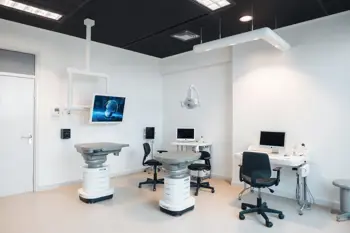
Patients evaluating potential centers should consider the following institutional capabilities when making clinical comparisons. These factors generally influence the overall quality of care and the long-term maintenance of the device system.
| Metric | Clinical Relevance |
|---|---|
| Multidisciplinary Team | Integration of ENT, audiology, and speech therapy |
| Robotic Assistance | Potential for greater surgical precision and tissue preservation |
| Rehabilitation Pathway | Access to long-term auditory-verbal therapy and mapping |
| Diagnostic Capability | On-site access to high-resolution CT and MRI imaging |
| Age Specialization | Presence of dedicated pediatric or adult clinical tracks |
While technology is a key factor, the administrative and supportive aspects of the program are equally important. For example, some facilities maintain strict protocols requiring patients to demonstrate a commitment to long-term aural rehabilitation as a condition of candidacy 18. A hospital's participation in insurance networks and its geographic proximity are also practical considerations, given that patients often require frequent follow-up appointments for processor adjustments during the first year after the initial activation 19.
Considerations for International and Out-of-Region Patients
For patients considering medical travel for cochlear implantation, such as those traveling to established centers in India or other international hubs, the primary focus remains on the continuity of care. Major international centers, including those affiliated with AIIMS Delhi or Apollo, often provide consolidated packages that bundle pre-operative assessments, surgery, and initial rehabilitation 20. However, prospective patients must ensure they have a plan for long-term support and mapping once they return to their home region, as the external processor requires ongoing professional configuration 21.
Regulatory oversight and standardized practice protocols vary significantly by jurisdiction. In the United States, for instance, the FDA provides guidance on the intended use of these devices, ensuring that clinical sites follow evidence-based protocols 22. When traveling internationally, it is essential to verify that the hospital uses FDA-approved or equivalent internationally recognized hardware, such as devices from Cochlear Nucleus, MED-EL, or Advanced Bionics, which are widely accepted in clinical settings globally 23.
Risks and Long-Term Maintenance Realities
Cochlear implantation carries inherent medical risks that should be reviewed during the consultation process. Potential complications include infection, damage to the facial nerve, or dizziness, though these are relatively infrequent in experienced surgical centers 24. Furthermore, patients must be aware that the device is a permanent electronic implant, and there is a possibility of future mechanical failure or the need for device upgrades as technology advances 25. The commitment to the process involves not just the initial surgery, but the lifelong maintenance of both internal and external components 26.
Ultimately, the effectiveness of the cochlear implant is highly subjective and depends on individual physiological factors, such as the condition of the auditory nerve and the duration of hearing loss prior to the procedure 27. Patients with a history of meningitis, for instance, may face greater surgical challenges due to potential scarring within the cochlea, which can necessitate highly specialized expertise from an experienced surgical team 28. Transparent communication with medical providers regarding these risks is essential for ensuring that patients are well-prepared for both the surgery and the subsequent period of neurological adaptation 29.
Sources
- U.S. Food and Drug Administration
- National Institute on Deafness and Other Communication Disorders
- Johns Hopkins Medicine
- Mayo Clinic
- Cleveland Clinic
- NYU Langone Health
- Mass Eye and Ear
- UCSF Health
- Stanford Medicine
- Boston Children’s Hospital
- House Clinic
- Vanderbilt University Medical Center
- Boston Children’s Cochlear Implant Program
- George Washington University Hospital
- Barrow Neurological Institute
- M Health Fairview
- Ogden Clinic
- THANC Hospital Otology
- Duke Health
- Arodya Medical Guide 2026
- USZ Cochlear Implant Center Zurich
- Westchester Medical Center Health Network
- World Health Organization 2023 Clinical Data
- Clinical ENT Association Guidelines
- Otolaryngology Research Journal
- Journal of Audiology and Neurotology
- Hearing Health Foundation Archives
- Advanced Surgical Procedure Reports
- National Association of the Deaf Clinical Summaries
Authored by 24Trendz team