Ways to manage muscle spasms at home: Evidence-based relief and safety guidance
Understanding muscle spasms and common triggers
Muscle spasms are sudden, involuntary contractions that may feel like a tight knot, twitch, or painful hardening of the muscle. They commonly affect the legs and feet but can occur in the hands, arms, abdomen, back, or neck. Dehydration, electrolyte imbalance, overexertion, muscle strain, medication effects, nerve irritation, pregnancy, and some neurologic or metabolic disorders are recognized contributors. Many episodes are benign, but recurring or unexplained spasms can require evaluation to identify an underlying cause. 1
- Exercise, heat, tired muscles, and dehydration can increase cramping risk.
- Some spasms occur without an obvious trigger.
- Muscle soreness may remain after the contraction has ended.
Stretching during an active spasm
Gentle, sustained stretching is a primary home measure for an active cramp because it lengthens the contracting muscle and may help it relax. For a calf spasm, slowly pull the toes upward toward the shin or stand carefully and place weight on the affected leg if that movement is tolerable. A hamstring spasm may respond to gradually straightening the leg. Stretching should be controlled rather than forced, and movement should stop if pain sharply worsens or an injury is suspected. 2
- Breathe steadily while holding a comfortable stretch.
- Repeat gently instead of bouncing the limb.
- Use support when standing during a painful leg cramp.
Massage, heat, and cold therapy
Light massage or direct pressure can reduce the sensation of tightness and may improve local circulation. Heat, delivered through a warm towel, heating pad, bath, or shower, is generally used to relax stiff muscles. Cold therapy can numb pain and reduce swelling, particularly when a spasm follows a recent strain or injury. Ice should be wrapped in cloth rather than placed directly on skin. Temperature treatments should be brief and comfortable, with care taken to avoid burns or skin damage. 3
- Choose warmth for stiffness without an acute injury.
- Consider wrapped cold therapy after a recent injury.
- Do not fall asleep with a heating pad in place.
Hydration and electrolyte considerations
Regular fluid intake is important because dehydration can make muscles more irritable, particularly during exercise or exposure to heat. Sodium, potassium, calcium, and magnesium all contribute to normal muscle function, but supplements should not be assumed necessary for every cramp. A balanced diet and appropriate fluids may be sufficient for many people. Electrolyte products can also be unsuitable for people with certain kidney, heart, or medication-related conditions, so persistent cramps or suspected deficiency should be discussed with a clinician rather than self-treated with large doses. 4
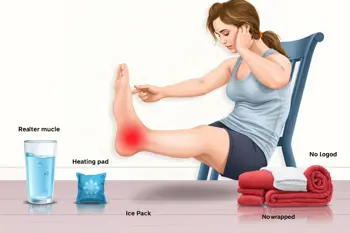
- Drink regularly during the day, not only after cramps begin.
- Increase attention to fluids during strenuous activity or hot weather.
- Avoid high-dose mineral supplements without professional advice.
Rest, movement, and prevention
Stopping the activity that triggered a spasm allows an irritated or strained muscle to settle, but prolonged bed rest is not usually necessary for uncomplicated symptoms. Once intense pain subsides, gentle walking and other low-impact movement can support circulation and reduce stiffness. Regular stretching, gradual conditioning, adequate sleep, and attention to posture may reduce recurring tension. Exercise in extreme heat, on hard surfaces, or beyond the muscle’s current conditioning can increase risk, making gradual progression and recovery periods important parts of prevention. 5
- Temporarily avoid strenuous activity that reproduces the spasm.
- Return to movement gradually as comfort improves.
- Include routine stretching rather than stretching only during cramps.
Pain medicines and limits of home treatment
Over-the-counter acetaminophen or nonsteroidal anti-inflammatory medicines may help soreness associated with a spasm, although they do not necessarily stop the involuntary contraction itself. NSAIDs may be unsuitable for people with ulcers, kidney disease, bleeding risks, or certain medication combinations. Topical menthol products may provide temporary sensory relief but do not correct dehydration, nerve compression, or another underlying condition. Medical assessment is important for new weakness, loss of bladder or bowel control, fever, severe pain, major injury, swelling, or spasms that are persistent, frequent, or progressively worsening. 6
- Follow the product label and avoid combining medicines with duplicate ingredients.
- Ask a pharmacist or clinician about medication interactions and contraindications.
- Seek urgent care for neurologic symptoms or severe symptoms after injury.
Sources
- Muscle Cramps, StatPearls, NCBI Bookshelf: https://www.ncbi.nlm.nih.gov/books/NBK499895/
- Harvard Health Publishing, How to get rid of muscle cramps in your legs: https://www.health.harvard.edu/pain/how-to-get-rid-of-muscle-cramps-in-your-legs
- Mayo Clinic, Muscle cramp diagnosis and treatment: https://www.mayoclinic.org/diseases-conditions/muscle-cramp/diagnosis-treatment/drc-20350825
- MedlinePlus, Muscle strain: https://medlineplus.gov/ency/article/002030.htm
- Cleveland Clinic, Muscle cramps: https://my.clevelandclinic.org/health/diseases/15466-muscle-cramps
- Johns Hopkins Medicine, Muscle pain: https://www.hopkinsmedicine.org/health/conditions-and-diseases/muscle-pain
Authored by 24Trendz team