Top rated all-weather electric bicycles in 2026: An Analysis of Performance and Utility
In 2026, the market for all-weather electric bicycles has matured, shifting focus from raw motor power toward integrated system reliability and component longevity. Current industry standards now prioritize features such as internal hub gearing, belt drives, and documented water-resistance ratings to support consistent use across variable climates 1. These machines, often categorized as SUV e-bikes or all-terrain commuters, are engineered to handle challenges like rain, mud, and gravel while maintaining daily functionality 2.
Defining the All-Weather Standard in 2026
Modern all-weather electric bicycles are defined by specific design elements that protect critical electronics and mechanical systems from the elements. A primary indicator of suitability for adverse weather is the inclusion of integrated lighting, full-coverage fenders, and hydraulic disc brakes for reliable stopping power in wet conditions 1. High-end models often utilize mid-drive motors paired with internally geared hubs or belt drives to reduce the maintenance requirements associated with exposed chain systems that frequently gather grit and moisture during inclement weather commutes 8.
Furthermore, frame design plays a significant role in weather-ready performance. Models like the Velotric Summit 2 feature UL2271 certified batteries with IPX7 water-resistance ratings, signaling a broader industry move toward stricter safety and durability testing 1. Regardless of these protections, technical guidance consistently emphasizes that no bicycle is truly waterproof. Proper maintenance practices, including drying the frame and storing batteries indoors after exposure to heavy precipitation, remain essential to preserving the lifespan of the motor and electrical systems 10.
Performance and Capability in Diverse Conditions
The capability of an all-weather e-bike is often dictated by its motor-to-terrain interaction. The Pedego Ridge Rider 2, for example, utilizes a 750W rear hub motor with a 48V sinewave controller, providing quiet operation and near-instant engagement that proves advantageous on loose or wet terrain 2. Similarly, the Tenways Wayfarer utilizes an air-suspension front fork to manage potholes and road vibrations, bridging the gap between city asphalt and gravel trails 4. This flexibility ensures that riders are not confined to pristine cycling paths during less-than-ideal weather conditions.
For riders requiring significant cargo capacity alongside all-weather durability, utility-focused designs have become prominent. The Ariel Rider Kepler offers a robust frame capable of handling varied road conditions, leaning into the comfort afforded by its fat tires and upright geometry 5. Meanwhile, models like the Moustache Xroad FS 6 demonstrate that high-performance mid-drive systems, specifically those from Bosch, offer superior climbing capabilities, making them highly effective for commuters navigating hilly, rain-slicked terrain 7.
Material Science and Weight Considerations
Advancements in materials are changing how manufacturers approach the build of all-terrain machines. The Urtopia Carbon Atom, which utilizes a Toray carbon fiber frame, highlights a trend where manufacturers seek to maintain strength and stiffness while reducing the overall weight of the bike 8. This weight reduction, dropping the bike to approximately 64 pounds, allows for easier maneuvering when lifting the machine onto a rack or storing it indoors after a wet commute 8.
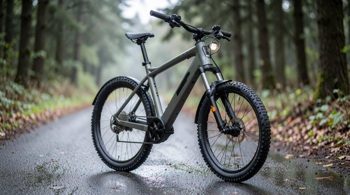
Conversely, many high-utility bikes remain on the heavier end of the spectrum to prioritize durability and carrying capacity. The Lacros Cyclone, for instance, weighs in at 77.8 pounds but compensates for this bulk with a powerful 750W motor that can peak at 1400W and deliver 85Nm of torque 10. This power output is crucial when the bike is fully loaded or when navigating heavy winds and steep, saturated inclines, proving that weight and performance are often balanced differently based on the intended primary use case 10.
Serviceability and Long-Term Ownership
A critical aspect of long-term ownership for all-weather e-bikes is the availability of service and the reliability of components. Some manufacturers are differentiating themselves by offering extensive service plans or dealer networks. Pedego, for example, pairs its hardware with a five-year service plan, including periodic tune-ups, which is a significant factor for riders relying on their bikes for daily transportation 2. This support model helps mitigate the inevitable wear and tear caused by year-round exposure to road salt, dust, and precipitation.
Reliability also depends on the integration of established motor systems. The Canyon Grizl:ON, which features Bosch mid-drive integration, illustrates the benefit of using modular, well-supported electronic ecosystems 9. By relying on industry-standard components, owners often find it easier to source replacement parts and locate service technicians. This is a contrast to direct-to-consumer models, which may offer higher performance-to-price ratios but can sometimes lack the same level of local technical infrastructure 3.
Evaluating Key Market Segments
To assist in understanding the diverse landscape of 2026 e-bikes, the following table summarizes the key characteristics observed in the current high-rated category.
| Model | Motor Type | Key Feature | Intended Use |
|---|---|---|---|
| Velotric Summit 2 | 750W Hub | IPX7 Battery Rating | Mixed Commute/Adventure |
| Pedego Ridge Rider 2 | 750W Hub | 5-Year Service Plan | SUV/Commuter |
| Urtopia Carbon Atom | 750W Hub | Carbon Fiber Frame | All-Terrain Versatility |
| Lacros Cyclone | 750W Hub | 1400W Peak Power | Heavy-Load Utility |
Regulatory and Safety Realities
Navigating the all-weather e-bike market requires an understanding of regulatory and safety frameworks. UL2849 certification has become an essential benchmark for the electrical safety of the entire system, while UL2271 pertains specifically to the battery pack’s integrity 2, 8. Prospective owners should prioritize models that carry these certifications, as they indicate that the manufacturer has met rigorous testing standards for fire safety and electrical resilience 8. Safety in adverse conditions is not limited to the electrical system; the choice of tire width and tread pattern is also critical for maintaining traction on slippery or uneven surfaces, further influencing the classification of a bike as truly all-weather 2.
Sources
- Freshly Charged, Velotric Summit 2 Review, 2026.
- Electric Bike Review, Pedego Ridge Rider 2 Review, 2026.
- Electrek, Kingbull Discover ST 2.0 review, 2026.
- GearJunkie, Tenways Wayfarer Electric Bike Review, 2026.
- Electrek, Ariel Rider Kepler review, 2026.
- Wired, Hiboy P6 Fat Tire Electric Bike Review, 2026.
- Road.cc, Moustache Xroad FS 6 Review, 2026.
- Electric Bike Review, Urtopia Carbon Atom Review, 2026.
- EBikeReviewLab, Canyon Grizl:ON Review, 2026.
- Electroheads, Lacros Cyclone Review, 2026.
Authored by 24Trendz team