Top rated lightweight power wheelchairs in 2026: A technical analysis of modern mobility solutions
The market for lightweight power wheelchairs has reached a significant turning point in 2026, characterized by the integration of aerospace-grade materials and advanced lithium-ion energy systems 9. Designed to facilitate independent travel and daily navigation, these devices bridge the gap between heavy-duty medical chairs and standard manual models 7. Manufacturers have prioritized structural integrity while aggressively reducing total unit weight, enabling users to transport mobility equipment in standard vehicle trunks and manage travel requirements with greater ease 9.
Evolution of Carbon Fiber Mobility Construction
The most prominent trend in 2026 is the adoption of carbon fiber frames, which offer superior strength-to-weight ratios compared to traditional steel or aluminum models 2. Devices like the Golden Technologies Cricket LT Carbon demonstrate this evolution, achieving a total weight of 25.8 lbs while maintaining a robust 300-pound weight capacity 1. Similarly, the Ezi-Fold Carbon represents the extreme end of this trend, weighing only 13 kg, which significantly reduces the physical demand placed on users and caregivers during lifting and stowing processes 2.
These ultra-lightweight configurations are not merely for show; they incorporate complex engineering to ensure stability during operation. The Pride Jazzy Carbon, for instance, weighs approximately 43.6 lbs total and features front suspension for a smoother ride, demonstrating that weight reduction does not necessarily require the sacrifice of comfort or safety features 3. Modern carbon fiber models are increasingly designed for rapid folding, often allowing the chair to be packed into a compact footprint in a matter of seconds 4.
Battery Efficiency and Range Performance
Advancements in lithium-ion battery technology have become the backbone of 2026 mobility standards, with many models now achieving ranges between 10 and 15 miles on a single charge 6. The ComfyGO Phoenix Carbon Fiber unit stands out in this segment, utilizing dual batteries to deliver an impressive driving range of up to 23 miles 4. Most modern travel-ready power chairs, including the Q50 R Carbon, utilize airline-approved lithium batteries that satisfy international safety regulations for air and cruise travel 7.
| Model | Approx. Weight | Range | Weight Capacity |
|---|---|---|---|
| Cricket LT Carbon | 25.8 lbs | 9.5 miles | 300 lbs |
| Ezi-Fold Carbon | 13 kg | Not Specified | 300 lbs |
| ComfyGO Phoenix | 29 lbs | 23 miles | 300 lbs |
| Q50 R Carbon | 14.5 kg | 7.5 miles | 136 kg |
Maneuverability in Small Indoor Environments
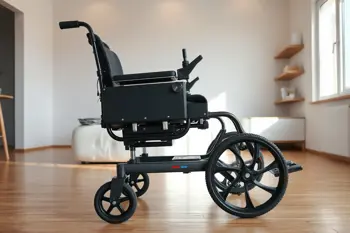
Navigating tight urban spaces or small domestic apartments remains a primary focus for designers in 2026. Turning radii of under 25 inches are now the baseline for top-rated models, allowing users to navigate narrow hallways and tight indoor spaces with precision 7. The Pride Jazzy Carbon, for example, features a 24-inch turning radius, which is specifically optimized for indoor independence 3. This maneuverability is enhanced by digital joystick controllers, which often include 360-degree navigation capabilities and integrated USB charging ports for peripheral mobile devices 4.
Regulatory Oversight and Selection Criteria
Selecting a lightweight power chair is a complex decision that involves assessing personal physical needs against the technical specifications of the device. Regulatory bodies, including the FDA, classify many of these power-driven chairs as Class II medical devices, emphasizing their role in assisting individuals with chronic physical mobility impairments 1. Potential users are advised to evaluate devices based on three core metrics: total weight, battery range, and the specific turning radius required for their primary living environment 6.
Insurance coverage and Medicare reimbursement for these ultra-lightweight models are highly contingent on formal medical documentation 7. Prospective users must typically demonstrate that the specific features of the chair, such as its portability, are medically necessary for their daily activities and living environment 8. Failure to provide adequate documentation often leads to coverage denial, making it essential for users to work closely with mobility specialists to ensure their chosen model meets all clinical criteria 3.
Maintenance Realities and Long-term Ownership
While the benefits of carbon fiber and high-tech electronics are significant, owners must recognize the maintenance requirements of modern power wheelchairs. Brushless motors, while quieter and more efficient, require professional inspection to ensure that electromagnetic braking systems remain calibrated for safety 4. Furthermore, while the frames are designed for durability, the composite materials can be susceptible to damage if exposed to improper storage conditions or excessive impact during travel 2.
Users should prioritize routine checks of the tires, castor wheels, and electrical connections to prolong the life of the device. Most manufacturers offer warranties ranging from 12 to 13 months on electrical components, but these warranties typically do not cover accidental damage resulting from improper folding or loading procedures 1. Maintaining clear records of servicing is recommended for users who intend to utilize the device for professional travel, as airline handlers may occasionally cause surface-level wear that requires cosmetic or structural attention 4.
Market Diversity in 2026
Beyond the carbon fiber segment, the market remains diverse with specialized options like the Permobil M1, which serves high-acuity users through a modular design approach 7. The LITH-TECH Smart Chair Pro Max represents another facet of the market, focusing on multi-terrain versatility through the use of larger, puncture-proof solid rubber tires and a sophisticated suspension system 5. Consumers are no longer restricted to a single design philosophy, as the 2026 market now provides high-tech options that emphasize either extreme lightweight portability or ruggedized reliability 7.
Sources
- Golden Technologies, Cricket LT Carbon Product Data
- Monarch Mobility, Ezi-Fold Carbon Specifications
- Medical Department Store, Pride Jazzy Carbon Technical Overview
- Bellevue Healthcare, ComfyGO Phoenix and Glide Care G-5 Data
- Lith-Tech Mobility, Smart Chair Pro Max Features
- Verywell Health, Best Power Wheelchairs 2026 Analysis
- Christopher & Dana Reeve Foundation, Mobility Aid Selection Guidance
- CMS.gov, Medicare Coverage Database for Mobility Devices
- Mobility Management, 2026 Power Chair Industry Trends
Authored by 24Trendz team