Christmas Cruises: The Most Beautiful 7-Day Routes: A Comprehensive Guide to Holiday Navigation
Choosing a 7-day holiday sailing requires an understanding of two fundamentally different cruise experiences: the cultural, land-centric immersion of European river systems and the expansive, sun-drenched itineraries of the Caribbean 1. While holiday travel is often associated with logistical friction, cruise-based vacations offer a stable home base that allows travelers to visit multiple destinations without the need to coordinate individual hotel transfers or inter-city transport 2, 7. Whether navigating the historic waterways of central Europe or traversing the islands of the Atlantic, selecting a route depends on whether one prefers winter-themed festivities or a warm-weather escape 1.
The European River Circuit: Navigating the Danube and Rhine
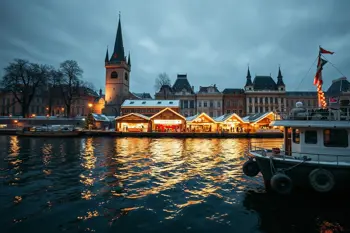
European river cruises represent a premier category for travelers seeking a deep cultural experience during the festive season. The Danube and Rhine rivers provide the structural core of this itinerary format, connecting travelers to medieval cities that host centuries-old Christmas markets 6, 7. A standard 7-night sailing, such as a route from Budapest to Nuremberg, allows passengers to visit prominent urban centers including Vienna, Bratislava, and Passau without the requirement of changing accommodations 2, 3, 5.
These itineraries are designed for accessibility to local customs and seasonal traditions. For instance, in Nuremberg, passengers can engage with historic market squares, while in Vienna, the focus shifts to illuminated palaces and concert performances 4, 8. Travelers on these routes should anticipate an environment defined by cold-weather climate conditions, traditional savory foods like roasted chestnuts and gingerbread, and a proximity to landlocked European sites that offer high levels of historical density 1, 2.
Regional Nuances in Caribbean Holiday Sailing
Caribbean 7-day itineraries offer a distinct alternative to European river journeys, typically categorized into Eastern, Western, and Southern regions 9, 10. The Eastern Caribbean route is often characterized by shorter transfers and a focus on leisure, frequently including stops in Nassau, various private islands, and the historic port of San Juan 1, 12. This region provides a balance between accessible beach time and cultural exploration, particularly in Old San Juan, where colonial forts and waterfront walking paths are easily accessible from the cruise terminal 14.
Western Caribbean itineraries, by contrast, are frequently prioritized by travelers interested in marine and archaeological activities. Common ports like Cozumel, Roatàn, and Belize offer access to coral reefs, snorkeling, and mainland Mayan archaeological sites 1, 16, 17. Southern Caribbean voyages, often departing from San Juan, allow for deeper penetration into the region, reaching islands such as Aruba, Curaçao, and Bonaire. These routes are noted for their distinct Dutch-Caribbean architecture and generally longer port call durations compared to the more compressed schedules of other Caribbean circuits 1.
Logistical Considerations and Market Realities
When planning a holiday cruise, the distinction between ship-based programming and shore-side exploration is a critical variable. Most river cruise lines, such as Riviera Travel, Viking, or Emerald Cruises, emphasize all-inclusive models that bundle shore excursions, regional dining, and onboard festive entertainment as part of the core experience 1, 4, 5. Conversely, ocean-going Caribbean vessels rely on a wide variety of independent and cruise-line-operated excursions to manage visitor volume during the high-traffic holiday season 10, 11.
| Route Type | Focus Area | Key Atmospheric Elements |
|---|---|---|
| European River | Cultural/Historical | Christmas markets, folklore, winter scenery |
| Eastern Caribbean | Leisure/Beach | Private islands, clear waters, historic forts |
| Western Caribbean | Adventure/Marine | Coral reefs, Mayan sites, jungle excursions |
| Southern Caribbean | Regional Diversity | Dutch architecture, extended port calls |
Evaluating Itinerary Density and Port Accessibility
The intensity of a 7-day schedule varies significantly depending on the geography of the route. River cruises operate on a schedule where the ship often docks in the center of historic towns, facilitating a high degree of pedestrian-focused exploration 6. This constant proximity to the destination minimizes the time spent in transit. In contrast, Caribbean itineraries frequently involve a mix of sea days and port calls, with the cruise ship serving as an island-hopping mechanism across larger distances 1.
Travelers must assess their preference for destination density. A 7-day river cruise might result in daily port visits, whereas a 7-day ocean cruise will typically intersperse sailing days with visits to different geographic zones 1, 4. Ensuring that the chosen route matches personal energy levels is essential, as the requirement for frequent off-ship activity during European winter sailings can differ greatly from the relaxed pace of a Caribbean beach day 2, 7.
Regulatory and Planning Framework
All cruise sailings are subject to specific operational requirements and market-driven variability. Potential passengers should confirm exact itineraries, including the specific time spent in each port, with the cruise operator, as scheduling can change due to tidal conditions or seasonal port congestion 1. For those embarking from major hubs like Miami or Fort Lauderdale, airport proximity is a significant factor in total trip logistics 18, 19. Travelers should also verify the inclusion of holiday-specific programming, such as gala dinners or special concert events, which may require pre-departure coordination with the cruise line 8.
Furthermore, because holiday sailings are highly sought after, availability is often limited to specific ship-and-date combinations. It is considered standard practice to review the specific amenities and exclusion policies of the cruise line, particularly regarding travel insurance, transfers between airports and ports, and the extent of cultural enrichment programs offered on board 1, 4.
Summary of Seasonal Differences
The primary distinction between these travel segments lies in the seasonal intent of the visitor. European Christmas cruises are specifically targeted at individuals who wish to engage with the cold-weather traditions of central Europe, emphasizing historical resonance and market-town social dynamics 6, 7. Caribbean voyages, however, prioritize environmental contrast, offering warm temperatures and nautical leisure as a respite from the standard holiday season 1. Understanding these disparate motivations is key to choosing an itinerary that aligns with long-term travel objectives rather than immediate, short-term trends.
Sources
- World of Cruising: The best Christmas cruises guide
- Celebrity Cruises: Danube Christmas Market Cruise Guide
- Crui.se: Danube Budapest to Nuremberg Christmas Markets
- World of Cruising: Nuremberg to Budapest itinerary
- World of Cruising: Passau to Budapest itinerary
- Quartz: Magical Christmas river cruises overview
- Emerald Cruises: European Christmas Market guide
- Celebrity Cruises: Best Christmas Market river cruises destinations
- Royal Caribbean: Caribbean cruise regional definitions
- Norwegian Cruise Line: Caribbean itinerary options
- Carnival Cruise Line: Caribbean destination guide
- Princess Cruises: Caribbean ports and regions
- Discover Puerto Rico: Old San Juan visitor guide
- San Juan Cruise Port: Official port information
- U.S. Virgin Islands Tourism: St. Thomas visitor overview
- Visit Mexico: Cozumel marine and archaeological guide
- Bay Islands Tourism Bureau: Roatán visitor information
- PortMiami: Cruise embarkation information
- Port Everglades: Cruise terminal information
Authored by 24Trendz team