7 Days France City Packages: Complete Guide to Multi-City Itineraries and What to Expect
Planning a week in France requires thoughtful routing and realistic expectations about pace and distance. Seven-day France city packages represent one of the most common trip lengths for first-time visitors and returning travelers alike, balancing enough time to experience multiple regions without excessive travel fatigue or logistical complexity. This guide examines what actually comprises these packages, how they structure city combinations, what costs realistically range across different quality tiers, and what operational details matter before committing to a booking.
Typical Structure of 7-Day France City Packages
Most seven-day France city packages follow a two-base model rather than attempting three or four separate cities 1. This constraint reflects practical train logistics, hotel changeover friction, and the reality that deeper exploration of fewer places yields richer experiences than rapid transit between many. The standard architecture allocates three to four nights in Paris, then redistributes the remaining three to four nights across a single secondary destination 2. This split acknowledges Paris's status as the primary draw for most North American and European travelers while recognizing that a full week in Paris alone can feel repetitive without geographic contrast.
The choice of secondary base significantly shapes the trip's character. Research sources document six distinct popular combinations: Paris paired with Provence (typically Avignon or Aix-en-Provence as the regional hub), Paris with the French Riviera (Nice as the coastal anchor), Paris combined with Lyon for food-focused travelers, Paris extended into the Loire Valley for château enthusiasts, Paris with Strasbourg and Alsace for those prioritizing medieval architecture and wine culture, or dedicated regional itineraries excluding Paris entirely, such as Brittany or the Pyrenees 3. Each pairing requires different transportation methods and generates distinct pacing constraints.
Cost Structure and Budget Tiers
Pricing for seven-day France city packages varies significantly by accommodation class, meal inclusions, and whether transportation between cities is bundled. Mid-range packages for a single traveler typically cost between $2,300 and $2,500 (approximately €2,300 in 2026 pricing) when international flights are included as part of the package 4. This figure assumes three-star hotels in city-center neighborhoods, breakfast daily, some lunch or dinner components, museum skip-the-line tickets, and internal ground transportation via train or coach.
Budget-conscious travelers can access seven-day experiences in the $1,500 to $2,000 range through hostel accommodations, self-catering meal arrangements, and packages emphasizing walking tours and free attractions over paid museum entry 4. Luxury packages, conversely, begin at $3,500 and escalate to $4,500 or higher when featuring five-star Palace category hotels, Michelin-starred dining experiences, private car transfers, and concierge-curated cultural activities 5. Peak-season pricing (April through October) typically commands 20 to 40 percent premiums over winter rates, reflecting higher hotel occupancy and tour operator demand 6.
What Seven-Day Packages Typically Include and Exclude
Standard package inclusions cluster into consistent categories across operators. Hotel accommodations represent the largest cost component, followed by ground transportation between cities (usually high-speed TGV train from Paris to secondary destinations), daily breakfast service, and access to one or two major paid attractions 7. Many packages include skip-the-line tickets for the Eiffel Tower, Louvre Museum, or Versailles, reflecting these as non-negotiable for first-time visitors. Seine river cruises, local walking tours led by English-speaking guides, and one curated cultural experience (cooking class, perfume workshop, wine tasting) appear frequently in mid-range packages.
Systematic exclusions require equal attention. International flights from North America, Australia, or Asia are almost universally excluded from stated package prices, with operators providing airfare estimates rather than bundled tickets 8. Travel insurance, visa assistance, and pre-trip consultations typically fall outside package scope. Airport transfers vary: some packages include private sedan pickup; others require independent navigation to hotels or Metro stations. Meals remain partially excluded even in all-inclusive marketed packages; typically three to five dinners are provided, leaving travelers to self-arrange lunches and remaining dinners. Personal transportation within cities (Metro cards, taxi rides to restaurants) and gratuities for guides remain traveler responsibility 9.
Paris-Plus-One-Region Routing Logic and Transfer Mechanics
The Paris-to-secondary-region transfer has become standardized because it solves multiple operational problems simultaneously. Paris to Avignon via TGV train requires two hours and 30 minutes, meaning a morning departure allows afternoon arrival and hotel check-in without losing a full day 10. Paris to Nice takes approximately five hours, consuming most of a single day but remaining feasible. Paris to Lyon requires one hour 40 minutes, making it the fastest secondary connection and popular for travelers prioritizing minimal travel time relative to destination variation.
Train booking and seat reservation requirements create a hidden layer of package logistics. Premium TGV cars require mandatory seat reservations purchased separately from base fare; packages must specify whether this is included. High-speed trains depart Paris from Gare de Lyon (for Provence, Mediterranean coast destinations) and Gare de l'Est (for Alsace and eastern routes). Packages must clarify departure station because it determines how travelers reach the station from their Paris hotel. First-time visitors without European train experience frequently underestimate platform navigation, ticket validation, and luggage management on crowded trains, making clarity on these mechanics essential 11.
Museum Access, Booking Requirements, and Timed-Entry Logistics
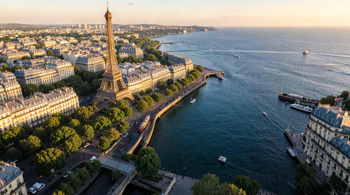
Museums in Paris operate under timed-entry systems that create genuine booking friction. The Louvre, Musée d'Orsay, and Sainte-Chapelle release tickets online exactly seven to 30 days before visit dates; walk-up tickets are unavailable or available in minimal quantities 12. Eiffel Tower tickets release in tranches, with summit access (versus second-floor access) often selling out four to six weeks ahead during peak season. Packages marketed as including museum access must operationalize this through pre-booked tickets in travelers' names, reducing flexibility if plans shift.
Paris Museum Pass represents an alternative to individual ticketing, offering unlimited access to over 60 museums and monuments across multiple days (two, four, or six-day passes available). Packages sometimes bundle Museum Passes; others require travelers to decide whether independent pass purchase offers better economics given their specific museum interests. Pass holders skip standard entry lines but still encounter security queues. Versailles, technically outside Paris in its separate municipality, requires separate ticketing and operates under its own timed-slot system with separate security processing. Many package descriptions obscure whether Versailles entry is included or requires separate purchase 13.
Regional Variations: Provence, French Riviera, Loire Valley, and Alsace Experiences
Provence-focused packages (typically Avignon, Aix-en-Provence, or Marseille as base cities) emphasize lavender fields, Roman archaeological sites, medieval villages, and Provençal wine regions 14. These packages frequently include day-trip components to destinations like Gordes, Les Baux-de-Provence, and the Luberon valley, though travelers should verify whether these day trips represent guided coach excursions or self-guided itineraries. Car rental becomes increasingly important in Provence because public transportation between small villages is sparse; packages must clarify whether vehicle rental is included or represents an additional cost.
French Riviera packages center on Nice, Cannes, or Antibes, emphasizing Mediterranean coastline, upscale shopping, and day trips to coastal villages and Monaco 15. These packages typically include one full-day guided tour covering Monaco, Eze, and coastal viewpoints, plus free time for beach relaxation and independent exploration. Riviera pricing skews higher due to higher hotel costs in glamorous coastal markets. Loire Valley packages stress château visits, wine tastings in regional producers, and Renaissance architecture, appealing to history and architecture enthusiasts specifically. Alsace packages emphasize medieval town aesthetics, Christmas markets (if winter travel), Franco-German cultural blend, and regional wine production 16.
Practical Operational Realities: What Travelers Should Anticipate
Accommodation logistics warrant explicit attention. Many packages specify hotel star ratings but provide minimal detail about location within city neighborhoods. A three-star hotel near a Metro station operates fundamentally differently than one requiring a taxi ride to reach main attractions. Packages should clarify whether hotels occupy central arrondissements (Paris 4th, 5th, 6th, 8th) versus peripheral areas where nightly transit costs accumulate 17. Room configurations vary between European twin beds and North American queen-size preferences; packages must confirm bed types if this matters to travelers. Air conditioning is not universal in European city hotels, particularly in older buildings; summer travelers should confirm climate control, especially in southern France where heat can be intense.
Walking distances and physical exertion levels require honest framing. Paris itineraries typically involve 12,000 to 18,000 steps daily across multiple neighborhoods, museum galleries, and churchyards 18. Travelers with mobility limitations need explicit clarity on whether daily walking can be modified or whether attractions require stairs, long corridors, or uneven cobblestone terrain. Provence and Riviera packages often include hill towns with steep approach roads, narrow medieval streets, and vertical climbing that exceed casual walking. Guide-led group walks versus self-directed exploration fundamentally affect pacing; packages should specify which model applies to each day.
Booking Timeline, Seasonal Variation, and Realistic Advance Planning
Operators recommend booking seven-day France city packages eight to twelve weeks ahead during peak season (April through October) to secure preferred hotel properties and favorable pricing 19. Accommodations in Paris's most desirable neighborhoods (Marais, Latin Quarter, Saint-Germain) fill completely three months ahead during summer; waiting until six weeks before departure often results in availability only in outer districts or hotels with less favorable reviews. Museum and attraction tickets, as noted, release on fixed timelines that package operators must work around; booking too far in advance means gambling that dates remain available when tickets open.
Winter packages (November through March) offer substantially lower costs-20 to 40 percent reductions from summer rates-but introduce weather unpredictability, reduced daylight hours (approximately 9 to 10 hours in December and January), and closures of minor attractions 20. Shoulder seasons (April-May and September-October) represent optimal value: pleasant weather, manageable crowds, and pricing between peak summer and winter extremes. Package cancellation policies vary dramatically; some operators enforce strict no-refund policies once itineraries are confirmed, while others offer flexible rescheduling. Reading cancellation terms before booking represents essential due diligence, particularly post-pandemic when travel disruptions remain possible.
Sources
- France Travel Wiki: France Itinerary: 7 Days Across Paris and Beyond
- World Travel Planning: 7 Day France Itinerary: Paris & Provence Guide 2026
- France Bucket List: One Week in France – 6 Curated Itineraries for the Discerning Traveler
- Civitatis: The Ultimate 7-Day Paris Trip Budget Guide (2026)
- Royal Air Trip: Paris Luxury & Leisure Vacation | 7-Day Private Tour in France
- TripSapien: Paris & the Riviera Itinerary, Jul 2026
- KimKim: Paris & the South of France - 7 Days
- Forever Tourism: France Honeymoon Package: Paris & Nice (7 Days)
- Rough Guides: France itinerary (7, 10 & 14 days) | Plan with experts
- City Stay Pilot: France Itinerary 7 Days 2026: Paris or Strasbourg
- Booking.com: Your ultimate seven-day Paris itinerary
- TravelerMania: 7 Days in Paris: The First-Timer Itinerary
- Paris Vibes: One Week in Paris: The Itinerary Locals Would Recommend 2026
- Janice Rohrssen: 7-Day Itinerary // Provence, France
- Matthew Rian Travel Concierge: 7 Days Gems of Provence and French Riviera
- Insight Guides: France guided tour: the Liberation Route - 7 days
- Southern Curls and Pearls: South of France Itinerary | 7 Days in Provence and French Riviera
- Explorers Away: 7-Day Paris Itinerary: Complete Travel Guide
- Chasing Whereabouts: My Ultimate 7-Day Paris Itinerary for First-Timers (and Return Visitors!)
- Sadie's Global Travel: Spotlight on Paris
Authored by 24Trendz team