Natural approaches to easing muscle soreness at home: An evidence-informed review
Understanding post-exercise soreness
Delayed-onset muscle soreness, commonly called DOMS, is the gradual tenderness and stiffness that follows unfamiliar exercise, increased training volume, or eccentric movements such as lowering a weight or running downhill. It usually becomes noticeable 24 to 72 hours after activity, may temporarily reduce strength and range of motion, and generally fades within three to five days. 1
DOMS differs from an acute strain because it typically does not begin as sudden, sharp pain during the exercise itself. Microscopic disruption in muscle fibers and surrounding connective tissue, followed by a localized inflammatory response, contributes to the aching sensation. Soreness can indicate adaptation, but it is not a requirement for an effective workout and should not be treated as permission to ignore significant pain. 2
Gentle movement and mobility
Active recovery uses low-intensity movement instead of complete inactivity. Easy walking, light cycling, gentle yoga, and controlled mobility exercises can increase circulation without adding substantial strain to already tender tissue. Research summaries supplied for this topic identify active recovery as a way to support blood flow and reduce stiffness, although the activity should remain comfortable rather than becoming another demanding workout. 3
Stretching is most appropriate when it is gradual and pain-free. Dynamic movements can be used after the body has warmed, while aggressive static stretching of cold or acutely painful muscles may increase discomfort. A practical home routine can include several minutes of easy walking followed by slow movements through the affected joints, stopping if sharp pain, instability, or worsening symptoms appears. 4
Choosing heat or cold
Heat is generally associated with tight, stiff muscles. A warm bath, shower, or heating pad can increase local blood flow, improve muscle extensibility, and promote relaxation. Heat should be comfortably warm rather than excessively hot, and direct contact with a heating pad should be limited to reduce the risk of skin injury. The evidence supplied describes heat as particularly useful when stiffness is the dominant symptom. 5
Cold therapy can temporarily numb nerve endings and may reduce soreness, swelling, and perceived discomfort shortly after strenuous exercise. An ice pack should be wrapped in cloth rather than placed directly on skin, with applications commonly described as lasting 15 to 20 minutes. Cold is not automatically preferable to heat, and prolonged exposure can irritate skin or reduce sensation enough to conceal a worsening injury. 6
Hydration and dietary support
Fluid replacement supports normal muscle function, particularly after sweating. Dehydration and electrolyte imbalance can contribute to cramping and may complicate recovery. Water is appropriate for ordinary activity, while foods or drinks containing electrolytes may be relevant after substantial sweat loss. Sodium, potassium, calcium, and magnesium all participate in muscle and nerve function, but electrolyte supplementation is not automatically necessary for every episode of post-workout soreness. 7
Food-based recovery can include sources of magnesium such as leafy greens, nuts, seeds, and whole grains. Tart cherry juice contains anthocyanins and has been studied for possible effects on exercise-induced muscle damage and soreness. Omega-3 fatty acids from fish and flaxseeds, along with turmeric or curcumin and ginger, are also described as having anti-inflammatory potential. These foods support a broader recovery pattern, but none should be presented as a guaranteed or rapid treatment. 8
Massage and self-myofascial techniques
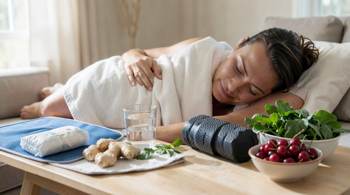
Massage, self-massage, and foam rolling are commonly used to address tenderness and restricted movement at home. The supplied research describes foam rolling as a method that may mitigate DOMS, increase flexibility, and improve perceived range of motion. Pressure should be moderate and controlled, particularly over highly sensitive areas. Rolling directly over a suspected tear, swollen joint, bruise, or region with numbness is inappropriate without professional guidance. 9
These techniques may make movement feel easier, but temporary relief should not be confused with tissue repair. A short session followed by gentle mobility is more consistent with recovery than forceful rolling intended to eliminate every tender sensation. Essential oils, peppermint oil, aloe vera, and arnica are mentioned among home remedies, yet topical products can cause irritation or allergic reactions and should not be applied to broken skin. 10
Supplements, baths, and realistic expectations
Magnesium is involved in muscle contraction and relaxation, and low intake can be relevant to cramping. Food is generally the first dietary route. The supplied research notes an adult tolerable upper limit of 350 milligrams per day for magnesium from supplements and medications, excluding magnesium naturally present in food. Supplement use can cause gastrointestinal effects and may be unsuitable with certain medical conditions or medicines, so persistent cramps warrant clinical advice rather than indefinite self-treatment. 11
Epsom salt baths may relax muscles through warm water and can provide a soothing routine, but claims that substantial magnesium reliably passes through skin are not established by the supplied evidence. Recovery is better viewed as multimodal: adequate sleep, hydration, gradual training progression, nutritious meals, and tolerable movement work together. A bath may improve comfort, but it does not replace rest or evaluation when symptoms are abnormal. 12
When home care is not appropriate
Routine DOMS should gradually improve rather than intensify. Medical assessment is appropriate for severe or persistent pain, marked swelling, weakness, numbness, fever, pain following a clear injury, or symptoms that do not follow the usual delayed pattern. Chest pain and difficulty breathing require urgent attention. Dark urine after strenuous exercise is also a warning sign that should not be managed solely with home remedies. 13
Prevention focuses on gradual progression rather than avoiding activity altogether. Warming up, introducing unfamiliar movements progressively, and allowing recovery time can reduce the likelihood of excessive soreness. Repeatedly training through sharp pain, using extreme heat or cold, or taking supplements without considering interactions creates avoidable risk. Natural approaches can support comfort, but symptom pattern, severity, and duration determine whether self-care remains reasonable. 14
Sources
- RitFit, “How to Get Rid of Muscle Soreness: Fast Relief Tips”
- Daily Glow Routine, “How to Reduce Body Soreness After Heavy Workouts”
- Shape, “Active Recovery Workouts”
- Woman’s World, “How To Relieve Sore Muscles in as Little as 5 Minutes”
- Cleveland Clinic, “Should You Ice or Heat an Injury?”
- PubMed Central, review of cold therapy and exercise recovery
- Mayo Clinic, “Hydration for Athletes”
- Journal of the International Society of Sports Nutrition, tart cherry juice and exercise-induced muscle damage
- Healthline, “Foam Rolling Benefits”
- Super Health Guide, “Natural Remedies for Sore Muscles”
- ScienceInsights, “Is There a Natural Muscle Relaxer? What Works”
- Medical News Today, “Epsom Salt Baths”
- FactxTop, “The Best Natural Muscle Relaxers and How to Use Them”
- Health Fitness Revolution, “Ease Muscle Soreness Naturally”
Authored by 24Trendz team