Portable Oxygen Concentrators: A Technical Overview of Mobile Medical Technology
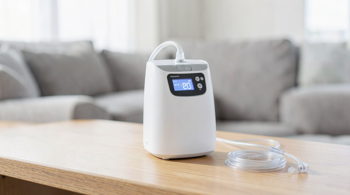
Portable oxygen concentrators (POCs) represent a significant evolution in supplemental oxygen therapy, shifting from the use of heavy, refillable tanks to compact, battery-powered medical devices 1, 2. These units are designed to assist individuals who require greater oxygen concentrations than ambient air can provide, effectively restoring independence by enabling an active, social lifestyle 1, 2. By extracting oxygen from the surrounding environment through pressure swing adsorption, these devices provide a continuous, reliable supply of medical-grade oxygen without the necessity of frequent tank refills 2, 11.
Mechanisms of Action and Oxygen Delivery
The operational core of a portable oxygen concentrator involves a miniaturized air compressor, a filtration system containing a molecular sieve, and a pressure-equalizing reservoir 2. The system utilizes zeolite, a microporous crystalline aluminosilicate, to adsorb nitrogen molecules from the air, thereby increasing the purity of the remaining oxygen before it is delivered to the user 2. Users must consult with a healthcare professional to determine the correct flow settings and delivery patterns tailored to their physiological needs 1, 12.
Oxygen delivery typically occurs through one of two modalities: pulse flow or continuous flow 1. Pulse dose delivery is the standard for most lightweight portable units, where oxygen is released upon inhalation 4. Conversely, some specialized units offer continuous flow, providing a steady stream of oxygen regardless of breathing patterns 2. It is essential for users to ensure that their chosen device conforms precisely to their prescribed therapy requirements, as pulse settings are not standardized in the same way as liters per minute (LPM) 2, 12.
Performance Metrics and Physical Specifications
When assessing portable oxygen concentrators, key metrics include device weight, battery endurance, and oxygen output capacity 2. Models currently available on the market vary significantly in size and capability, ranging from ultra-lightweight units around 2.8 to 3.3 pounds to more substantial continuous flow units that can weigh between 10 and 20 pounds 2, 9. Battery life is a major differentiator; some configurations allow for extended run times, with select models offering up to 13 hours of use depending on the battery type and flow setting used 4, 6.
| Metric | Typical Range/Expectation |
|---|---|
| Weight (Pulse Flow) | 2.8 lbs to 9.9 lbs |
| Weight (Continuous Flow) | 10 lbs to 20 lbs |
| Oxygen Purity | Approximately 90% to 95% |
| Pulse Flow Settings | Typically 1 to 6 or 1 to 10 settings |
Regulatory Oversight and Medical Compliance
Because portable oxygen concentrators are classified as prescription medical devices, federal law mandates that they be used under the direct guidance of a physician 5, 10. Furthermore, Medicare may provide coverage for oxygen equipment and supplies, provided the beneficiary meets specific medical necessity criteria and obtains the equipment through an authorized, enrolled supplier 1, 11. Patients are encouraged to verify their coverage status with their healthcare provider to ensure that the chosen equipment meets established clinical guidelines 11.
Logistics and Travel Considerations
The ability to travel remains a primary advantage of portable oxygen technology, though users must adhere to specific airline and Federal Aviation Administration (FAA) requirements 2, 11. Most modern POCs are FAA-approved for use on commercial aircraft, but passengers should always confirm the airline's specific policies before booking travel 2, 4. Users should prepare for travel by ensuring they carry sufficient battery power for the entire duration of the flight, including potential delays, and keeping their physician's prescription readily accessible 6, 11.
Maintenance and Long-Term Reliability
Proper maintenance is vital for ensuring the longevity and consistent performance of a portable oxygen concentrator 1. Many manufacturers design these devices with user-replaceable components, such as air intake filters and batteries, which allow for routine upkeep without requiring professional service 4, 9. Regular monitoring of oxygen purity and battery health is critical for safe operation 9. Furthermore, prospective users should review warranty terms and ongoing maintenance service support offered by the manufacturer or authorized distributor to protect their investment in long-term therapy 3, 8.
Comparison of Market Offerings
The marketplace for portable oxygen concentrators includes a wide range of manufacturers, each providing different features such as Bluetooth connectivity, mobile app integration for monitoring, and varying oxygen output levels 4, 9. While some units are marketed for their extreme portability, others emphasize a higher number of oxygen delivery settings for more precise dosing 7, 8. When comparing these options, it is important to prioritize clinical requirements and individual activity levels over aesthetic features or weight alone, as the most portable option may not always satisfy the necessary medical dosage 2.
Sources
- https://www.seniorliving.org/health/oxygen/
- https://en.wikipedia.org/wiki/Portable_oxygen_concentrator
- https://varoninc.com/products/varon-vp-8-lite-pulse-flow-portable-oxygen-concentrator-1-7-settings
- https://www.oxygenparts.com/product/oxygo-ng-generation-portable-oxygen-concentrator/
- https://vitalcareusa.com/products/arya-mini-portable-oxygen-concentrator
- https://vitalcareusa.com/products/arya-p5-portable-oxygen-concentrator
- https://puremedco.com/products/rove6/
- https://www.oxygenparts.com/product/oxygo-fit-plus-portable-oxygen-concentrator/
- https://dmesuperstore.com/products/oxygo-fit-compact-portable-oxygen-concentrator
- https://xploroxygen.com/product/x-plor/
- https://www.medicare.gov/coverage/oxygen-equipment
- https://www.fda.gov/consumers/consumer-updates/oxygen-concentrators-what-know
Authored by 24Trendz team