Comparing gastric bypass options in the United States: An analytical review of surgical pathways
When exploring surgical weight loss interventions, understanding the nuances between various gastric bypass techniques is essential for informed decision-making. In the United States, patients and clinical teams frequently evaluate the traditional Roux-en-Y gastric bypass (RYGB) against alternative models like the mini-gastric bypass, also known as the one-anastomosis gastric bypass (OAGB) 1, 8. This article provides an objective overview of the anatomical differences, expected outcomes, and necessary lifestyle considerations inherent to these procedures to assist in understanding the current landscape of bariatric surgery.
Anatomical Differences and Surgical Procedures
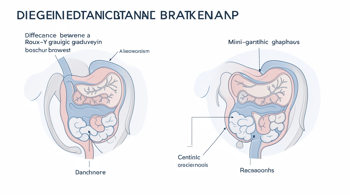
The Roux-en-Y gastric bypass remains a gold standard in bariatric medicine, involving the creation of a small stomach pouch followed by the rerouting of the digestive tract through two distinct intestinal connections, or anastomoses 1, 9. This complex configuration typically involves bypassing 100 to 150 cm of the small intestine, which serves to both restrict caloric intake and alter nutrient absorption 1. The surgical procedure generally requires an operating time of 1.5 to 3 hours 1.
Conversely, the mini-gastric bypass involves a single intestinal connection, which simplifies the geometry of the procedure 1. By bypassing approximately 200 cm of the small intestine, this approach often requires a shorter operating time, typically ranging from 1 to 1.5 hours 1. While the reduction in the number of anastomoses may lower the risk of leaks at connection points, the single-connection design introduces different long-term considerations, such as the potential for bile to reach the stomach pouch, necessitating careful clinical evaluation 1, 4.
Clinical Outcomes and Weight Loss Expectations
Both the Roux-en-Y and mini-gastric bypass procedures are recognized for their efficacy in promoting substantial weight reduction, with patients frequently achieving 70% to 80% excess body weight loss 1. Clinical data suggests that these interventions are highly effective for managing metabolic conditions, including Type 2 diabetes, often facilitating remission of the disease even before significant weight loss is fully realized 1, 7. Results can vary based on individual health history, baseline BMI, and adherence to post-operative protocols 4, 8.
When comparing long-term efficacy, studies indicate that while both procedures produce comparable results, factors such as pre-existing gastroesophageal reflux disease (GERD) often influence the selection of the surgical technique 2, 9. Patients with severe, pre-existing GERD are frequently directed toward the Roux-en-Y procedure, as it is associated with a lower incidence of post-operative reflux compared to other interventions 2, 9. Monitoring metabolic markers remains a central component of the post-operative care plan for all bypass patients 4.
Regulatory Oversight and Eligibility Criteria
In the United States, access to bariatric surgery is guided by established clinical criteria, often centered on Body Mass Index (BMI) and the presence of comorbid conditions 2, 7. Generally, insurance providers consider coverage for patients with a BMI of 40 or higher, or those with a BMI of 35 or higher who have obesity-related comorbidities such as hypertension, sleep apnea, or Type 2 diabetes 3. These benchmarks serve as a framework for determining medical necessity and ensuring patient safety during the pre-operative evaluation process 2, 7.
Beyond BMI, clinicians evaluate a patient's entire medical and surgical history to determine candidacy. This assessment includes reviewing prior abdominal surgeries, current medication regimens, and psychological readiness for the lifestyle changes required after surgery 4, 5. The goal of this evaluation is to align the chosen procedure with the patient’s specific health profile, recognizing that no single operation is universally appropriate for all individuals 4, 6.
Long-Term Nutritional and Lifestyle Maintenance
Success following a gastric bypass requires a permanent commitment to strict nutritional protocols, as the anatomical changes inherently limit the body's ability to absorb specific vitamins and minerals 3, 7. Patients are mandated to maintain lifelong supplementation, which typically includes iron, calcium, vitamin B12, and vitamin D, to prevent deficiency-related health issues 3, 4. Regular follow-up appointments with a bariatric care team are critical to monitoring nutrient levels and adjusting supplementation as necessary 4.
In addition to nutritional monitoring, patients must adapt to significant changes in eating patterns to manage post-surgical physical responses. One documented risk is dumping syndrome, a condition characterized by nausea, dizziness, or abdominal discomfort occurring when food passes too rapidly from the stomach into the small intestine 3, 4. Modifying the speed and composition of meals is a common strategy employed by patients to mitigate these effects and ensure long-term comfort and health 5, 10.
Market Context and Financial Considerations
The financial landscape for bariatric surgery in the United States is influenced by a range of factors, including hospital facility fees, surgeon experience, and geographic location 3. While cost is a factor for many individuals, the decision to undergo surgery is predominantly guided by clinical outcomes and the compatibility of the procedure with the patient's long-term health needs 6, 9. Costs for these procedures in the U.S. typically range from $15,000 to $35,000, though these figures represent broad averages rather than specific price points for individual clinics 3.
Patients are encouraged to discuss the full scope of costs and coverage with their insurance providers and surgical centers. Transparency in billing and an understanding of what is included in the global surgical fee-such as pre-operative testing, anesthesia, and follow-up care-are essential components of the financial planning process for bariatric patients 6. Ensuring that the clinical team is fully vetted and accredited is often regarded as a priority that outweighs minor fluctuations in market pricing 4.
Risks and Complications
All surgical interventions carry inherent risks, and gastric bypass is no exception. Beyond the specific risk of bile reflux associated with certain bypass techniques, patients face potential complications including surgical site infections, internal hernias, and the development of ulcers at the connection sites 1, 2. Laparoscopic approaches have significantly reduced the prevalence of many of these issues compared to traditional open surgeries, yet they remain a primary focus of pre-operative counseling 3, 5.
Long-term risks require active management by the patient and their healthcare providers. This includes staying vigilant for signs of malabsorption, monitoring for changes in digestive function, and maintaining consistent follow-up care for several years post-surgery 2, 4. By addressing these risks through consistent medical supervision and lifestyle discipline, patients can better navigate the transition toward their health goals while managing the realities of altered digestive anatomy 4, 10.
Sources
- ALO Bariatrics: Mini Gastric Bypass vs Gastric Bypass
- WeightFAQ: Bariatric Surgery Types Compared (2026)
- Midlands Clinic: Comparing Bariatric Surgeries in 2026
- Acibadem Health Point: Which Bariatric Surgery Fits Your Health Profile
- Houston Surgical Weight Loss: Sleeve Gastrectomy vs. Gastric Bypass
- BA Medical Center: Which Bariatric Surgery Is Right for You?
- IBI Healthcare Tampa: Gastric Bypass vs Sleeve
- Liv Hospital: Sleeve Gastrectomy vs Gastric Bypass
- Obesity Baja Point: Gastric Sleeve vs Gastric Bypass 2026 Comparison
- Slimthetics: What to choose between mini gastric bypass and gastric bypass
Authored by 24Trendz team