Train journeys across the New England coast: A comprehensive analysis of regional rail corridors
Overview of New England Coastal Rail Infrastructure
The New England coastline is characterized by a mix of rugged Atlantic inlets, historic maritime towns, and expansive salt marshes. Rail travel in this region serves both as a functional necessity for regional connectivity and a scenic methodology for experiencing the geography of the Northeast 1, 3. Unlike long-distance national train lines, the coastal rail network in New England is primarily composed of regional, state-funded, and excursion-based services that prioritize local access and seasonal tourism rather than cross-country transit 2.
Key segments of this network, such as the Amtrak Downeaster, operate with frequencies and stop patterns that mirror European regional rail models, effectively connecting residential centers in Massachusetts, New Hampshire, and Maine 1, 2. These lines allow for transit between major urban hubs and smaller coastal communities, often bypassing the traffic-heavy highway corridors that experience significant congestion during peak summer and foliage seasons 1, 8.
The Amtrak Downeaster Corridor
The Amtrak Downeaster covers a 145-mile span between Boston, Massachusetts, and Brunswick, Maine, traversing three states with multiple daily departures 1. This service is a primary component of northern New England's transit infrastructure, facilitating access to coastal destinations such as Saco, Portland, and Brunswick 1. The route provides amenities including complimentary Wi-Fi, bicycle storage, and pet-friendly policies, alongside Business Class offerings that include specific seating configurations and beverage services for passengers seeking additional space 1.
From a logistical perspective, the Downeaster is distinct because it operates as a high-frequency service within an corridor that connects transit-dependent hubs 2. Travelers utilize this line to avoid the unpredictability of regional road travel, particularly in the fall, when tourism demand increases traffic volume 1, 8. The service also acts as a primary link for those connecting to longer-distance transit in Boston, though users should be aware that transfers between hubs like North Station and South Station may require additional local transit planning 4.
Massachusetts Coastal Commuter and Regional Transit
In addition to intercity rail, the Massachusetts Bay Transportation Authority (MBTA) provides critical coastal access through the Commuter Rail network. The Newburyport/Rockport line is notable for its proximity to the North Shore coastline, offering stops in communities where rail access remains central to local identity 3. This line splits at Beverly, allowing travelers to choose between the Newburyport or Rockport branches, both of which provide access to seaside shopping, historical sites, and culinary locations 3.
Furthermore, the southern coastal region of Massachusetts is seeing active development through the South Coast Rail project, an expansion initiative intended to increase connectivity between Boston and the South Coast communities 7. These lines function as an alternative to automobile-based travel, specifically for regional commuting and weekend excursions, with infrastructure that continues to evolve to meet the demographic and tourism demands of the Commonwealth's coastline 3.
Specialized Excursion and Seasonal Rail Lines
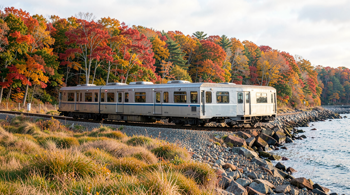
Beyond standard commuter and regional services, the New England coast hosts a variety of seasonal, tourist-oriented rail operations designed to showcase the region's geography. The Cape Cod Central Railroad, for instance, provides curated scenic tours through the marshes and dunes of the Cape Cod peninsula 5, 7. Similarly, the Essex Steam Train in Connecticut operates historical excursions that traverse the Connecticut River Valley and coastal marshland environments, emphasizing the region's maritime and industrial heritage 5.
These operations often package rail experiences with dining or themed cultural programming, such as sunset dinner trains or tours of regional landmarks 8. While these excursions are geographically localized, they form a significant part of the regional rail landscape by offering a perspective of the coastline that is not accessible via standard roadway or public transit infrastructure 7.
Operational and Market Considerations
Rail travel along the New England coast is subject to seasonal demand fluctuations and market-based pricing models. Pricing for tickets, particularly for Amtrak services, varies significantly by booking lead time, travel day, and peak periods such as holidays or autumn foliage season 4. Prospective travelers are advised that headline fares often represent base coach quotes rather than fixed rates for all travel dates 4. Furthermore, travel itineraries involving transfers between different systems, such as shifting between Northeast Regional and Downeaster lines, can require careful coordination of schedules to avoid extended wait times 4.
| Service Category | Primary Geography | Operational Focus |
|---|---|---|
| Amtrak Downeaster | Boston to Maine | Intercity/Regional Transit |
| MBTA Commuter Rail | North/South Shore MA | Commuter/Coastal Access |
| Cape Cod Central | Cape Cod, MA | Seasonal/Scenic Excursion |
| Essex Steam Train | Connecticut | Historical/River Valley |
Regulatory and Strategic Development
The expansion and maintenance of rail infrastructure along the New England coast are guided by multi-state planning efforts and federal oversight. The Acela line, operated by Amtrak, maintains high-speed connectivity along the Northeast Corridor, connecting Boston through Rhode Island and into Connecticut, which serves as the backbone for intercity coastal movement 7. Ongoing projects, such as the South Coast Rail expansion, highlight the continued emphasis on regional connectivity to address infrastructure limitations and support tourism-led economic growth in coastal communities 6, 7.
As these corridors develop, balancing historical preservation-such as the maintenance of aging stations and tracks-with modern transit requirements remains a key challenge for state departments of transportation. The integration of rail with local multimodal transport options, including bicycle accessibility and pedestrian-friendly station design, remains a core component of regional transit planning in New England 1, 3.
Sources
- AOL: 145-Mile Train Route Information
- TheTravel: Regional Rail Analysis
- MassByTrain: Coastal Commuter Rail Data
- Cultural Creatives: Regional Fare and Transit Logistics
- Visit New England: Tourist Rail Lines Overview
- News USA Today: Maine Rail and Coastal Growth
- Massachusetts Department of Transportation: South Coast Rail Project
- Travel + Leisure: Fall Foliage and Rail Excursion Planning
Authored by 24Trendz team