Top hospitals for cataract surgery by state in the United States: A comprehensive rankings review
Understanding where to access high-quality cataract surgery requires knowledge of how hospitals and ambulatory surgery centers rank by state, the credentials of surgical teams, and the standards that distinguish top-performing facilities from others. This article synthesizes publicly available ranking data from U.S. News & World Report, CMS Hospital Compare, and specialty ASC evaluations to map cataract surgery excellence across the United States.
National Leadership in Ophthalmology Rankings
Bascom Palmer Eye Institute in Miami, Florida has maintained the number-one ranking for ophthalmology hospitals according to U.S. News & World Report for 25 consecutive years since 1990 1. The institute, part of the University of Miami Health System and Miller School of Medicine, earned this distinction based on a survey of U.S. physicians and reputation metrics across specialized care delivery. Pradeep Y. Ramulu, MD, MHS, PhD, serves as director and chair of the University of Miami department of ophthalmology as of 2026 1. Wills Eye Hospital in Philadelphia maintained its second-place position nationally, while Wilmer Eye Institute in Baltimore ranked third 1. These institutions represent the apex of a tiered national system where specialty rankings correlate with multidisciplinary surgical capacity, patient volume, and peer recognition.
The U.S. News & World Report 2026-2027 Best Hospitals edition evaluated more than 4,500 hospitals across 14 specialties and introduced regional specialty rankings to help patients locate complex care closer to home 3. The evaluation framework emphasizes risk-adjusted patient outcome measures such as survival and complication rates, placing increased statistical weight on these clinical metrics 3. Five hundred five best regional hospitals across 49 states and Washington, D.C. demonstrated superior patient outcomes for a variety of common procedures and conditions 3.
State-by-State Ambulatory Surgery Center Excellence
Ambulatory surgery centers have become primary venues for cataract procedures nationwide. U.S. News evaluated 4,421 ASCs in 2026 across four specialty areas, with 911 centers (21 percent) earning a high-performing designation 11. The methodology uses three years of Medicare data to evaluate facilities on how successfully they avoided complications, emergency room visits, unplanned hospitalizations, and other undesirable outcomes 4. Procedures performed at ophthalmology-focused ASCs include cataract surgery, glaucoma surgery, corneal transplants, laser treatments for retinal disorders, and corrective laser eye surgery 4.
Geographic concentration of top-rated centers reflects infrastructure investment patterns and population density. California had the largest number of best ASC facilities with 105, followed by Florida with 81 and Texas with 59 13. Other states with large numbers of highly rated centers included Maryland (48), Pennsylvania (43), Georgia (40), and New Jersey (40) 13. The 10 states with the fewest high-performing ASCs include Vermont with zero, Maine with one, and West Virginia with one 14. This geographic variation reflects both patient population size and market development patterns in ophthalmology surgery services.
CMS Hospital Quality Metrics and Star Ratings
The Centers for Medicare and Medicaid Services rates hospitals on a 1-to-5-star scale, condensing dozens of quality measures into a single number visible to patients researching facility quality 7. Of the 5,426 Medicare-certified hospitals in the United States, only 2,866 (52.8 percent) carry enough data to receive a CMS star rating at all 7. The average star rating across all rated hospitals is 3.08 out of 5, with one-third of rated hospitals landing at exactly 3 stars 7. The 4-star tier holds 26.7 percent of hospitals, the 2-star group captures 22.6 percent, while only 10 percent of rated hospitals reach the 5-star distinction 7.
State-level hospital quality varies significantly. New Jersey leads with 51.5 percent of its hospitals earning an A grade, followed by Idaho (50 percent) and Utah (48.1 percent) 8. States at the lower end include Alabama (11.3 percent), New York (11.3 percent), Wyoming (11.1 percent), and North Dakota (0 percent receiving best hospital recognition) 8. California hosts 46 hospitals among the nation's best, Florida 30, and Texas 37, reflecting the absolute concentration of top-performing facilities in high-population states 8. Pennsylvania lists 24 best hospitals, Ohio 23, and Illinois 18, demonstrating strong Midwest and Northeast representation 8.
Regional Metropolitan Hospital Leadership
Metropolitan areas with five or more best regional hospitals show concentrated excellence in eye care infrastructure. New York hosted 28 best regional hospitals, with Mount Sinai Hospital, New York-Presbyterian Hospital at Columbia and Cornell, and NYU Langone Hospitals tied for top ranking within the metro area 6. Los Angeles had 25 best regional hospitals with Cedars-Sinai Medical Center and UCLA Ronald Reagan Medical Center tied for leadership 6. Chicago hosted 20 best regional hospitals with Northwestern Medicine-Northwestern Memorial Hospital and Rush University Medical Center tied for top position 6. Houston, Atlanta, and Dallas-Fort Worth each hosted 13-14 best regional hospitals, demonstrating substantial ophthalmology surgical capacity in major Texas metropolitan areas 6. Philadelphia, another major metro, also hosted 13 best regional hospitals 6.
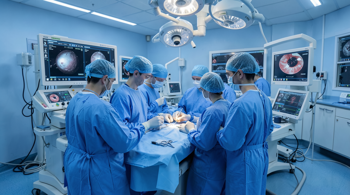
These regional concentrations indicate where patients seeking cataract surgery at nationally ranked facilities are most likely to find multiple high-performing options. The presence of multiple top-ranked facilities within a single metro area typically correlates with teaching hospitals, academic medical centers, and established referral networks. Patients in these metropolitan areas benefit from choice and competitive quality standards among providers.
Surgeon Density and Geographic Access Patterns
Ophthalmologist availability varies dramatically by state population density and economics. Massachusetts leads with 5.30 ophthalmologists per 100,000 residents, followed by Maryland at 5.22 per 100,000, Connecticut at 4.62 per 100,000, Hawaii at 4.24 per 100,000, and Utah at 4.23 per 100,000 18. In absolute numbers, California has 639 ophthalmologists in verified directories, far more than any other state 18. However, California's large population yields only 1.62 ophthalmologists per 100,000 residents, placing it near the bottom of state rankings per capita 18. Wyoming has only 0.34 ophthalmologists per 100,000 residents, representing a 15-fold spread between the highest and lowest states 18. This geographic disparity directly affects appointment wait times, travel distances, and access equity for cataract surgery patients.
Cataract Surgery Cost Variation and Facility Economics
The national median negotiated rate for cataract surgery (CPT 66984, extracapsular cataract removal with intraocular lens insertion) is $806, with rates ranging from $614 to $1,181 across 117,481 providers 9. Without insurance, cataract surgery costs range from $3,500 to $7,000 per eye, with a national average near $5,000 20. Site of service is the biggest cost driver: ambulatory surgery centers charge 30 to 50 percent less than hospital outpatient departments for identical procedures 20. Medicare pays $462.94 to the surgeon and $1,255.73 to an ASC facility, or approximately $2,370 to a hospital outpatient department for the same procedure 20.
State-level pricing shows Hawaii as the most expensive at $5,820 (16.4 percent above national average), followed by California at $5,665 and New York at $5,640 10. Alaska ranks eighth most expensive at $5,435, while several Midwestern and Southern states cost substantially less: Wisconsin at $4,990 (below national average), Michigan at $4,975, and Georgia at $4,900 10. Illinois averages $771 for cataract surgery, 13 percent below the national average of $888, with a median of $694 across 3,854 providers 23. Louisiana averages $730, 18 percent below national average, with negotiated rates between $226 and $1,345 24. Minnesota averages $800, 10 percent below national average, with median rates of $763 across 375 providers 25. Cost variation reflects regional labor expenses, facility competition, insurance market dynamics, and case complexity mix.
Key Considerations for Selecting Cataract Surgery Facilities
When evaluating hospitals and surgery centers for cataract procedures, patients should verify that surgeons hold active ophthalmology licensure and board certification from the American Board of Ophthalmology or equivalent credential bodies 11. Facility accreditation through AAAHC (American Association for Accreditation of Ambulatory Surgery Facilities) or JCAHO (Joint Commission on Accreditation of Healthcare Organizations) indicates compliance with standardized safety and quality protocols 11. Patient complication rates, surgical volumes, and peer-review honors serve as reliable indicators of outcomes quality, particularly where clinic-level data transparency is limited 11. Insurance coverage varies: Medicare and most private insurance cover standard cataract surgery with basic monofocal intraocular lenses when medically necessary, but premium lenses and laser-assisted techniques are typically out-of-pocket expenses 17.
Geographic variation in facility ratings, surgeon availability, and cost means that optimal cataract surgery selection requires local research paired with understanding one's own insurance coverage and medical complexity. Patients in metropolitan areas with multiple best-ranked hospitals can compare options locally. Rural patients may need to travel to regional centers. Understanding whether a facility is hospital-based or an ambulatory surgery center matters for both cost and convenience, as ASCs typically offer lower facility fees and faster same-day discharge. Verifying that any selected surgeon participates in one's insurance plan is essential, particularly for Medicaid patients seeking state-specific coverage confirmation.
Sources
- Healio - Bascom Palmer maintains top ophthalmology hospital ranking
- Ophthalmology Times - US News reveals top-ranked hospitals for eye care in 2026
- PR Newswire - U.S. News & World Report Announces 2026-2027 Best Hospitals
- Becker's ASC - The best ophthalmology ASCs: US News
- Healthcare Technology News - Forbes Names 259 Five-Star Hospitals in 2026 State Rankings
- Periop Leader Network - U.S. News & World Report releases 2026-2027 edition of Best Hospitals ratings and rankings
- OurHealthNetwork - Hospital Quality Rankings by State: CMS Star Ratings Analyzed
- World Population Review - Hospital Rankings by State 2026
- Momentary Lab - How Much Does a Cataract Surgery Cost? Self-Pay Rates (2026)
- Surgery Cost Guide - Most Expensive States for Cataract Surgery
- ASC News - America's Best Ambulatory Surgery Centers Revealed as Outpatient Care Surges
- Living in West Palm Beach - Relocating? Your Checklist for the Best Cataract Surgery Centers in Florida
- Becker's ASC - 10 states with the most, least high-performing ASCs: US News
- Becker's ASC - 10 states with the most, least high-performing ASCs: US News
- Morningstar - U.S. News & World Report Names 2026 Best Ambulatory Surgery Centers
- Kerbside Insights - Where U.S. Ophthalmologists Practice
- AllClinics - How Much Does Cataract Surgery Cost in the U.S.?
- Kerbside Insights - Where U.S. Ophthalmologists Practice
- CoveredUSA - How Much Does Cataract Surgery Cost in 2026?
- CoveredUSA - How Much Does Cataract Surgery Cost in 2026?
- Surgery Cost Guide - Most Expensive States for Cataract Surgery
- Becker's ASC - The best ophthalmology ASCs: US News
- Momentary Lab - Cataract Surgery Cost in Illinois: $418-$1,200 (Self-Pay)
- Momentary Lab - Cataract Surgery Cost in Louisiana: $226-$1,345 (Self-Pay)
- Momentary Lab - Cataract Surgery Cost in Minnesota: $90-$1,548 (Self-Pay)
Authored by 24Trendz team