Subtle warning signs of kidney disease often overlooked: A clinical guide to early clues
Subtle warning signs of kidney disease often overlooked may look like ordinary tiredness, stress, dehydration or aging. Persistent changes in urination, unexplained fatigue and swelling can nevertheless justify a medical evaluation, particularly because chronic kidney disease frequently develops gradually and many people do not know they have it. 1
Why early kidney disease is easy to miss
The kidneys remove waste and excess water from the bloodstream, regulate electrolytes and blood pressure, help produce red blood cells and activate vitamin D. When damage develops slowly, remaining healthy kidney tissue can compensate for reduced function, so waste may not accumulate enough to cause obvious discomfort. This compensation helps explain why early disease can remain unnoticed during normal daily activities. 1
Chronic kidney disease affects about one in seven American adults, according to the Mayo Clinic summary, and most affected people are unaware of it. Diabetes, high blood pressure, older age, family history of certain genetic conditions and some autoimmune diseases are among the factors associated with higher risk. Symptoms alone cannot establish a diagnosis because similar complaints have many possible causes. 1
Changes in urination that deserve attention
Urination changes are among the most commonly reported early clues. A person may need to urinate more often, particularly at night, or notice a change in the appearance of urine. Increased nighttime urination can occur when damaged filtering units lose some ability to concentrate urine, although it can also have other explanations. The important clinical feature is a persistent or progressive change rather than one isolated episode. 5
Persistent foam or bubbles in urine may indicate protein leakage, known as proteinuria or albuminuria, because proteins can stabilize bubbles. Foamy urine is not definitive evidence of kidney disease and should be assessed with urine testing rather than interpreted visually. Blood and urine tests can identify abnormalities before symptoms become pronounced, which is why routine evaluation is important for people with diabetes, hypertension or other risk factors. 6
Fatigue, weakness and concentration changes
Unexplained fatigue or weakness is easy to attribute to poor sleep, work pressure or a busy schedule. In kidney disease, declining function can allow waste products to accumulate, while reduced production of erythropoietin can contribute to anemia. Anemia associated with chronic kidney disease may produce persistent tiredness and reduced stamina, so fatigue that continues without a clear explanation should be considered alongside other symptoms and health history. 10
Changes in concentration are also described in accounts of early chronic kidney disease, but they are nonspecific and cannot distinguish kidney disease from sleep problems, medication effects or other medical conditions. A pattern of fatigue, reduced appetite, urine changes or swelling is more informative than fatigue alone. Clinical assessment generally relies on kidney function measurements and urine analysis, not symptom recognition by itself. 4
Swelling, skin symptoms and muscle cramps
Swelling, or edema, may appear in the feet, ankles, legs or around the eyes when the kidneys do not remove excess fluid effectively. Puffy eyes can be especially easy to dismiss as a consequence of sleep or allergies. Swelling does not automatically mean kidney disease, because heart, liver, venous and medication-related conditions can also cause it. Persistent, unexplained or worsening swelling warrants professional assessment. 3
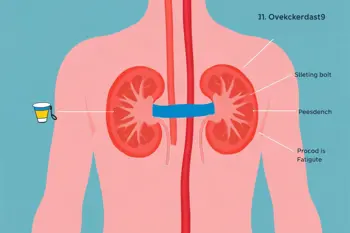
Persistent itching, dry skin and muscle cramps may occur when declining kidney function disrupts mineral and electrolyte balance. Elevated phosphorus and related mineral changes have been associated with itching, while electrolyte abnormalities can contribute to cramps, particularly in the legs. These complaints are common in many conditions, so they should be interpreted with laboratory findings and other symptoms rather than treated as specific proof of kidney damage. 11
Appetite changes, taste and breathing symptoms
Loss of appetite, nausea or an unpleasant metallic taste can develop when waste products such as urea build up in the bloodstream. These symptoms may be mistaken for digestive illness, infection or medication effects. A continuing reduction in appetite, especially when combined with fatigue, itching, nausea or urine changes, is more concerning than a short-lived appetite fluctuation. 12
Shortness of breath can occur in advanced kidney disease because fluid may accumulate in the lungs or because anemia reduces oxygen-carrying capacity. Breathlessness has many urgent and nonurgent causes, including heart and lung conditions, so it should not be attributed to the kidneys without evaluation. Breathing difficulty accompanied by severe swelling, chest symptoms or sudden deterioration requires urgent medical attention. 13
How kidney disease is checked and what to avoid
Some kidney conditions cause no symptoms at all, making testing central to detection. Evaluation commonly considers blood measures of filtration, urine findings such as protein, blood pressure and relevant medical history. Chronic kidney disease is categorized by estimated GFR, with the cited clinical overview describing stages from GFR of 90 or higher through kidney failure below 15. A single result may require clinical interpretation and follow-up. 9
Risk reduction focuses on managing conditions that damage blood vessels and filtering units, especially diabetes and high blood pressure. Reports also identify excessive salt, heavily processed foods and unprescribed painkiller use as concerns, particularly for people who already have diabetes or hypertension. Medication decisions should be reviewed with a qualified clinician because kidney function can affect drug safety. Symptoms should prompt evaluation, not self-diagnosis or unsupervised treatment. 8
When a symptom pattern should not be dismissed
No single subtle symptom confirms chronic kidney disease, and early disease may have no noticeable signs. Persistence, progression and combinations are the more meaningful warning pattern: repeated nighttime urination with foamy urine, fatigue with swelling, or appetite and taste changes accompanied by nausea. These patterns can reflect kidney disease, but testing is needed to separate it from infection, stones, medication effects and other disorders. 2
People with diabetes, high blood pressure, a family history of kidney conditions, autoimmune disease or prior kidney problems have established reasons to discuss monitoring with a healthcare professional. The broader evidence consistently emphasizes that routine blood and urine testing can reveal abnormalities before serious symptoms develop. Awareness is therefore most useful when it leads to measured evaluation rather than fear based on an isolated bodily change. 4
Sources
- Mayo Clinic, Chronic kidney disease: Symptoms and causes
- AdventHealth, What Are the Symptoms of Kidney Disease?
- Acibadem Hospitals Group, Symptoms and Signs of Kidney Problems
- The Times of India, Doctor reveals kidney disease symptoms that have nothing to do with your kidneys
- Business Standard, Early Symptoms of Kidney Problems
- Hindustan Times, Subtle signs of impaired kidneys
- American Kidney Fund, Chronic kidney disease
- The Times of India, Kidney damage and symptom awareness
- Northern Virginia Magazine, Chronic kidney disease often goes unnoticed
- Johns Hopkins Medicine, Chronic kidney disease and anemia
- WebMD, Understanding kidney disease symptoms
- Harvard Health Publishing, Kidney disease and appetite
- General clinical research summary, shortness of breath in chronic kidney disease
Authored by 24Trendz team