10-day vacation packages to Japan: An evidence-based comparison of routes, inclusions, and planning considerations
Published 10-day Japan itineraries commonly describe journeys with flights, hotels, Tokyo, Kyoto, Osaka, and Mount Fuji, closely matching the advertised format of a Japan tour with flights, hotels, and guided sightseeing. The available research shows that the same trip length can represent a guided group experience, a private itinerary, or an independently paced package, so headline duration alone does not establish what transportation, meals, transfers, or activities are included. 1
What a 10-day Japan package typically covers
The clearest flight-inclusive example describes roundtrip airfare from 11 United States departure cities, eight hotel nights, a Shinkansen journey, and three guided excursions covering Tokyo, Mount Fuji and Hakone, and the Kyoto, Nara, and Osaka area. Its lodging pattern is four nights in Tokyo, three in Kyoto, and one in Osaka. The published terms state that the room-based price assumes two travelers sharing and that solo occupancy carries an additional charge. 1
Other package structures use nine nights rather than eight. A private cultural itinerary lists Tokyo, Hakone, Kyoto, and Osaka over 10 days and includes experiences such as Imperial Palace visits, Lake Ashi views, Fushimi Inari, a tea ceremony, and a Hiroshima day trip. This format emphasizes private guiding and cultural depth rather than a standardized flight-and-hotel bundle, demonstrating why the number of nights and the number of touring days should be checked separately. 2
Route patterns and destination trade-offs
The most repeated first-visit route is Tokyo, Hakone or Mount Fuji, Kyoto, and Osaka. A classic itinerary published by iLink Tours expands that sequence to include Takayama and lists airport transfers, accommodations, and guided tours among its package information. Adding Takayama increases regional variety, but it also reduces unstructured time compared with a simpler Tokyo, Kyoto, and Osaka plan. 4
A different 10-day private route begins in Osaka, continues to Hiroshima, then travels to Kyoto and Tokyo, with Mount Fuji scheduled near the end. Its stated highlights include Itsukushima Shrine, Hiroshima Peace Memorial Park, Fushimi Inari, Nijo Castle, Senso-ji, Meiji Shrine, and Lake Kawaguchiko. This northbound sequence can suit travelers prioritizing Hiroshima, while a Tokyo-first sequence may simplify arrival logistics for packages whose international flights begin and end around the capital. 6
Transportation and pacing
The Tokyo to Kyoto corridor is particularly compatible with a 10-day schedule because the Tokaido Shinkansen connects Tokyo, Kyoto, and Osaka. Published package examples either include a guided bullet-train transfer or specify Shinkansen tickets between the three cities. Rail travel therefore appears frequently in conventional routes, while domestic flights are more relevant when an itinerary adds distant regions such as Hokkaido, Okinawa, or Hiroshima. 1 5
Rail pass eligibility and pricing depend on the pass category, so a nationwide pass should not be assumed to be automatically suitable for a short multi-city trip. The official Japan Rail Pass information identifies different pass types, prices, eligibility requirements, and purchasing guidance. Comparing the proposed rail segments with individual tickets is a practical screening step, particularly when a package already includes selected train reservations or transfers. 10
Published prices and occupancy terms
Available examples show substantial variation because they represent different service levels and inclusions. Japan’s Cultural Treasures is published from $3,934 for a 10-day, nine-night private tour. iLink Tours lists $2,115 based on quad occupancy, $2,820 for triple occupancy, and $4,230 for double occupancy. These figures are not directly interchangeable because the itineraries, room assumptions, guiding arrangements, and included services differ. 2 4
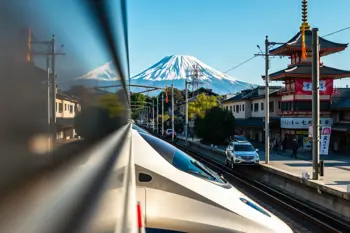
A TourRadar listing presents a 10-day partially guided small-group itinerary from Tokyo to Kyoto at US $1,824 per person based on the cheapest room category. The listing identifies English-language guiding, group travel, light physical activity, and accommodation categories ranging from three-star to five-star examples. Such descriptions indicate that the lowest displayed room basis may not reflect private occupancy, upgraded lodging, checked baggage, meals, or optional excursions. 5
Guided, private, and self-guided formats
Guided packages generally trade flexibility for consolidated logistics. The flight-inclusive example supplies scheduled tours in Tokyo, Mount Fuji and Hakone, and the Kyoto, Nara, and Osaka region, while the small-group listing combines selected guided activities with independent travel. These formats can reduce the need to coordinate city transfers, but the fixed itinerary may leave limited room for weather changes, extended museum visits, or spontaneous regional travel. 1 5
Self-guided products place more responsibility on the traveler but can preserve control over daily timing. Japan Experience lists a 10-day Tokyo, Mount Fuji, and Kyoto self-guided tour from 1,167 euros per person based on double occupancy, while Expedia describes build-your-own flight-and-hotel travel with a large hotel inventory. The comparison should focus on whether rail tickets, breakfast, airport transfers, attraction reservations, and local support are explicitly included. 8 3
Entry preparation and practical risks
U.S. passport holders generally use Japan’s short-term tourism framework for stays of up to 90 days when they meet the applicable entry requirements, but eligibility should be confirmed through the U.S. Department of State and Japan’s Ministry of Foreign Affairs because nationality, passport status, and travel purpose can affect admission. Visit Japan Web is the government digital service for completing immigration, customs, and tax-free shopping procedures before arrival. 11 12 13
Package descriptions also reveal recurring exclusions and friction points. The flight-and-hotel example excludes checked baggage fees, optional tours, meals unless specified, and airport transfers, while the independent rail example includes daily breakfast but leaves excursions optional. Travelers should also examine occupancy rules, hotel locations, cancellation conditions, connection times, guide language, mobility demands, and whether Mount Fuji views or outdoor activities can change with weather. 1 7
How to compare a 10-day itinerary objectively
A meaningful comparison begins with a day-by-day accounting of nights, cities, transfers, and free periods. The Japan National Tourism Organization provides destination, transportation, seasonal, and itinerary-planning information, while operators such as Trafalgar, Intrepid Travel, and G Adventures illustrate how organized programs combine hotels, sightseeing, and multi-city movement. Those references help distinguish a genuinely guided itinerary from a package that mainly bundles accommodation and transport. 14 15 16
The central limitation is compression: ten days can cover three or four major destinations, but adding Takayama, Hiroshima, extensive Mount Fuji touring, or distant islands leaves less flexibility. A useful evaluation therefore records what is guaranteed, what is optional, and what remains self-arranged. Private programs may provide more tailored pacing, whereas group and self-guided formats can differ substantially in room category, meal coverage, transfers, and responsibility for reservations. 2 8
Sources
- Groupon, TripToGo 10-Day Japan Tour
- Tours to Asia, Japan’s Cultural Treasures
- Expedia, Japan Vacations and Trips
- iLink Tours, 10 Day Classic Japan Tour
- TourRadar, 10 Day Highlights of Japan
- Royal Airtrip, Highlights of Japan
- DealNews, Japan Flight, Hotel, and Rail Vacation
- Japan Experience, 10-Day Tours
- Exoticca, Japan Vacation Packages
- Japan Rail Pass, Official Pricing and Eligibility
- U.S. Department of State, Japan Travel Information
- Ministry of Foreign Affairs of Japan, Visa Information
- Visit Japan Web, Digital Agency of Japan
- Japan National Tourism Organization
- Trafalgar, Japan Tours
- Intrepid Travel and G Adventures, Japan Tours
Authored by 24Trendz team