Effective ways to manage acne naturally: A comprehensive guide to evidence-based skincare practices
Managing acne necessitates a multifaceted approach that addresses the biological drivers of breakouts: excess sebum production, follicular hyperkeratinization, bacterial activity, and inflammation 1. While public interest in natural solutions is rising, clinical evidence indicates that the most effective strategies rely on supporting the skin barrier rather than relying on unverified home remedies 2. Effective acne management is built upon the pillars of consistent, gentle care, which aims to modulate oil production and minimize irritation rather than aggressively stripping the skin 6.
The Core Framework of Natural Skincare Routines
The clinical standard for managing acne-prone skin involves a structured, three-pillar framework: cleansing, moisturizing, and photoprotection 7. Most skincare failures occur when individuals focus on single products or "miracle" treatments instead of establishing a consistent ritual 9. Gentle twice-daily cleansing with lukewarm water is essential to remove excess sebum and pollutants without compromising the skin barrier 5. Harsh scrubbing or abrasive exfoliants can trigger further inflammation and worsen the appearance of acne by damaging the protective outer layer of the skin 5.
Hydration remains a non-negotiable step in an acne-safe routine. Skipping moisturizer can lead the skin to overproduce oil as a compensatory mechanism, potentially worsening the cycle of clogged pores 7. Individuals should prioritize non-comedogenic, fragrance-free lotions or gels that hydrate without increasing shine or blocking hair follicles 5. Furthermore, clinical guidelines emphasize the avoidance of comedogenic or oil-based products, which can exacerbate follicular congestion 14. Maintaining this baseline routine provides the necessary support for the skin to heal naturally over time 5.
Evaluating Botanical Actives and Their Mechanisms
Natural bioactives, including tea tree oil, aloe vera, and green tea extract, have garnered attention for their role in managing acne-related inflammation and bacterial load 1. Tea tree oil is frequently cited for its antimicrobial properties against Cutibacterium acnes, though it must be used with caution to avoid allergic contact dermatitis or irritation 4, 11. It is imperative that such ingredients are never applied undiluted or ingested, as they carry risks of systemic toxicity and skin sensitivity 11. Other compounds, such as thymoquinone found in black seed, have shown potential in inhibiting inflammatory pathways such as NF-κB 4.
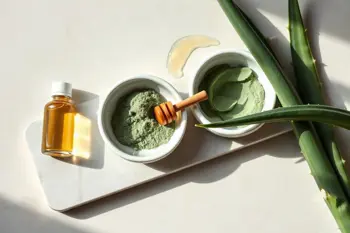
Additional botanicals often incorporated into DIY formulations include cucumber, lavender essential oil, and honey, which contain various phytoconstituents known for soothing properties 1. Green clay is another common natural element that aids in sebum absorption, potentially reducing the oily shine that contributes to pore blockage 6. While these ingredients show promise in laboratory studies, the overall effectiveness of herbal medicine for acne remains limited by insufficient clinical data and the need for standardized quality control in non-pharmaceutical products 19.
The Intersection of Diet and Acne Severity
Dietary composition is a significant area of research regarding the modulation of acne vulgaris symptoms 3. Some studies suggest that high-glycemic-load diets may be associated with increased acne severity, likely through hormonal or inflammatory cascades that stimulate oil glands 13, 17. Conversely, there is no universal consensus that specific food groups, such as dairy, must be strictly eliminated by all individuals, as evidence often stems from observational data rather than definitive trials 10. While a lower-glycemic dietary pattern may improve skin health for some patients, such changes should be considered as a supportive measure rather than a primary replacement for dermatological care 2, 10.
| Dietary/Lifestyle Factor | Clinical Perspective |
|---|---|
| High-Glycemic Diet | Associated with increased inflammatory responses in some cohorts. |
| Dairy Intake | Observational studies show links, but evidence is not definitive for all cases. |
| Stress/Sleep Management | Supportive habits that contribute to overall skin homeostasis. |
| Supplementation | Zinc and probiotics show potential in specific, qualified deficiencies. |
Management of Lesions and Prevention of Scarring
A critical aspect of natural acne management is the prevention of mechanical trauma to the skin. Squeezing, picking, or otherwise manipulating lesions increases inflammation and significantly elevates the risk of permanent scarring and post-inflammatory hyperpigmentation 10, 12. Clinical experts emphasize that the skin is a self-regulating system, and manual intervention disrupts the natural wound-healing processes 2. Avoiding these behaviors is as important as the topical products used in a routine, as it limits the duration and severity of individual breakouts 10.
When to Seek Professional Medical Care
Natural habits are best utilized to support the skin and manage mild cases, but they do not replace medical evaluation for moderate or severe conditions 2. Clinical intervention is required when acne is widespread, painful, cystic, or resistant to consistent, gentle care 11. Delaying professional care for severe acne increases the likelihood of long-term scarring and emotional distress, both of which are documented impacts of the condition 11, 14. A board-certified medical provider can determine if an individual's acne requires systemic treatments or prescription-grade topicals that a botanical-only approach cannot provide 2.
Safety Considerations for Natural Remedies
Consumers should approach "natural" supplements and herbal products with a degree of critical skepticism. Unlike regulated medications, these products may lack rigorous testing for purity, potency, and safety, potentially leading to adverse drug interactions or unintended reactions 10. Always patch-test new topical applications on a small, inconspicuous area of the skin to observe for sensitization before full-face use 5. Relying exclusively on unregulated home remedies without an understanding of the underlying causes of acne can lead to prolonged skin inflammation and frustration 11.
Sources
- Bentham Science Publishers: Natural Bioactives and Nano-formulations for Acne
- Perfect B: How to Reduce Acne Naturally
- MDPI: The Impact of Diet Composition on the Reduction of Acne Vulgaris
- Biochron: Natural Remedies for Acne and Sebum Control
- Medical Daily: Best Ways to Get Rid of Acne Naturally
- Organic and Herbal Solutions: Science-Backed Home Remedies
- Natural Beauty Regimen: Skincare Routine for Acne-Prone Skin
- Utama Spice: Natural Acne Treatment Guidance
- WorldHealth.net: Benefits of Structured Skincare Routines
- American Academy of Dermatology: Acne Self-Care Recommendations
- NHS: Acne Management and Medical Advice
- Mayo Clinic: Acne Treatment and Prevention
- NCBI Bookshelf: Dietary Interventions in Acne
- National Institute for Health and Care Excellence: Acne Vulgaris Management
- National Center for Complementary and Integrative Health: Tea Tree Oil
- Harvard Health Publishing: Does Diet Matter in Acne
- DermNet: Acne Triggers and Management
- Cochrane Library: Evidence for Complementary Acne Medicines
- Cleveland Clinic: Acne Treatment Overview
Authored by 24Trendz team