Understanding recovery planning after joint surgery: A clinical perspective on postoperative rehabilitation
The Clinical Framework of Joint Replacement Recovery
Joint replacement recovery is defined as the medically supervised process beginning immediately upon the conclusion of surgery and extending through to functional restoration or maximum medical improvement 1. The American Academy of Orthopaedic Surgeons (AAOS) classifies this period as a structured clinical phase rather than a passive duration of healing 1. This phase encompasses acute inpatient management, transition to rehabilitation units or home-based environments, and the implementation of specific outpatient physical therapy protocols 1. Recovery timelines are not monolithic; they are heavily influenced by the specific joint involved, such as the knee or hip, as well as the patient's baseline health and surgical approach 1, 4.
Institutional frameworks in the United States, such as the Comprehensive Care for Joint Replacement (CJR) model managed by the Centers for Medicare and Medicaid Services (CMS), highlight the clinical significance of this phase 1. Given that total knee and hip replacements account for over 1 million procedures annually, the standardization of recovery protocols has become a primary focus for managing episode-of-care costs and patient outcomes 1. Patients are encouraged to shift from viewing recovery as a static timeline to engaging with evidence-based management strategies that prioritize early mobilization and individualized care plans 4.
Immediate Post-Surgical Phase and Hospital Protocols
The transition from the operating room to the recovery room marks the start of the physiological healing response, where surgical trauma triggers a complex biological cascade 2, 4. After initial anesthesia recovery, medical staff prioritize hemodynamic stability before moving the patient to a standard hospital floor 2. Pain management during this period involves the administration of analgesics and the application of localized cryotherapy to manage post-surgical swelling 2. Despite residual fatigue and discomfort, clinical staff typically encourage early mobilization, sometimes within a few hours of the procedure, to stimulate circulation and prevent complications 2.
Physical therapy serves as a core component of the inpatient experience, as therapists educate patients on the safe use of assistive devices like walkers or crutches 2. Modern surgical advancements have dramatically compressed the hospital stay, with many patients transitioning to home-based recovery within 24 hours of the operation 8. The primary goal during this initial window is to ensure the patient is stable, safe for discharge, and possesses the requisite mobility to perform basic daily activities, including supervised stair-climbing if necessary 7.
Evidence-Based Rehabilitation and the 5E Protocol
Recent research highlights the efficacy of structured management frameworks, such as the 5E protocol, which integrates Education, Exercise, Eat (nutrition), Emotion (psychological support), and Ease (multimodal pain management) 5. Clinical trials demonstrate that this multidimensional approach often yields superior functional recovery compared to conventional care models by addressing modifiable factors like nutritional status and psychological stress 5. Individualized plans allow for more granular control over rehabilitation milestones, ensuring that patients receive targeted interventions based on their specific health profiles 4, 5.
Rehabilitation, specifically for hip and knee arthroplasty, requires consistent, supervised effort to restore range of motion, balance, and muscular strength 6. Exercises are phased to prevent joint atrophy while gradually increasing weight-bearing capacity 9. For example, typical hip rehabilitation may progress from initial bed-side isometric exercises to full ambulation over an eight-day window, followed by specialized stair-climbing training around the eleventh day post-procedure 9. Success hinges on the patient's adherence to these guided protocols at home, where rest must be carefully balanced with prescribed activity to avoid overexertion 7.
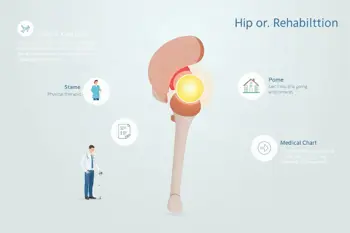
Logistical Planning and Home Environment Preparation
Successful recovery is fundamentally supported by pre-surgical preparation, which includes organizing home support systems and addressing potential environmental hazards 8, 9. Patients are advised to remove trip hazards, ensure frequently used items are accessible at waist height, and arrange for necessary mobility equipment well before the procedure date 8. For individuals living alone, it is essential to arrange for assistance with meals, hygiene, and transportation during the initial weeks of recovery 8.
Coordination with healthcare teams-including occupational therapists-can help identify specific home modifications needed for a safe transition 8. Furthermore, patients with chronic conditions such as diabetes or hypertension must ensure these comorbidities are optimized under physician supervision before surgery to reduce the risk of systemic complications 8. Proactive planning regarding social support and home logistics directly correlates with the ability to transition smoothly from professional hospital care to independent self-management 8.
Monitoring for Complications and Clinical Thresholds
Post-discharge monitoring is a critical responsibility for both the patient and the caregiving team. Early signs of potential infection, which necessitate immediate communication with the surgical team, include persistent fever, increased redness, abnormal warmth, wound drainage, or the reopening of the incision 10. While minor soreness is expected, worsening or unexplained pain levels should also be reported to ensure the surgical site is healing according to expected clinical trajectories 10.
Patients must also remain vigilant for indicators of serious complications such as deep vein thrombosis or pulmonary embolism. Warning signs-including sudden shortness of breath, chest pain, coughing blood, or new, severe swelling in the calf or leg-require immediate emergency medical intervention 10. Preventive measures for these vascular issues, such as the use of prescribed anticoagulants and early mobilization, are standard parts of the post-surgical care plan and must be followed with strict adherence to prevent acute health crises 10.
Long-Term Follow-Up and Functional Restoration
Post-surgical follow-up appointments function as essential check-points to evaluate incision integrity, range of motion, and the progression of functional independence 10. During these visits, surgeons and therapists assess the efficacy of the current medication regimen and the patient's progress through their physical therapy curriculum 10. These sessions provide an opportunity to adjust the rehabilitation plan based on the patient's unique recovery rate and to address any barriers to reaching daily activity goals 4.
Patients often transition from intensive clinical supervision to independent exercise regimens as they recover. The overarching objective of this entire clinical journey is to return the patient to a pain-free, functional lifestyle 3. By adhering to the multidisciplinary guidance provided by orthopedic surgeons, physical therapists, and nursing staff, patients can manage the complexities of joint replacement recovery in a predictable, safe, and effective manner 3, 4.
Sources
- Orthopedics Authority - Recovering From Joint Replacement Surgery
- AskMD - What to expect after joint replacement surgery
- The Dudley Group NHS Foundation Trust - Total knee replacement
- Acibadem International - What Recovery Really Feels Like After Joint Replacement Using Evidence Based Medicine
- Journal of Orthopaedic Surgery and Research - 5E management protocol for enhanced recovery after total knee arthroplasty
- Yale Medicine - How Exercises After Hip Replacement Surgery Can Speed Your Recovery
- Hull University Teaching Hospitals NHS Trust - Arthroplasty Patient Initiated Follow Up
- Mayo Clinic News Network - Questions to ask before joint replacement surgery
- Merck Manual Professional Edition - Hip Surgery Rehabilitation
- General Clinical Research Guidance - Post-surgical Monitoring and Complication Mitigation
Authored by 24Trendz team