Natural treatments for sore feet and heels: Analytical review of holistic and traditional management approaches
Persistent foot and heel discomfort is a widespread issue often linked to mechanical stress, environmental factors, and underlying structural imbalances 1. While conventional medicine frequently emphasizes rest, orthotics, and clinical intervention, there is a growing body of research exploring natural and holistic methodologies for managing these conditions 2, 4. Understanding these diverse approaches requires a clear distinction between superficial skin issues, such as fissures, and deep-tissue concerns, like plantar fasciitis 1, 6.
Holistic TCM Perspectives on Heel Pain
Traditional Chinese Medicine (TCM) approaches heel discomfort not as a singular ailment, but as a potential sign of deeper physiological imbalances 6, 7. Practitioners often categorize these pains based on the nature of the sensation, such as dull aches versus sharp stabs, which may suggest either a need for increased nourishment or the clearance of stagnant energy and blood 6. Acupuncture, cupping, and Tui Na massage are frequently utilized to address these systemic issues, with the goal of restoring circulation and strengthening the body's natural capacity to recover from localized inflammation 2, 4.
Clinical observations suggest that many individuals experience symptomatic improvement within 6 to 12 weeks when utilizing targeted acupuncture and specialized herbal formulations 6. By focusing on acupoints such as Kidney 1 (Yong Quan) and Kidney 3 (Tai Xi), practitioners aim to reduce inflammation and stabilize the foot's structural integrity 8. This approach emphasizes the root cause of discomfort rather than merely masking the symptoms, often incorporating lifestyle assessments to address external triggers like repetitive strain or poor footwear habits 2, 4.
Ayurvedic and Unani Remedial Modalities
Ayurvedic medicine identifies heel pain, particularly plantar fasciitis, as a condition often involving stiffness and localized inflammation 3. Recent pilot studies have evaluated the efficacy of Iṣḍikā Sveda, a therapy involving the application of heated materials, combined with decoctions such as Chincha Kwātha (tamarind decoction) 3. In a study of ten patients, this 15-minute daily application resulted in a significant reduction in pain scores-shifting from a mean of 8.7 to 2.6 on the Visual Analogue Scale (VAS)-and notable improvements in overall foot function index scores without reported adverse effects 3.
Similarly, the Unani system utilizes Dīmād therapy, which involves the local application of herbal pastes and heat to the affected heel area 9. This method aims to restore humoral balance and eliminate morbid materials that contribute to structural discomfort, such as calcaneal spurs 9. Both Ayurvedic and Unani traditions highlight the value of non-invasive, thermal-based applications as affordable, safe alternatives to more aggressive interventions, provided that the treatments are conducted under informed guidance or within a structured clinical framework 3, 9.
Botanical Approaches to Skin Integrity
Heel fissures, or cracked heels, represent a common dermatological concern often exacerbated by age-related loss of skin thickness, reduced oil production, and excessive physical pressure 1. Research into polyherbal formulations has demonstrated that natural ingredients like black turmeric, aloe vera, and cocoa butter can serve as effective alternatives to conventional chemical creams 5. These ingredients are prized for their antioxidant, antimicrobial, and emollient properties, which help repair damaged tissue and enhance skin regeneration while maintaining an optimal skin pH of approximately 6.5 5.
Modern pharmaceutical research has also begun exploring advanced delivery systems, such as niosomal gels, to improve the penetration of botanical extracts like pomegranate peel 10. By utilizing non-ionic surfactants to create nanocarriers, these gels offer a more controlled release of active ingredients compared to traditional topical applications 10. These developments aim to create a more efficient, long-term barrier against infection for compromised skin, emphasizing that proper moisturizing and hygiene are essential components of foot health 1, 10.
Mechanical and Cryotherapy Techniques
Standard home-based physical therapy often includes cryotherapy to manage inflammation, such as rolling the arch of the foot over a frozen water bottle for 10 to 15 minutes 11. This provides a combination of massage and cold therapy that can target acute pain 11, 12. Additionally, simple manual stretches focusing on the Achilles tendon and plantar fascia-such as towel curls-are recommended to build strength in the foot's intrinsic muscles and reduce the mechanical tension that often leads to chronic heel soreness 11, 13, 17.
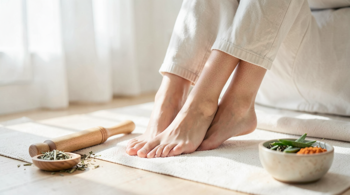
Pressure points can also be addressed at home using tools like massage balls or wooden sticks, which help break up muscle tension and improve blood flow throughout the sole 8. When performing these self-massage techniques, it is common to apply steady pressure for 10 to 30 seconds, followed by gentle circular motions to stimulate the surrounding tissue 8. These techniques, combined with consistent daily stretching, form a foundation for managing recurring discomfort without the need for constant reliance on external aids 8, 16.
Supportive Measures and Lifestyle Considerations
Beyond direct treatment, environmental and mechanical factors play a critical role in the maintenance of foot health 11, 15. The use of orthotic inserts or shoe cushions is frequently suggested to redistribute pressure away from the heel and arch, particularly for individuals who spend long hours standing 11, 15. Maintaining a healthy body weight is also a frequently cited factor, as it significantly reduces the cumulative mechanical stress placed on the feet during daily activities 11, 19.
For those experiencing tightness overnight, night splints may be recommended by professionals to keep the plantar fascia in a gentle, flexed position while sleeping, preventing the common "first-step" pain experienced upon waking 11, 14. Regular Epsom salt foot baths, rich in magnesium sulfate, are also utilized as a traditional method to reduce inflammation and provide a soothing environment for sore muscles, helping to alleviate the general fatigue associated with daily activity 11, 12.
Clinical Limitations and Safety Precautions
While natural treatments offer various paths toward relief, they are not a substitute for professional diagnostic evaluation, especially when pain is sharp, persistent, or accompanied by numbness 6, 7. Many practitioners emphasize that self-care should be viewed as a complementary approach rather than a replacement for medical diagnosis 6, 7. Certain systemic conditions, such as diabetes, require strict monitoring of foot health to avoid infections or complications that natural remedies alone may not adequately address 1.
Moreover, the effectiveness of any herbal or physical intervention can vary based on individual constitution, the severity of the condition, and the presence of any underlying comorbidities 2, 6. Consumers are encouraged to consult with qualified healthcare providers when considering new topical agents, supplements, or physical therapy regimens to ensure that the chosen strategies are appropriate for their specific needs and to avoid any adverse interactions with existing treatments 6, 7.
Sources
- Cleveland Clinic: How To Heal Your Cracked Heels
- AIMIN: TCM for Heel Pain & Calcaneal Spurs
- IJACARE: Management of Vātakaṇḍaka (Plantar Fasciitis)
- AIMIN: Tui Na for Plantar Fasciitis
- Journal of Pharmacognosy and Phytochemistry: Polyherbal cream for heel fissures
- Me&Qi: Plantar Fasciitis in Traditional Chinese Medicine
- Me&Qi: Foot Pain in Traditional Chinese Medicine
- Acupressure for Feet: Relieve Heel Pain With Acupressure
- Journal of Drug Delivery and Therapeutics: Calcaneal Spur and Unani Medication
- IJPS Journal: Niosomal Foot Crack Gel
- LLM General Health Information Synthesis
- Healthline: Epsom salt foot bath
- Mayo Clinic: Plantar fasciitis diagnosis and treatment
- AAOS: Plantar Fasciitis and Bone Spurs
- Podiatry Today: Choosing the right shoes
- Verywell Health: Plantar fasciitis exercises
- Harvard Health Publishing: Easy foot exercises
- Medical News Today: Natural remedies for sore feet
- Johns Hopkins Medicine: Plantar fasciitis factors
Authored by 24Trendz team