Natural options for knee comfort: Evidence, safety, and practical choices
Natural options for knee comfort can include exercise, dietary changes, botanical preparations, topical approaches, and complementary therapies. Evidence is strongest for structured movement and self-management, while supplements and plant extracts remain possible adjuncts with important limitations in trial quality, product consistency, and safety.
How the evidence should be interpreted
Knee osteoarthritis is a chronic musculoskeletal condition involving inflammation and structural damage to the joint. A 2026 review reports that commonly used supplements include glucosamine, chondroitin, turmeric, ginger, omega-3 fatty acids, vitamins, and herbal formulations, but concludes that these options are only conditionally recommended because randomized controlled trials and conclusive evidence remain limited. 1
A separate scoping review examined randomized controlled trials of non-pharmacological complementary and alternative therapies published from 2016 through January 2026. It describes evidence spread across diverse interventions, settings, comparators, and outcome measures, making direct comparisons difficult. This means a reported improvement in pain or function from one study should not automatically be generalized to every product, preparation, or person with knee symptoms. 2
Movement, strengthening, and load management
Low-impact activity is a central natural strategy because it can support the muscles surrounding the knee while limiting repeated high-impact loading. Swimming, cycling, and walking on level surfaces are identified as lower-impact choices, while physical therapy exercises can target range of motion, muscle strength, and joint stability. Exercise selection generally needs to reflect symptoms, mobility, balance, and the underlying cause of pain rather than relying on a single routine. 3
A 2026 systematic review and Bayesian network meta-analysis assessed 20 randomized controlled trials involving 1,457 middle-aged and older adults with knee osteoarthritis. The interventions included Tai Chi, Baduanjin, Wuqinxi, and Yijinjing, with outcomes such as WOMAC scores, pain ratings, quality of life, and the six-minute walk test. These findings support traditional exercise as a studied rehabilitation category, although rankings from a network analysis do not establish that one practice is universally suitable. 6
Weight, food, and nutritional supplements
Weight management is frequently included in conservative knee-care plans because body weight affects the mechanical demand placed on the joint during walking. The Arthritis Foundation describes a commonly cited estimate that each pound of weight lost reduces knee loading by four pounds during walking. The practical implication is that gradual, sustainable changes may matter, but weight goals should be individualized and should not be treated as a measure of personal responsibility for every episode of knee pain. 7
Nutrition research includes omega-3 fatty acids, turmeric-derived curcumin, ginger, and collagen peptides. A 2025 randomized, double-blind, placebo-controlled trial enrolled 80 adults aged 40 to 75 with Kellgren-Lawrence grade I or II knee osteoarthritis to study low-molecular-weight collagen peptides. The trial reflects growing interest in nutritional interventions, but the accompanying evidence summary states that clinical evidence remains insufficient for firm conclusions about long-term effectiveness. 5
| Option | Evidence context | Important qualification |
|---|---|---|
| Curcumin or turmeric | Botanical trials and reviews report possible pain or function benefits | Preparation, dose, absorption, and interactions vary |
| Ginger extract | Clinical research indicates moderate analgesic effects | Results do not establish benefit for every formulation |
| Omega-3 fatty acids | May influence stiffness or inflammatory pathways | Evidence is conditional rather than conclusive |
| Collagen peptides | Studied in a controlled trial involving 80 adults | Evidence remains limited, especially for long-term outcomes |
Botanical and topical approaches
A 2025 network meta-analysis evaluated botanical and medicinal plant extracts for knee osteoarthritis using randomized controlled trials. The review considered outcomes including WOMAC, visual analogue pain scores, quality of life, and knee-specific function. It describes potential activity from plant compounds, but clinical results remain dependent on the specific extract, comparator, study design, and outcome measure. “Natural” therefore describes origin, not proof of effectiveness or absence of adverse effects. 3
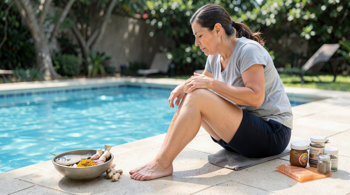
Topical curcumin has more recent direct evidence. In a randomized, double-blind, placebo-controlled study, 60 adults aged 45 to 75 applied either a curcumin gel or placebo every second day for 28 days. Researchers assessed KOOS results, daily pain ratings, performance tests, and rescue oral medication use. The trial found an association between the topical formulation and outcomes compared with placebo, but its short duration and small sample mean that durability and broader applicability remain uncertain. 4
Ginger extract has been studied for moderate relief of osteoarthritis knee pain, while capsaicin cream acts as a topical analgesic by affecting substance P, a neurotransmitter involved in pain signaling. These approaches may cause local irritation, and topical products should be kept away from eyes, broken skin, and sensitive areas. Oral botanical products can also interact with medicines, so product labels and medical histories matter. 8
Acupuncture, heat, cold, and daily routines
Acupuncture is described in the supplied research as an evidence-based non-pharmacological option for chronic knee pain. Its effects may differ according to treatment protocol, practitioner experience, comparison treatment, and patient expectations. It should be considered one component of a broader plan rather than a replacement for assessment when pain follows an injury, causes substantial swelling, or limits ordinary movement. 9
Heat may help relax tight tissues and ease stiffness, whereas cold can numb soreness and reduce swelling after activity. Aquatic exercise uses buoyancy to reduce stress on painful knee joints, allowing movement with less weight-bearing demand. Stretching can help maintain mobility and reduce strain associated with restricted movement, but painful or forceful stretching may aggravate symptoms. Sleep, pacing, and gradual increases in activity also affect whether a routine can be maintained. 10
Safety, product quality, and clinical review
Natural products are not automatically risk-free. The 2026 review notes that supplements are accessible adjunct treatments but remain conditionally recommended because evidence is incomplete. The Devil’s Claw review similarly describes traditional use, possible anti-inflammatory mechanisms, clinical studies, pharmacokinetics, safety, regulatory status, and comparisons with non-steroidal anti-inflammatory drugs. Mechanistic findings from laboratory research should be interpreted cautiously because they do not guarantee meaningful clinical benefit. 1 7
Product variability is a practical limitation: botanical identity, extract strength, formulation, contamination controls, and labeling can differ. People using anticoagulants, medicines for diabetes or blood pressure, or treatments affecting the stomach, kidneys, or liver should discuss supplements with a qualified clinician before use. Professional review is particularly important when knee pain is sudden, severe, associated with major swelling or instability, or fails to improve with sensible activity modification and rehabilitation.
The most defensible approach is layered rather than supplement-centered: identify the likely cause, maintain tolerable movement, strengthen gradually, address weight-related load where relevant, and treat supplements or topical preparations as optional adjuncts with monitored outcomes. A written record of pain, walking tolerance, stiffness, adverse effects, and other medicines can help distinguish a genuine change from normal symptom fluctuation.
Sources
- Springer Nature, “An Evidence-Based Update on Nutritional Supplements for Osteoarthritis Management”
- Dove Medical Press, “Non-Pharmacological Complementary and Alternative Therapies for Knee Osteoarthritis”
- Frontiers in Pharmacology, “Efficacy of botanical extracts for knee osteoarthritis”
- Frontiers in Pain Research, “The effect of a topical curcumin formulation on knee pain”
- Frontiers in Nutrition, “Efficacy and safety of low-molecular-weight collagen peptides”
- Frontiers in Public Health, “Comparative effectiveness of traditional Chinese exercises”
- Arthritis Foundation and Frontiers in Pharmacology, weight management and Devil’s Claw evidence
- National Library of Medicine, ginger extract research
- Healthline, acupuncture for osteoarthritis overview
- Harvard Health Publishing and Verywell Health, aquatic exercise and knee stretching guidance
Authored by 24Trendz team