Train tours through the Hudson Valley: An Analysis of Rail-Based Regional Exploration
Overview of Hudson Valley Rail Connectivity
The Hudson Valley, spanning the corridor between New York City and Albany, offers a unique vantage point for travelers when viewed from the rail lines that hug the riverbanks. Rail-based exploration in this region is facilitated by a combination of high-frequency commuter services and specialized heritage railroad operations 1. The Metro-North Railroad’s Hudson Line provides a primary artery, connecting Grand Central Terminal to Poughkeepsie with intermediate stops in communities such as Tarrytown, Peekskill, and Beacon 1. These stations serve as accessible gateways to local historic districts, riverfront parks, and established hiking trails 1.
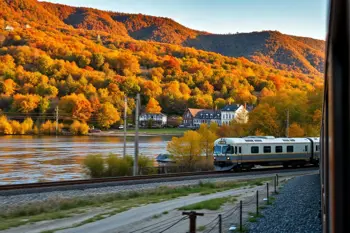
For those traveling further north toward the state capital, Amtrak’s Empire Service offers additional connectivity with key Hudson Valley stops, including Rhinecliff, Hudson, and Albany-Rensselaer 1. This service integrates with the wider national network, allowing for varying degrees of travel intensity ranging from short day excursions to longer regional transits 2. Unlike bus tours, rail transit provides a consistent, rhythmic travel experience that emphasizes the visual landscape, featuring views of the Hudson Highlands, the Palisades, and historic riverside architecture 3.
Heritage Railroads and Specialized Scenic Excursions
Beyond standard commuter and intercity transit, the Hudson Valley and the nearby Catskill Mountains are home to several heritage railroad operations that focus on preservation and scenic recreation 1. The Catskill Mountain Railroad, based in Kingston, utilizes a section of the former Ulster and Delaware Railroad corridor, which dates back to the 1870s 4. These heritage excursions provide a different perspective on the regional topography, often navigating through dense forests and rural farmland that are otherwise inaccessible via modern passenger rail 4.
The Delaware and Ulster Railroad operates additional vintage train excursions through the Catskill Mountains, typically running between Arkville and Roxbury 5. These operations prioritize historical immersion, frequently utilizing vintage equipment that reflects 20th-century rail travel 5. Furthermore, the Trolley Museum of New York in Kingston maintains an collection of historic streetcars, offering specialized trolley rides that connect visitors with the city’s industrial transportation history 1. For those seeking an active alternative to traditional rail cars, Rail Explorers offers pedal-powered rail-bike excursions in the Catskills near Phoenicia, providing a kinetic way to engage with historic rail infrastructure 1.
Logistics and Seasonal Service Adjustments
Travelers planning a rail-based visit to the Hudson Valley must account for the distinct differences between public transit schedules and specialized excursion timetables. Metro-North and Amtrak operate year-round, though both providers frequently implement seasonal service adjustments to accommodate fluctuations in demand 6. For example, during peak autumn foliage periods, Metro-North has historically expanded its capacity on the Hudson Line, adding extra northbound and southbound trains on select weekends to manage the influx of visitors traveling to river towns 6.
Heritage railroads like the Catskill Mountain Railroad generally operate on specific seasonal event schedules, such as summer and fall foliage adventures, rather than daily commuter rotations 7. Prospective travelers should consult official transit websites or regional tourism databases to confirm service availability, as these heritage lines often require advance booking for specific time slots 7. Coordinating transfers between these specialized lines and major regional rail hubs requires careful attention to timing, as private heritage rail schedules do not typically synchronize with the high-frequency arrivals of the main Hudson Line or Empire Service trains 1.
Key Attractions Accessible by Rail
Many Hudson Valley attractions are positioned within walking distance of major rail stops, which influences how visitors structure their itineraries. Poughkeepsie serves as a significant transit node, providing access to the Walkway Over the Hudson, an elevated pedestrian bridge that offers expansive views of the river and the Catskill Mountains 8. Other towns like Cold Spring are noted for their proximity to the Hudson Highlands, providing direct access to hiking trails and historic downtown antique corridors 1.
The cultural footprint of the region is further supported by sites accessible via short local transits from train stations, such as the FDR Presidential Library and Museum or the Culinary Institute of America 9. Travelers often combine rail arrival with visits to historic landmarks like the Vanderbilt Mansion or the West Point area 9. Because of this accessibility, visitors can curate diverse experiences ranging from urban-style historic exploration in Sleepy Hollow to natural sightseeing in the Hudson Highlands without the necessity of personal vehicle transport 1.
Physicality and Accessibility Considerations
While rail travel is a passive mode of transport, the exploration of destination sites often requires a degree of physical mobility. Tours that include walking or exploration of historic sites are often rated based on activity levels, with many sites involving flat terrain, garden paths, or short walks between transit points and attractions 9. Travelers should be aware that some historic sites may have limited accessibility options, such as stair-heavy colonial structures or uneven natural paths 9.
For those managing mobility concerns, the Walkway Over the Hudson and well-developed Main Streets in towns like Hudson or Tarrytown are generally more accessible than mountainous trail systems 1. Most major stations on the Hudson Line are equipped with modern boarding facilities, but auxiliary heritage sites may require more advanced notice for mobility accommodations 1. It is advisable for travelers to review the specific terrain and accessibility documentation provided by individual venue websites or regional tourism authorities prior to arrival 1.
Regional Context and Regulatory Oversight
The Hudson River Valley National Heritage Area encompasses a broad range of landscapes and transportation corridors that are essential to understanding the region’s development 10. The preservation of these rail routes and their integration into the regional tourism economy is a multi-layered effort involving state agencies like the Metropolitan Transportation Authority, private rail operators, and municipal tourism boards 10. These organizations regulate the use of rail corridors to balance commuter utility with scenic, recreational access 10.
Travelers benefit from this regional structure, as it provides a relatively stable network of transportation options supported by standardized safety and informational services. However, the reliance on multiple entities-ranging from public rail authorities to private heritage excursion operators-creates a fragmented system that requires active research by the traveler. Understanding the distinction between a state-regulated commuter line and a privately managed heritage rail experience is fundamental to planning an itinerary that avoids logistics gaps while maximizing the scenic potential of the Hudson Valley 1.
Sources
- Metropolitan Transportation Authority, https://new.mta.info/agency/metro-north-railroad
- Amtrak, https://www.amtrak.com/empire-service-train.html
- TouristTube, https://www.touristtube.com/nyc-train-trip-with-sleepy-hollow-and-walkway-over-hudson/
- Catskill Mountain Railroad, https://catskillmountainrailroad.com/
- Delaware & Ulster Railroad, https://www.durr.org/
- Travel And Tour World, https://www.travelandtourworld.com/news/article/new-york-metro-north-expands-fall-foliage-train-service-on-peak-weekends-connecting-grand-central-to-scenic-hudson-valley-towns/
- UC Tourism Production, https://visitulstercountyny.com/event/catskill-fall-foliage-adventure/2026-10-09/
- Walkway Over the Hudson, https://walkway.org/
- Warther Tours, https://warthertours.com/tours/discover-the-hudson-river-valley/
- Hudson River Valley National Heritage Area, https://www.hudsonrivervalley.com/
Authored by 24Trendz team