Effective ways to manage menstrual cramps naturally: Evidence-based guidance and safety considerations
Why menstrual cramps happen
Menstrual cramps, also called primary dysmenorrhea, usually result from prostaglandins released as the uterine lining is shed. These hormone-like compounds stimulate uterine contractions and can reduce blood flow to the uterine muscle, producing cramping pain that may radiate to the lower back or thighs. Nausea, diarrhea, headache, fatigue, and vomiting can accompany the pain. 1
Primary dysmenorrhea commonly begins shortly before or at the start of menstrual bleeding and often peaks during the first two days. Pain that begins much earlier in the cycle, continues after menstruation, becomes progressively worse, or appears for the first time later in life may reflect endometriosis, adenomyosis, fibroids, or pelvic infection rather than routine menstrual discomfort. 2
Heat is the best-supported non-drug measure
A heating pad, warm compress, heated wrap, or hot-water bottle placed over the lower abdomen can relax uterine muscle and improve comfort. A warm bath may provide a similar soothing effect, while heat applied to the lower back can help when pain radiates. Clinical guidance from major medical organizations consistently includes local heat among standard self-care measures for period pain. 3
Research reviewed in a 2025 Frontiers article describes heat therapy as one of several complementary approaches for primary dysmenorrhea. Another reviewed source reports that sustained low-level heat around 38 to 40°C was comparable with ibuprofen in one randomized trial, although that finding does not mean heat will work equally well for every person or every type of pelvic pain. 4
- Use a comfortably warm setting rather than intense heat.
- Place a towel between hot-water bottles and skin.
- Check the skin regularly to reduce the risk of burns.
Movement, stretching, and massage
Gentle exercise can be useful even when vigorous activity feels unrealistic. Walking, light aerobic movement, stretching, and yoga are commonly recommended non-drug measures, and regular physical activity may lessen menstrual-pain intensity for some people. The appropriate level depends on symptoms, energy, and any medical conditions. Rest remains reasonable when movement clearly worsens pain or causes dizziness. 5
Abdominal or lower-back massage may offer short-term relief by promoting relaxation and reducing the perception of muscle tension. Massage can be performed with light, circular pressure over the lower abdomen or along the lower back. It is a supportive measure rather than a diagnostic treatment, so persistent pain should not be explained solely as muscle tightness. 6
Relaxation, sleep, and daily routines
Relaxation techniques can complement heat and movement, particularly when pain is accompanied by anxiety or physical tension. Slow breathing, progressive muscle relaxation, mindfulness, and a quiet resting position are practical options. Guidance from the American College of Obstetricians and Gynecologists includes sleep, relaxation, exercise, heat, and massage among self-care strategies for dysmenorrhea. 7
Sleep and stress management are relevant because menstrual symptoms can affect fatigue, mood, and the ability to cope with pain. A consistent sleep schedule, adequate rest during the most symptomatic days, and tracking the timing and severity of cramps can help identify patterns. A symptom record may also give a clinician useful information if evaluation becomes necessary. 8
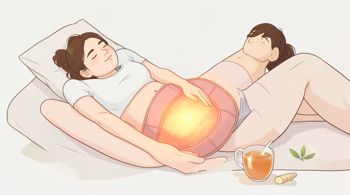
Ginger and supplements: useful possibilities with limits
Ginger has been studied as a treatment for menstrual cramps, and reviews report that ginger supplements or ginger-containing preparations may reduce pain severity. The Frontiers review includes vitamins, herbal supplements, acupuncture, exercise, TENS, acupressure, and aromatherapy among complementary approaches under investigation. However, the National Center for Complementary and Integrative Health notes that evidence for ginger remains limited and that product quality and safety can vary. 9
Magnesium, vitamin B1, vitamin D, and fish-oil or omega-3 supplements have also been studied, but evidence is inconsistent across products, doses, and study designs. Food sources such as leafy greens, nuts, avocado, and fish may fit a balanced diet, but dietary changes should not be presented as a guaranteed treatment. Concentrated supplements can interact with medicines or cause adverse effects, so professional advice is appropriate before regular use. 10
| Approach | Evidence and practical context |
|---|---|
| Ginger | Potential pain reduction, but dosing, product quality, and safety require attention. |
| Magnesium or omega-3 | Studied for menstrual pain, with inconsistent evidence and possible interactions. |
| Acupuncture, acupressure, or TENS | Complementary options reviewed in current literature, with results varying by method and study. |
Safety, limitations, and when to seek care
Natural does not automatically mean risk-free. People who are pregnant, use blood thinners, have kidney or stomach disease, or plan to take concentrated herbal products should consult a clinician before using supplements. Essential oils should not be swallowed, and evidence for approaches such as aromatherapy or castor-oil packs is less established than evidence for heat, exercise, massage, and other standard self-care measures. 1
Medical assessment is advisable when cramps interfere with school, work, exercise, sleep, or daily activities; become severe or progressively worse; do not improve with self-care; or occur with unusually heavy bleeding, fever, fainting, abnormal discharge, or pain outside menstruation. These features can indicate secondary dysmenorrhea caused by endometriosis, fibroids, adenomyosis, or pelvic inflammatory disease. Nonsteroidal anti-inflammatory drugs are often effective for typical cramps, but they are medicines and may be unsuitable for some people. 27
A layered plan is generally more realistic than relying on one remedy: local heat during painful periods, gentle movement when tolerated, massage or relaxation for additional comfort, and careful consideration of ginger or supplements after reviewing personal risks. Tracking symptoms across cycles helps distinguish occasional manageable cramps from a recurring pattern that merits gynecological evaluation. 38
Sources
- Frontiers in Reproductive Health, “Complementary and alternative therapies in the treatment of primary dysmenorrhea”
- Medanta, “Period Pain Relief: Home Remedies for Menstrual Cramps”
- Cleveland Clinic, “What Actually Helps Period Cramps?”
- Floriva, “Natural Remedies for Period Cramps: What Has Evidence and What Doesn’t”
- NHS, “Period pain”
- Mayo Clinic, “Menstrual cramps: Diagnosis and treatment”
- American College of Obstetricians and Gynecologists, “Dysmenorrhea: Painful Periods”
- Healthdirect Australia, “Period pain”
- National Center for Complementary and Integrative Health, “Ginger”
- Office on Women’s Health, “Period problems”
Authored by 24Trendz team