Warning signs of vascular decline in your extremities: A clinical guide to circulation changes
The warning signs of vascular decline in your extremities can be subtle and are sometimes mistaken for normal aging, inactivity, or muscle discomfort. Patterns such as leg pain during walking, persistent coldness, color changes, numbness, weakness, and sores that heal slowly may indicate reduced blood flow and warrant medical assessment. 1
What vascular decline in the extremities means
Peripheral vascular disease, also called peripheral arterial disease when arteries are involved, is a progressive disorder in which blood vessels narrow, become blocked, or go into spasm. The legs and feet are affected most often, although vessels supplying the arms can also be involved. Atherosclerosis, or plaque buildup inside artery walls, is the most common cause because plaque reduces the delivery of oxygen and nutrients to limb tissue. 1
PAD is also a marker of broader arterial disease rather than an isolated leg problem. It shares risk factors with coronary artery disease and can occur without noticeable symptoms. Johns Hopkins Medicine reports that about half of people diagnosed with peripheral vascular disease have no symptoms, which helps explain why changes in walking ability or foot health can be overlooked. 1
Leg pain that follows a predictable pattern
The classic early symptom is intermittent claudication: cramping, aching, or fatigue in the calf, thigh, buttock, or another limb muscle during walking or stair climbing that improves after resting. The pattern results from muscles needing more blood during activity while narrowed arteries cannot increase flow sufficiently. The same symptom may feel like tightness, heaviness, or unusual fatigue rather than sharp pain. 2
Persistent or worsening symptoms deserve attention because people may unconsciously walk shorter distances, stop more often, or avoid activity altogether, masking the progression. Yale Medicine describes more advanced disease as rest pain, often accompanied by numbness or weakness, with ulcers or tissue death possible when circulation becomes severely compromised. 3
Changes in temperature, color, sensation, and strength
Affected feet or legs may feel colder than the opposite limb, particularly when the difference is persistent rather than caused by environmental temperature. Pale, bluish, or otherwise altered skin color, numbness, tingling, weakness, and diminished pulses are additional signs of reduced arterial flow. These findings can affect one side more than the other, so comparing both limbs can provide useful information for a clinical examination. 4
Long-standing low blood flow may also produce visible tissue changes. Reported findings include shiny skin, hair loss on the legs, slower hair and nail growth, thickened toenails, and reduced muscle size. None of these signs establishes PAD by itself, because other disorders can produce similar changes, but several appearing together or alongside exertional pain should be medically reviewed. 5
Wounds and tissue changes that should not be ignored
Sores on the toes, feet, or lower legs that heal slowly or fail to heal can indicate that oxygen, nutrients, and immune defenses are not reaching tissue adequately. Nonhealing ulcers are especially concerning when accompanied by discoloration, rest pain, numbness, or coldness. Advanced disease may progress to gangrene, a form of tissue death associated with chronic limb-threatening ischemia. 3
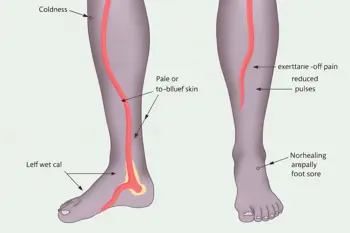
Diabetes requires particular caution because diabetic nerve damage can blunt or alter the pain of exertional ischemia. Consequently, the absence of typical walking pain does not rule out PAD in a person with diabetes. A foot wound in someone with diabetes, or any wound that changes color, enlarges, drains, or remains open, requires professional evaluation rather than home observation alone. 4
When symptoms suggest an emergency
A sudden, severe change in one limb is different from the gradual pattern of chronic PAD. Acute limb ischemia can produce sudden pain, pallor, coldness, abnormal sensation, weakness, and absent pulses because blood flow has been sharply reduced. These findings represent a time-sensitive medical emergency, particularly when several occur together or the limb becomes rapidly more impaired. 9
One-sided swelling, tenderness, warmth, and redness or discoloration point toward deep-vein thrombosis rather than typical chronic arterial disease. A clot can become life-threatening if it travels to the lungs. Chest pain, shortness of breath, coughing blood, fainting, or severe breathing difficulty occurring with possible clot symptoms requires emergency medical care. 7
Risk factors and clinical evaluation
Risk rises with age, a history of heart disease, diabetes, high cholesterol, high blood pressure, overweight, physical inactivity, tobacco use, and a family history of vascular disease or related cardiovascular conditions. Johns Hopkins identifies smoking and diabetes as particularly important sources of impaired blood flow, while the American Heart Association describes smoking and diabetes as the two dominant PAD risk factors. 1 2
Evaluation commonly begins with a history of symptom timing, walking distance, wound development, and differences between limbs, followed by examination of skin, temperature, and pulses. An ankle-brachial index compares blood pressure at the ankle with blood pressure in the arm and can help identify PAD. The result is interpreted with the clinical picture, since symptoms may be absent or altered by diabetes and nerve damage. 8
How to interpret warning signs responsibly
Cold feet that warm normally indoors, symmetrical color changes triggered by cold or stress, or visible veins alone do not necessarily indicate dangerous vascular decline. However, persistent one-sided coldness, pain, pallor, bluish skin, weak pulses, or progressive loss of sensation has greater clinical significance. A symptom pattern, its duration, and associated risk factors matter more than any isolated sign. 4
PAD has no single symptom profile, and many affected people remain asymptomatic. The most useful distinction is between exertional discomfort that repeatedly improves with rest, progressive tissue problems such as nonhealing sores, and sudden limb changes that require emergency treatment. Because PAD reflects atherosclerosis throughout the circulation, identifying it also provides an opportunity for clinicians to assess cardiovascular risk. 2
Sources
- Johns Hopkins Medicine, Peripheral Vascular Disease
- American Heart Association, Is your leg pain actually PAD?
- Yale Medicine, Peripheral Artery Disease
- National Heart, Lung, and Blood Institute, Peripheral Artery Disease Symptoms
- Mayo Clinic, Peripheral Artery Disease Symptoms and Causes
- NHS, Peripheral Arterial Disease
- Centers for Disease Control and Prevention, Blood Clot Signs and Symptoms
- RadiologyInfo, Peripheral Arterial Disease
- Merck Manual Consumer Version, Peripheral Arterial Disease
Authored by 24Trendz team