Techniques to reduce muscle tension at home: Evidence-informed methods and safety guidance
Progressive muscle relaxation
Progressive muscle relaxation is a structured technique in which one muscle area is gently tensed and then released. NHS inform describes it as a way to reduce bodily tension while improving awareness of the early physical signs of anger or panic.1 A typical sequence can begin while lying comfortably on the back, with a pillow under the knees when lower-back support is useful. The exercise involves breathing in while creating mild tension, holding it briefly, breathing out, and allowing the area to soften.
The sequence can move through the hands and arms, legs and feet, stomach, chest, back, shoulders, neck, throat, and face.1 A shorter version can be performed in a chair by focusing on breathing, making a fist for a few seconds, and then slowly opening the fingers to notice the contrast between tension and relaxation.2 Painful or injured areas should be skipped rather than deliberately contracted.
Breathing and body awareness
Muscle guarding can be influenced by stress-related nervous-system activity, so relaxed breathing is commonly paired with tension-release exercises. NHS guidance recommends slowly breathing in through the nose and out through the mouth during quick muscle relaxation.2 A practical home session can begin with several quiet breaths, relaxed shoulders, and attention to where the body feels clenched, heavy, or restricted. The aim is observation and reduced effort, not forceful breathing or a competition to take the deepest breath.
Body scanning can help identify tension before it becomes more uncomfortable. Attention may be directed gradually from the face and jaw to the neck, shoulders, chest, abdomen, hips, legs, and feet, while breathing remains comfortable. Harvard Health describes progressive relaxation as useful for people whose physical tension contributes to difficulty falling asleep, with the exercise performed gradually from the feet upward while lying in a supported position.3 Dizziness, breathlessness, or anxiety during breathing exercises is a reason to stop and return to normal breathing.
Gentle movement and stretching
Muscle tightness may be associated with limited movement, stress, overuse, or prolonged sitting. Hinge Health identifies gentle, frequent movement, varied postures, heat, hydration, relaxed breathing, and targeted stretching as measures that may help everyday tightness.4 Suitable movement can include an easy walk around the home, slow shoulder rolls, comfortable joint movements, or gradual changes between sitting and standing. Movements should remain within a tolerable range and should not reproduce sharp pain.
Static stretching is most appropriate when the body is warm and the stretch feels mild rather than aggressive. A home routine can address commonly tense areas such as the calves, thighs, hips, chest, shoulders, and neck, holding a comfortable position while breathing normally. Stretching should not involve bouncing, forced end ranges, numbness, or worsening pain. After exercise or unusual exertion, rest and gentle movement may be more appropriate than trying to force a tight muscle to lengthen.
Heat and water-based comfort
Warmth is commonly used to ease stiffness and encourage relaxation before gentle movement. A warm bath, shower, warm damp towel, or heating pack can provide local comfort, while a fabric layer between a heat source and the skin reduces burn risk. The supplied research describes heat sessions of about 15 to 20 minutes and notes that heat should not be used during the first 48 hours after a new injury because swelling may worsen.5
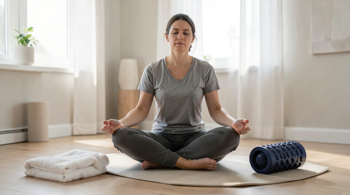
Heat is not suitable for every situation. A newly swollen, bruised, or acutely injured area requires particular caution, and skin sensation may be reduced in some medical conditions. Water temperature should remain comfortable, and a person should avoid sleeping with a heating device applied. Epsom salt baths are often discussed as a traditional remedy, but the supplied evidence describes the proposed magnesium absorption as a possibility rather than an established explanation for muscle relaxation.6
Self-massage and myofascial release
Self-myofascial release uses body weight, hands, a massage ball, or a foam roller to apply pressure to muscle and surrounding soft tissue. The supplied physical-therapy guidance describes foam rollers as suited to larger areas such as the quadriceps, glutes, lat muscles, and upper back, with softer equipment potentially more comfortable for beginners.7 Pressure should be gradual and controlled, with slow movement rather than repeated force over one highly tender spot.
Self-massage should target muscle tissue rather than bones, joints, the front of the neck, or areas with visible injury. It should not create sharp pain, tingling, numbness, bruising, or symptoms that spread away from the treated area. Percussion devices and massage guns require similar caution because the supplied research presents them as tools for muscle tightness and recovery, not substitutes for assessment of an acute injury or persistent pain.8 People with physical injuries or conditions that make a muscle painful should avoid contracting or aggressively treating that region.
Posture, yoga, and tai chi
Home-working positions can repeatedly load the neck, shoulders, and lower back. Mayo Clinic Health System identifies desk ergonomics as an intervention for reducing strain in remote work, making screen position, chair support, keyboard placement, and regular posture changes relevant to tension management.9 No single posture prevents all discomfort, so alternating positions and interrupting long periods of sitting are practical parts of a home routine.
Yoga and tai chi combine deliberate movement with breathing and attention. The supplied research identifies yoga as a systematic stretching practice associated with reduced chronic muscle tension and psychological stress, while the National Center for Complementary and Integrative Health describes tai chi as low-impact movement combined with meditative breathing.10 Beginners should choose slow, accessible movements and avoid forcing range of motion. Persistent pain, weakness, repeated spasms, swelling, or symptoms after a significant injury should be assessed by a qualified healthcare professional rather than managed solely with home techniques.
Sources
- NHS inform, Progressive muscle relaxation
- NHS inform, Quick muscle relaxation
- Harvard Health Publishing, Progressive muscle relaxation for sleep
- Hinge Health, Muscle Tightness: Definition, Causes, and Treatment
- ScienceInsights, How to Relax a Muscle: Heat, Stretching & More
- Medical News Today, Epsom Salt Baths
- Rebalance Physical Therapy and Wellness, Self-Myofascial Release
- Verywell Health, What Is a Massage Gun?
- Mayo Clinic Health System, Ergonomic Tips for Your Home Office
- National Center for Complementary and Integrative Health, Tai Chi in Depth
Authored by 24Trendz team