Green tea extract tablets for weight loss with bioavailable blend: An evidence and safety analysis
What the category contains
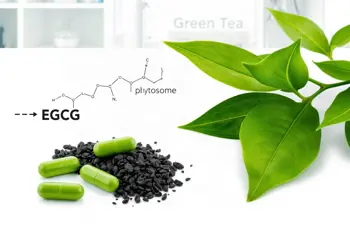
Green tea extract tablets for weight loss with bioavailable blend formulas are generally built around catechins, especially epigallocatechin gallate, or EGCG. Green tea extract is studied for possible effects on metabolic rate, thermogenesis, and fat oxidation, although reported weight changes are usually modest rather than comparable with pharmaceutical treatment. 1
Products in this category vary substantially. Pro-Elite lists a 250 mg 40:1 green tea extract tablet standardized to 95% total polyphenols and 30% EGCG, while Vilgain describes a 500 mg extract standardized to 50% EGCG. Other formulas combine green tea with curcumin, resveratrol, garcinia cambogia, cinnamon, holy basil, caffeine, or other branded ingredients. 2
Why bioavailability matters
Bioavailability refers to the amount of a compound that is absorbed and remains available for use in the body. Catechins from conventional green tea have limited oral bioavailability because absorption is low and elimination is relatively rapid through gastrointestinal and metabolic pathways. This helps explain why a tablet's extract weight alone does not reveal how much EGCG reaches circulation. 3
Phytosome delivery systems are designed to complex botanical compounds with phosphatidylcholine, a phospholipid used to improve delivery. Kate Living's product description states that its Green Tea Phytosome technology can increase plasma EGCG levels by up to 100% compared with standard extracts, while Purity Products describes its GreenSelect phytosome as providing up to two times better absorption. These are formulation or product claims, not a guarantee of weight loss. 4
How blends are formulated
A bioavailable blend may use more than one delivery strategy. The Kate Living formula describes a combination of Green Tea Phytosome and a full-spectrum green tea extract, with one component intended to improve systemic catechin absorption and the other intended to remain active in the gut. The same description identifies the product as caffeine-free, an important distinction from extracts that retain naturally occurring stimulants. 5
Piperine, derived from black pepper, is another ingredient frequently used in enhanced-absorption formulas because it may affect nutrient metabolism and absorption. Transparent Labs lists BioPerine alongside green tea extract, ForsLean, Capsimax, and natural caffeine in a stimulant-containing body-recomposition product. Its separate stimulant-free formula includes green tea extract with other ingredients but excludes caffeine and other stimulants. 6
| Label feature | What it indicates | Question to consider |
|---|---|---|
| EGCG percentage | The stated share of the extract identified as EGCG | Is the amount listed per tablet or per serving? |
| Phytosome or lipid delivery | An attempt to improve catechin absorption | Is supporting evidence provided for the exact formula? |
| Caffeine disclosure | Whether stimulant exposure is expected | Is total caffeine stated clearly? |
What research suggests about weight loss
Clinical research summarized in the supplied evidence links green tea extract consumption with modest weight loss and metabolic improvements. The proposed mechanism involves EGCG and, in some products, caffeine acting on pathways associated with thermogenesis and fat oxidation. Mayo Clinic notes that any effectiveness for weight management is most pronounced when green tea extract is paired with exercise, indicating that tablets should not be treated as a standalone intervention. 7
Standardized extracts commonly use an EGCG concentration around 45% to 50%, but label percentages are not equivalent to proven clinical effectiveness. The supplied research information identifies daily EGCG amounts of approximately 400 to 500 mg over at least 12 weeks as a range used in weight-loss research. That figure should not be interpreted as a universal dosage recommendation, because extract composition, caffeine content, health status, and medication use differ. 8
Safety and regulatory limitations
Concentrated green tea extract supplements have been associated with rare reports of liver stress or hepatotoxicity, particularly when high amounts are consumed. The NIH Office of Dietary Supplements and consumer safety reporting both caution that concentrated products can pose risks that are not equivalent to drinking ordinary green tea. Symptoms such as unusual fatigue, abdominal discomfort, dark urine, or yellowing of the skin require medical attention rather than continued self-experimentation. 9
In the United States, dietary supplements are not required to undergo the same pre-market approval process for safety and efficacy as pharmaceutical drugs. This makes independent testing, transparent labeling, and realistic claims important evaluation points. Some suppliers report GMP manufacturing or third-party testing, but those statements should be distinguished from regulatory approval and do not establish that a product produces clinically meaningful weight loss. 10
How to evaluate a tablet label
The most informative label identifies the botanical name, extract quantity, catechin or EGCG percentage, caffeine amount, serving size, and other active ingredients. A tablet listing only a large raw-herb equivalent may provide less useful information than one stating the actual standardized catechin content. For example, Pro-Elite presents both a 40:1 extract amount and its polyphenol and EGCG standardization, while LifeSource lists a 400 mg extract with 40% catechins and 11% EGCG. 11
Consumers should also distinguish between a caffeine-free phytosome product, a stimulant-containing fat-burner blend, and a conventional green tea tablet. Possible differences include alertness effects, tolerability, interactions with medicines, and suitability for people who are sensitive to stimulants. Product directions commonly advise taking one tablet or capsule with water and a meal, avoiding the stated maximum, and consulting a healthcare professional during pregnancy, breastfeeding, medication use, or medical supervision. 12
Practical expectations and unresolved questions
The main practical limitation is scale. Even when green tea extract influences thermogenesis or fat oxidation, the overall weight effect is generally modest, and results depend on diet, exercise, baseline health, adherence, and the exact extract used. Marketing language such as “fat burner,” “metabolism support,” or “healthy weight management” describes intended positioning, not a guaranteed outcome or a substitute for individualized medical care. 1
Evidence is also uneven across formulations. A study of ordinary green tea extract cannot automatically validate a phytosome product, a piperine combination, or a multi-ingredient tablet. Similarly, a higher EGCG percentage does not by itself prove superior results. The most defensible comparison therefore focuses on verified composition, caffeine disclosure, testing documentation, safety warnings, and whether claims are framed as support rather than certainty. 4
Sources
- National Center for Biotechnology Information, “Green Tea and Weight Management”
- Pro-Elite, “Green Tea Extract Tablets”
- Journal of Agricultural and Food Chemistry, research on green tea catechin bioavailability
- Purity Products, “Green Tea CR Phytosome”
- Kate Living Supplements, “Green Tea Bioactive”
- Transparent Labs, “Body Recomp” and “Stim-Free Fat Burner”
- Mayo Clinic, “Green tea extract and weight loss”
- Examine.com, “Green Tea Extract”
- NIH Office of Dietary Supplements, “Weight Loss for Consumers”
- U.S. Food and Drug Administration, “Dietary Supplements”
- LifeSource Vitamins, “Green Tea Extract 400 mg”
- Vilgain, “Green Tea Extract 50% EGCG”
Authored by 24Trendz team