Early warning signs of a heart attack: Clinical guidance on symptoms and emergency response
Early warning signs of a heart attack can include unusual fatigue, shortness of breath during routine activities, nausea, intermittent chest discomfort, or a general sense that something is wrong. These symptoms may begin hours, days, or even weeks beforehand, but some people have no recognizable warning signs. 1
How early warning symptoms may develop
Heart attacks occur when blood flow through a coronary artery becomes suddenly blocked or critically slow, depriving heart muscle of oxygen. The underlying artery disease may develop over years, while the symptoms preceding an event can be brief and inconsistent. Cleveland Clinic describes a pattern of “waxing and waning” symptoms that may be easy to attribute to indigestion, tiredness, or another minor condition. 2
- Symptoms may occur alone or in combination.
- Episodes can be mild, brief, or recurring.
- Improvement between episodes does not establish that the cause is harmless.
- Some heart attacks begin suddenly without an earlier warning period.
Chest discomfort and pressure
Chest discomfort remains the most familiar and common heart attack symptom, but it does not always feel like sharp pain. Reported sensations include pressure, squeezing, heaviness, fullness, tightness, burning, or an ache in the center or left side of the chest. Discomfort that lasts more than a few minutes, returns after easing, or appears with other symptoms requires emergency medical assessment. 3
- Discomfort can occur with activity or at rest.
- Pain may spread to one or both arms, the back, neck, jaw, or upper abdomen.
- A person may have chest discomfort without severe pain.
- Indigestion-like sensations can sometimes be mistaken for a cardiac symptom.
Breathing, stomach, and circulation symptoms
Shortness of breath can occur with chest discomfort or by itself. Other possible symptoms include cold sweating, nausea, vomiting, lightheadedness, dizziness, unusual weakness, and fainting. Medical references describe these symptoms as variable rather than a fixed checklist, meaning that the absence of chest pain does not rule out a heart attack. 4
- Breathlessness during usual activities may represent a change from a person’s baseline.
- Nausea or vomiting can accompany cardiac discomfort.
- Profuse or cold sweating may occur with other warning signs.
- Lightheadedness or fainting can indicate a serious circulation problem.
Symptoms in women, older adults, and people with diabetes
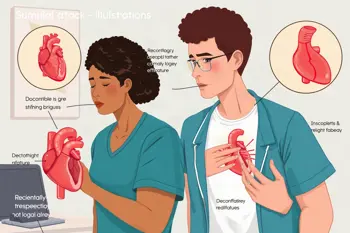
Women, older adults, and people with diabetes may experience less typical or subtler symptoms. Women may report unusual fatigue, shortness of breath, nausea, back pain, or jaw pain, with or without chest discomfort. Diabetes and older age can also be associated with symptoms that are less recognizable than the classic chest-pressure pattern. 5
- Unexplained exhaustion that is greater than usual can be significant.
- Back, jaw, neck, or upper-abdominal discomfort may occur instead of prominent chest pain.
- Indigestion-like discomfort should be considered alongside breathlessness, sweating, or weakness.
- Risk should not be judged only by whether dramatic pain is present.
When symptoms require emergency help
A suspected heart attack is a medical emergency because continued interruption of blood flow can damage heart muscle. Emergency guidance recommends calling 911 or the local emergency number when warning signs occur, rather than attempting to determine the cause at home. Emergency medical personnel can begin assessment and treatment during transport, while self-driving can delay care or create additional danger if symptoms worsen. 6
- Call emergency services for persistent, returning, or combined symptoms.
- Describe the person’s symptoms, timing, and location to the dispatcher.
- Do not rely on symptom severity alone to judge risk.
- Follow dispatcher instructions while awaiting medical personnel.
Why medical evaluation is necessary
Symptoms alone cannot confirm whether the cause is a heart attack, unstable angina, indigestion, a lung condition, or another problem. Clinicians use an electrocardiogram and blood testing for cardiac troponin to evaluate suspected myocardial infarction, with additional imaging or coronary evaluation when appropriate. Acute coronary syndromes include unstable angina and heart attack, conditions that require professional assessment because the consequences of reduced coronary blood flow can differ. 7
- Risk factors include smoking, high blood pressure, high cholesterol, diabetes, physical inactivity, excess weight, and an unhealthy diet.
- High blood pressure can damage artery walls and promote plaque buildup.
- Smoking damages blood vessels and increases clotting risk.
- Controlling diagnosed conditions and following prescribed care can reduce longer-term cardiovascular risk.
Sources
- Cleveland Clinic, “Warning Signs of a Heart Attack”
- Harvard Health, “Heart Attack (Myocardial Infarction)”
- Merck Manual Professional Edition, “Acute Myocardial Infarction”
- Merck Manual Consumer Version, “Acute Coronary Syndromes”
- Cleveland Clinic, “What a Heart Attack Can Feel Like”
- Centers for Disease Control and Prevention, “Heart Attack”
- Johns Hopkins Medicine, “Heart Attacks in Women”
Authored by 24Trendz team