Chest discomfort and other warning signs of a heart attack: Clinical guidance on symptoms and emergency response
Chest discomfort and other warning signs of a heart attack are not always dramatic or sudden. Pressure, squeezing, fullness, aching, or pain may be mild, may come and go, and may occur with shortness of breath, sweating, nausea, dizziness, or discomfort in the upper body. Because a heart attack can damage heart muscle when blood flow is reduced, symptoms that suggest one require emergency medical evaluation rather than observation at home. 1
How heart attack chest discomfort may feel
The most recognized symptom is discomfort in the center or left side of the chest, but descriptions vary substantially. People may report pressure, tightness, squeezing, fullness, aching, numbness, or a sensation of weight on the chest. Discomfort can last several minutes, fade and return, or begin gradually. A life-threatening heart attack can start with mild symptoms, so intensity alone does not establish whether the cause is serious. 2
- Chest discomfort may occur alone or alongside breathing difficulty, sweating, or nausea. 1
- Pain or discomfort can spread to one or both arms, the shoulders, back, neck, or jaw. 2
- Upper-abdominal discomfort may resemble indigestion or heartburn. 2
- The absence of severe, crushing pain does not rule out a heart attack. 3
Other warning signs to recognize
Heart attack symptoms can involve systems beyond the chest because the heart is not receiving adequate oxygen-rich blood. Shortness of breath may occur with or without chest discomfort. Nausea, vomiting, profuse sweating, cold or clammy skin, lightheadedness, dizziness, unusual fatigue, and a general sense that something is wrong are also reported warning signs. These symptoms are not specific to heart attack, but their combination with chest or upper-body discomfort raises concern. 1
- Shortness of breath, including difficulty with usual activities, can be a warning sign. 4
- Nausea, vomiting, or indigestion can occur instead of obvious chest pain. 2
- Sudden dizziness, faintness, or lightheadedness may accompany reduced cardiac function. 3
- Unusual tiredness or a feeling of not being well can appear before or during a heart attack. 4
Early and subtle changes before an event
Some people notice warning symptoms hours, days, or weeks before a heart attack, although others have no advance indication. Cleveland Clinic describes a pattern of waxing and waning symptoms, in which brief episodes are dismissed as indigestion, exertion, or ordinary tiredness. Recurrent chest discomfort, new fatigue, breathlessness during familiar activities, episodes of nausea, or an unexplained sense of illness should be medically assessed, particularly when the pattern is new or worsening. 4
- Chest discomfort that repeatedly appears and disappears should not be dismissed because it resolves. 4
- Breathlessness during activities that previously felt routine may represent a change in heart function. 4
- Nausea or fatigue without a clear explanation can be relevant when combined with other symptoms. 4
- Some heart attacks occur with little or no warning, so the absence of earlier symptoms offers no protection. 1
Differences among individuals
No single symptom pattern applies to every person. Women may experience shortness of breath, nausea, unusual tiredness, or pain in the back, shoulder, or jaw, sometimes without prominent chest pain. Older adults and people with diabetes may also have subtle symptoms or little chest discomfort. UC Davis Health reports that about 20% of heart attacks are silent, meaning they produce no recognized symptoms. 5
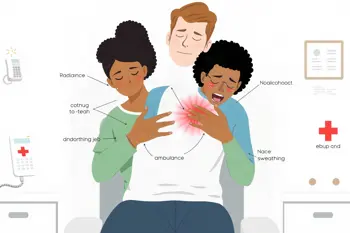
- Women can have upper-body pain, breathing difficulty, nausea, or fatigue as major symptoms. 6
- Older age and diabetes are associated with less typical presentations, including minimal chest pain. 1
- A silent heart attack may be discovered only through medical testing or later clinical evaluation. 5
- Symptoms should be judged by their overall pattern, not by comparison with television or movie portrayals. 6
What to do when symptoms suggest a heart attack
A suspected heart attack is a medical emergency. The appropriate response is to call 911 or the local emergency number and clearly describe the symptoms, rather than driving to a hospital independently or asking another person to drive. Emergency medical services can begin assessment and treatment before hospital arrival. While help is being arranged, an emergency dispatcher or medical professional can advise whether aspirin is appropriate, taking allergies and other contraindications into account. 7
- Stop exertion, sit or rest in a safe position, and keep the telephone available for emergency instructions.
- Do not delay the emergency call to determine whether symptoms improve.
- Do not take aspirin unless advised by emergency personnel or a qualified medical professional and no relevant contraindication exists. 7
- Do not drive yourself, because emergency responders can evaluate the condition during transport. 7
How clinicians evaluate possible heart attack
Symptoms alone cannot confirm or exclude a heart attack because indigestion, lung conditions, and other disorders can produce overlapping sensations. Clinical evaluation generally includes a medical history and physical examination, an electrocardiogram that checks the heart’s electrical activity, and blood testing for cardiac enzymes or troponin. Additional testing, such as echocardiography, may assess valves, pumping function, and heart-muscle problems. 2
- Electrocardiography helps identify electrical changes associated with acute coronary syndromes. 8
- Cardiac troponin elevation is used with the clinical assessment to identify myocardial injury. 8
- An echocardiogram can examine how effectively the heart pumps and whether heart muscle is affected. 2
- Acute coronary syndromes include unstable angina and heart attack, which differ according to whether heart tissue has died. 8
Sources
- Cleveland Clinic, Heart Attack: Symptoms, Causes & Treatment
- Penn Medicine, Heart Attack: Symptoms and Causes
- Heart Foundation Australia, Five warning signs of a heart attack that you may not know
- Cleveland Clinic, Warning Signs of a Heart Attack
- UC Davis Health, Heart Attack
- Mayo Clinic, Heart Attack: Symptoms and Causes
- Johns Hopkins Medicine, Heart Attack Symptoms
- Merck Manual Professional Edition, Acute Myocardial Infarction
Authored by 24Trendz team