Group line dancing classes in the United States: An analysis of current trends and participation
Group line dancing has evolved from its historical roots in 1970s disco and the 1990s country-western boom into a multifaceted social and physical activity across the United States 1. Modern participation occurs in diverse settings, ranging from professional dance studios to casual social environments like breweries and public parks 2, 3. This activity is characterized by its inclusive nature, often requiring no prior experience or established partners, which has contributed to its enduring presence in both rural and metropolitan communities 4, 5.
The Landscape of Social and Commercial Instruction
In the contemporary US, line dancing is frequently hosted by social clubs and entertainment venues that prioritize a mix of instruction and social atmosphere. For instance, clubs like DFW Young and Social in Texas offer structured weekly sessions where participants can purchase single classes or multi-session packages, emphasizing a beginner-friendly approach to social engagement 6. Similarly, in Washington, D.C., organizations like the DMV City Slickerz utilize public spaces such as Alethia Tanner Park to host seasonal community series, highlighting the trend of moving traditional dance instruction into accessible outdoor settings 7.
Hospitality venues also act as primary hubs for the craft, as seen in New York City where events like Molly and June’s Honky Tonk at SOB's combine live country music with scheduled instruction 8. These events often follow a hybrid model where professional instructors guide participants through routines before transitioning to open social dancing. Pricing structures in these environments vary, with many venues offering free or low-cost entry during specific time windows, balanced by requirements for food or drink purchases to maintain the economic viability of the venue 9.
Standardization and Skill Progression
The technical side of line dancing in the United States relies on a standardized system of step sheets and instructional databases. Platforms such as CopperKnob and Kickit serve as the primary global repositories for choreographic documentation, allowing instructors to maintain consistency in teaching classic and new-age routines 10, 11. This standardization is essential for the hobbyist community, as it allows dancers to travel between different regions and participate in familiar routines, often referred to as "variations" rather than fixed interpretations 12.
Classes are typically categorized by proficiency, ranging from absolute beginner sessions to advanced circuits managed by organizations like the United Country Western Dance Council (UCWDC) 13, 14. Instructors often provide a tiered approach to scheduling:
- Absolute Beginner: Focused on basic footwork and rhythm.
- Intermediate: Introduces complex patterns and faster tempos.
- Advanced/Competitive: Prepares participants for professional circuits and showcases.
Community Engagement and Corporate Integration
Beyond traditional hobbyist circles, line dancing has found a niche in corporate wellness and private event planning. Organizations like She Cultivates in Minnesota have developed customized line dance experiences specifically for team-building, wellness initiatives, and staff celebrations 15. These corporate offerings emphasize confidence-building and communal movement, reflecting a shift in how line dancing is utilized as a tool for employee engagement rather than strictly as a nightlife activity 16.
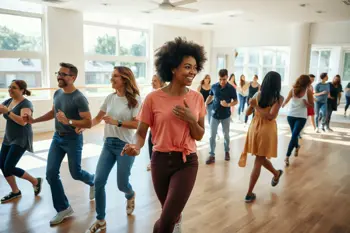
This professionalization extends to public outreach, where recreation departments partner with instructors to host inclusive sessions for various age groups. Research indicates that line dancing is a staple activity at many senior centers and community wellness programs, supported by the National Council on Aging, which recognizes the benefits of the activity for social and physical health 17, 18.
Regulatory Oversight and Participant Safety
While line dancing is a social activity, participation in organized classes involves specific logistical considerations. Most professional studios and event organizers, such as those at Glen Echo Park or Penn Social, enforce clear policies regarding footwear and class etiquette to prevent injuries and maintain the integrity of dance surfaces 19, 20. Furthermore, many venues now explicitly state codes of conduct to ensure a safe environment, specifically prohibiting discrimination or harassment based on protected characteristics 21.
Financial and logistical policies are equally defined in the sector. Event organizers typically maintain strict non-refundable ticket policies, particularly for small-group classes where capacity limits are enforced 22. Participants are encouraged to verify class details through dedicated channels such as Discord or local Meetup groups, as day-of-event communications are often handled through these platforms rather than traditional phone support 23.
The Digital Influence on Modern Dance Trends
The recent resurgence of line dancing in the US is largely attributed to the influence of social media platforms like TikTok and Instagram, where viral trends have introduced diverse styles-including pop, Latin, and hip-hop influenced choreography-to a younger demographic 24. This shift has expanded the genre beyond its traditional country-western confines, leading to a more eclectic musical selection at local classes 25.
| Metric | Industry Standard Expectation |
|---|---|
| Average Entry Fee | $10 - $20 per class |
| Common Package Offers | 4-12 class bundles available at per-class discounts |
| Age Requirements | Typically 18+ for evening social dance events |
| Skill Levels | Absolute Beginner to Advanced/Pro-Am |
As the genre continues to evolve, the distinction between casual hobbyist dancing and competitive circuits remains a defining feature of the US dance landscape, ensuring that both those seeking light exercise and those pursuing competitive mastery have established pathways for engagement 26.
Sources
- The Atlantic, "The Evolving Demographics of Line Dancing"
- Eventbrite, "Beginner Group Line Dancing Classes - DFW Young and Social"
- VenuNite, "DMV City Slickerz - Line Dancing in the Park"
- Line Dance Instructor Association (LDIA)
- Meetup, "Rhythm & Soul Line Dancing Group"
- Eventbrite, "Beginner Group Line Dancing Classes - DFW Young and Social"
- VenuNite, "DMV City Slickerz - Line Dancing in the Park"
- SOB’s NYC, "Molly & June’s Honky Tonk Line Dance Classes"
- SOB’s NYC, "Molly & June’s Honky Tonk Line Dance Classes"
- CopperKnob, "Global Database for Line Dance Step Sheets"
- Kickit, "Searchable Directory of Line Dances and Choreographers"
- Line Dancing with Jenergy, "No Wrong Moves Philosophy"
- United Country Western Dance Council (UCWDC)
- Country Dance World Championship
- She Cultivates, "Corporate Line Dance Experience"
- She Cultivates, "Corporate Line Dance Experience"
- National Council on Aging (NCOA)
- National Recreation and Park Association (NRPA)
- Glen Echo Park, "DanceFit Line Dancing Guidelines"
- Penn Social, "Firehouse Fridays Event Details"
- SOB’s NYC, "Molly & June’s Honky Tonk - Code of Conduct"
- DFW Young and Social Club, "Class Refund Policies"
- DFW Young and Social Club, "Communication Guidelines"
- Industry Trend Analysis (LLM Research)
- Yelp, "Local Directories for Dance Instruction"
- Borderline Country Nights, "General Overview of Regional Line Dancing"
Authored by 24Trendz team