Best acupuncture for migraines: An analysis of clinical efficacy and therapeutic outcomes
Migraine remains a significant neurological challenge, affecting approximately 1 billion people globally and serving as a primary driver for medical consultation 5. As researchers investigate non-pharmacological alternatives, acupuncture has emerged as a widely recognized approach for both acute pain relief and long-term prophylactic management 27. Clinical studies are currently evaluating how specific techniques, such as Xingnao Kaiqiao acupuncture or localized channel-based stimulation, contribute to symptom control and improved patient quality of life 49.
Clinical Efficacy in Acute and Prophylactic Settings
Recent randomized clinical trials have demonstrated that acupuncture can provide rapid analgesic benefits for patients suffering from acute migraines. In a study comparing real acupuncture to non-penetrating blunt needling, the real acupuncture group achieved an analgesic response rate of 92.5% at the 10-minute mark, compared to only 12.5% in the sham group 2. Pain intensity, measured via visual analog scale scores, showed a statistically significant reduction starting as early as one minute post-treatment 2. These findings suggest that for some, acupuncture may serve as a viable immediate intervention for headache symptoms.
Beyond acute relief, systematic reviews emphasize the prophylactic value of the practice. Analysis of 23 randomized controlled trials involving 2,295 patients indicated that acupuncture significantly reduces the frequency of migraine attacks and the number of days with migraines per four-week period when compared to waiting list controls 7. Furthermore, patients undergoing acupuncture reported improvements in quality of life metrics, specifically regarding emotional function and the reduction of migraine-related restrictions on daily activities 37.
Neurobiological Mechanisms and Brain Connectome Data
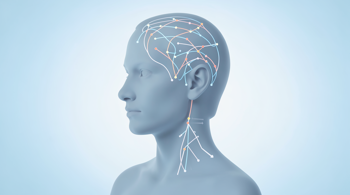
The therapeutic effect of acupuncture is increasingly explained through its modulation of central nervous system activity. Research utilizing connectome-based predictive modeling has identified that whole-brain resting-state functional connectivity can predict treatment outcomes in patients with migraine 1. Neuroimaging studies indicate that acupuncture influences key neural networks involved in pain perception, including the salience and sensorimotor networks 7. This suggests that the treatment operates by modulating pain control pathways rather than providing purely symptomatic relief 7.
At the molecular level, acupuncture may influence neuroinflammatory pathways and neuropeptide signaling. Evidence points toward the regulation of calcitonin gene-related peptide (CGRP) and serotonergic neurotransmission, which are central to the pathogenesis of migraines 7. Additionally, investigations into the brain's oxygenation levels via hemoencephalography suggest that auricular acupuncture may induce changes in the prefrontal cortex, although clinical results comparing these to sham procedures remain nuanced, with both intervention groups often showing improvement over time 8.
Methodological Approaches to Treatment Delivery
The selection of acupuncture points is a critical variable in treatment research. A comparative study involving 44 patients examined the difference between using established local points versus points based on affected channels 4. Data collection across six-month intervals focused on pain intensity, work ability, and analgesic usage to determine which configuration offers greater clinical longevity 4. Standard practice typically involves a series of 6 to 12 weekly sessions to achieve optimal prophylactic outcomes, targeting points on the scalp, neck, shoulders, and distal regions of the hands and feet 10.
| Study Type | Outcome Metric | Observed Effect |
|---|---|---|
| Acute Trial | Analgesic response at 10 min | 92.5% vs 12.5% (Real vs Sham) |
| Systematic Review | Migraine days per 4 weeks | Significant reduction vs waitlist |
| Meta-Analysis | MSQ restrictive subscale | Increased improvement vs placebo |
Regulatory and Clinical Guidelines
Major health organizations include acupuncture as a recognized non-pharmacological treatment option. The American Headache Society acknowledges the validity of these methods for migraine management, while the World Health Organization lists acupuncture as an effective treatment for various neurological headache disorders 510. The National Center for Complementary and Integrative Health emphasizes that the integration of acupuncture into a comprehensive care plan can help reduce the frequency and intensity of attacks 10.
Despite this, practitioners and patients must navigate regulatory and insurance realities. Coverage for acupuncture often varies significantly by insurance provider and jurisdiction, frequently requiring documentation of medical necessity or prior authorization 10. Because migraine is a complex, disabling condition, health professionals recommend that acupuncture should be pursued under the guidance of qualified professionals who can integrate the treatment with other necessary medical protocols 10.
Associated Risks and Considerations
While generally considered a safe procedure when performed by a trained professional, acupuncture is not without risks. Potential adverse events, although typically minor, can include bruising, local bleeding, or discomfort at the needle insertion sites. Because acupuncture acts on systemic neural and neuroendocrine pathways, it is vital that patients disclose all concurrent pharmacological treatments to their providers 7. There is no evidence suggesting that acupuncture should replace conventional medical diagnostics for chronic or severe headache disorders; rather, it is designed as a complementary therapeutic modality 10.
Furthermore, the placebo effect remains a factor in pain research. Many studies indicate that while real acupuncture outperforms sham acupuncture in specific metrics, the difference in clinical outcome is not always statistically absolute across all patient populations 8. Patients are encouraged to view acupuncture as a long-term management strategy rather than an immediate cure-all, noting that sustained preventive benefits are often linked to consistent, repeated sessions 7.
Future Directions in Migraine Research
Current research efforts are shifting toward personalized therapy, using the brain connectome to identify which patients are most likely to respond to specific acupuncture protocols 1. By analyzing cerebral blood flow and neural vasoactive substances, researchers aim to refine treatment parameters, such as combining acupuncture with pharmaceutical agents like flunarizine hydrochloride to maximize clinical efficiency 9. As these technologies evolve, the ability to tailor acupuncture treatments based on individual neurobiology may improve success rates for chronic migraine sufferers worldwide 1.
Sources
- JAMA Network Open: Acupuncture for Migraine Without Aura and Connection-Based Efficacy Prediction
- Headache: The Journal of Head and Face Pain: Acupuncture for Acute Treatment of Migraine Without Aura
- Systematic Reviews (Springer): Acupuncture Improves Migraine and Quality of Life
- Slovenian Medical Journal: Randomized Study Comparing Two Methods of Treating Migraine with Acupuncture
- Bulletin of the World Health Organization: Acupuncture recommendations for migraine
- Journal of Pain Research: Acupuncture versus Sham Acupuncture for Migraine without Aura
- The Journal of Headache and Pain (Springer): Acupuncture modulates migraine-related neural and neuroendocrine regulatory pathways
- Medical Xpress: Acupuncture to the ear may help to relieve migraines
- Journal of Hunan Normal University: Effects of Xingnao Kaiqiao Acupuncture on Migraine
- General Clinical Consensus: NCCIH, Cochrane, and American Headache Society Guidelines
Authored by 24Trendz team