Early symptoms of Anxiety Disorder you should know: Clinical signs and when to seek assessment
Early symptoms of Anxiety Disorder you should know include emotional, physical, cognitive, and behavioral changes that may initially seem like everyday habits or personality traits. Anxiety becomes more concerning when fear or worry is frequent, difficult to control, disproportionate to the situation, or disruptive to ordinary life. 1
Persistent worry and a sense of danger
One of the earliest patterns is worry that continues beyond a specific stressful event. A person may feel nervous, fearful, uneasy, or convinced that something bad is about to happen even when no immediate threat is identifiable. Anxiety differs from fear because it may occur before a threat, continue after it has passed, or arise without a clear cause. 2 These feelings can shift from one concern to another, covering health, safety, money, work, family responsibilities, or future events. 5
Normal anxiety can help someone prepare, rehearse, or respond cautiously to danger. It is more clinically significant when the intensity exceeds what the situation warrants and the person cannot reliably reduce the worry. Generalized anxiety disorder involves anxiety and worry occurring more days than not for at least six months, alongside symptoms such as fatigue, concentration difficulty, or muscle tension. 8 The duration and impact matter more than the presence of occasional nervousness alone.
Physical changes that may appear early
Anxiety activates the body's stress response, producing sensations that can be mistaken for an unrelated physical illness. Possible early signs include a rapid or pounding heartbeat, sweating, trembling, rapid breathing, shortness of breath, dizziness, nausea, gastrointestinal discomfort, and muscle tension. 4 Some people notice these sensations before recognizing that they are anxious. Repeated physical activation can also contribute to fatigue, particularly when the body remains tense or alert for long periods. 1
Physical symptoms vary by person and by anxiety disorder. Sudden episodes of intense fear with strong bodily sensations may represent panic attacks, while more persistent muscle tension, stomach problems, or restlessness can accompany ongoing worry. 6 Because anxiety-like symptoms can overlap with thyroid conditions, sleep disorders, heart-rhythm problems, and other medical issues, new, severe, or worsening symptoms require clinical evaluation rather than self-diagnosis. 6
Changes in concentration, mood, and alertness
Difficulty concentrating is a common early warning sign. Persistent worry can occupy attention, making it harder to complete tasks, remember information, make decisions, or remain mentally present during conversations. Restlessness and a feeling of being constantly on edge may accompany this reduced focus. 9 Fatigue can develop even when a person is maintaining ordinary responsibilities, because sustained mental alertness and physical tension are demanding.
Irritability and mood changes may also be overlooked because they can be interpreted as ordinary frustration. Anxiety-related irritability may appear when a person feels overwhelmed, unable to relax, or repeatedly interrupted while worrying. The National Institute of Mental Health identifies excessive fear or anxiety, restlessness, irritability, concentration problems, muscle tension, and sleep difficulties among common anxiety-disorder symptoms. 9 A cluster of changes is more informative than any single isolated symptom.
Sleep disruption and reduced recovery
Anxiety can interfere with falling asleep, staying asleep, or feeling rested after sleep. Worry may become more noticeable at night when fewer distractions compete for attention, while muscle tension and physical arousal can make relaxation difficult. Sleep problems are recognized among common anxiety symptoms and may occur alongside fatigue and concentration difficulties. 1 A developing pattern may involve repeatedly reviewing possible problems, rehearsing future conversations, or anticipating negative outcomes in bed.
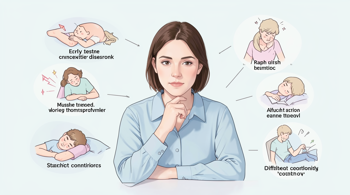
Sleep disruption can also intensify daytime symptoms, creating a cycle in which fatigue reduces concentration and poor concentration increases worry about performance. The presence of occasional restless sleep does not establish an anxiety disorder. Greater concern arises when sleep problems persist with excessive worry, irritability, physical symptoms, or impairment at work, school, home, or in relationships. 3 Recording sleep changes alongside emotional and physical symptoms can provide useful information for a professional assessment.
Avoidance and shrinking daily routines
Behavioral changes can reveal anxiety even when a person does not describe feeling anxious. Avoiding people, places, activities, travel, appointments, conversations, or situations that trigger discomfort is a central warning sign. 2 Avoidance may begin subtly, such as postponing a task, asking another person to handle it, leaving early, or repeatedly seeking reassurance. Over time, these adjustments can reduce opportunities for ordinary activities and make feared situations seem increasingly difficult.
The key issue is whether anxiety is changing behavior and limiting functioning. Anxiety disorders may lead people to avoid triggers, disrupt routines, strain relationships, and interfere with everyday responsibilities. 7 A person does not need to experience every listed symptom for concern to be valid. Noticing that life is becoming smaller because of fear or worry is itself a meaningful reason to discuss the pattern with a qualified clinician.
Distinguishing ordinary stress from a disorder
Short-term anxiety is a normal response to situations such as an interview, examination, medical test, first date, financial pressure, or major life change. It generally has a recognizable trigger, decreases as the situation resolves, and does not prevent ordinary functioning. 3 An anxiety disorder is more likely when worry persists, feels excessive or out of proportion, is hard to manage, and interferes with work, education, relationships, sleep, or routine activities. 4
Assessment should consider symptom duration, intensity, triggers, physical effects, avoidance, substance use, medical history, and the degree of daily impairment. A psychiatrist can diagnose and treat mental health conditions, while a psychologist can assess anxiety and provide counseling. 1 Psychotherapy, medication, or both can substantially help many people with anxiety disorders, but the appropriate approach depends on the individual assessment. 4 Urgent medical attention is warranted for chest pain, fainting, severe breathing difficulty, or thoughts of self-harm. 6
Why early recognition matters
Anxiety disorders are common and can begin gradually, which makes early symptoms easy to dismiss as personality, ordinary stress, or temporary tiredness. Generalized anxiety disorder affects about 2% of adults worldwide and approximately 3% to 4% of the United States population in a one-year period, according to the Merck Manual. 5 The condition may begin in adulthood but can start at any age, and it often fluctuates or worsens during stressful periods.
Early recognition does not mean assigning a diagnosis based on a checklist. It means observing whether worry, physical arousal, sleep problems, concentration changes, irritability, fatigue, and avoidance are forming a persistent pattern. A written record of when symptoms occur, what situations precede them, how long they last, and how they affect functioning can support a more accurate clinical conversation. Persistent or impairing symptoms should be evaluated, while sudden or dangerous physical symptoms should be treated as medical concerns.
Sources
- Everyday Health, “Do You Have an Anxiety Disorder? 8 Early Warning Signs”
- Merck Manual Professional Edition, “Overview of Anxiety Disorders”
- Psychology.com, “Normal Anxiety or an Anxiety Disorder? How to Tell”
- Merck Manual Consumer Version, “Overview of Anxiety Disorders”
- Merck Manual Consumer Version, “Generalized Anxiety Disorder”
- Acibadem International, “Anxiety Symptoms: Common Causes, Related Conditions, and When to See a Doctor”
- Quest Behavioral Health, “Signs of an Anxiety Disorder You Should Not Ignore”
- Merck Manual Professional Edition, “Generalized Anxiety Disorder”
- National Institute of Mental Health, “Anxiety Disorders”
Authored by 24Trendz team