Top 5 Sleep Apnea Clinics: A Comparative Clinical Review
This Top 5 Sleep Apnea Clinics overview compares five documented providers across the United States, South Africa, and Canada. The examples were selected from the supplied research because they describe identifiable sleep-apnea diagnostics, treatment pathways, specialist teams, or access models, rather than because one clinic can be considered universally superior.
How the five clinics were evaluated
Sleep-apnea care commonly involves diagnosis, interpretation of breathing and oxygen data, treatment selection, and follow-up. The supplied research identifies accreditation, diagnostic capability, multidisciplinary expertise, treatment breadth, geographic access, and communication as relevant comparison factors. The American Academy of Sleep Medicine states that accredited centers must meet standards covering personnel, facilities, policies, data collection, patient care, and quality assurance. 4
- Diagnostic options, including home testing or overnight laboratory studies
- Access formats, such as physical locations, virtual consultations, or referral pathways
- Treatment scope, including CPAP, oral appliances, surgery, or behavioral care
- Evidence of specialist leadership, accreditation, or structured follow-up
1. Emory Sleep Center, Atlanta region
Emory Sleep Center provides personalized evaluation for multiple sleep disorders and lists continuous positive airway pressure, or CPAP, among its evidence-based treatments. The center reports American Academy of Sleep Medicine accreditation, board-certified physicians, dedicated sleep specialists, home sleep apnea testing, and an overnight sleep laboratory. Its published information states that scheduling for sleep studies and other diagnostic tests typically occurs within two weeks of a physician referral. 1
| Documented feature | What it indicates |
|---|---|
| Home and laboratory testing | More than one diagnostic setting is available |
| AASM accreditation | External standards apply to operations and patient care |
| Personalized treatment plans | Care is described as diagnosis-driven |
2. Cleveland Clinic Sleep Disorders Center
Cleveland Clinic’s Sleep Disorders Center is led by Dr. Vaishal Shah, whose profile describes board certification in Sleep Medicine and Pediatrics and care for children, adolescents, and adults. The center addresses obstructive sleep apnea alongside insomnia, narcolepsy, restless legs syndrome, and circadian rhythm disorders. Its documented expertise includes hypoglossal nerve stimulation for patients who cannot tolerate CPAP, making it particularly relevant to complex cases and patients being evaluated for alternatives. 5
- Age groups documented: child, adolescent, and adult
- Specialist areas: pediatric and adult sleep medicine
- Advanced treatment area: hypoglossal nerve stimulation
- Reported provider profile: 4.9 rating from 81 ratings and 10 reviews
3. HCA HealthONE sleep clinics, Greater Denver
HCA HealthONE describes adult and pediatric sleep specialists working across facilities in Greater Denver. Its services include sleep studies and treatment for a broad range of conditions, with sleep apnea identified as the most commonly assessed disorder in the supplied material. Patients are directed to discuss referral with a primary care physician, while a nurse advice line is described as available around the clock for symptom questions and care-navigation support. 3
| Care characteristic | Documented information |
|---|---|
| Population | Adults and children |
| Diagnostics | Sleep studies |
| Conditions | Sleep apnea, snoring, insomnia, narcolepsy, and movement disorders |
| Entry pathway | Primary-care discussion and referral may be required |
4. Sleep Health Centre, South Africa
The Sleep Health Centre is described as a doctor-led South African service offering in-clinic and virtual consultations, nationwide home sleep studies, and structured clinics for different sleep conditions. Its listed sleep-apnea pathway includes home sleep testing, diagnostic polysomnography, CPAP care, and specialist assessment. The center also describes an integrated model combining medical expertise, advanced diagnostics, behavioral therapy, and condition-specific care, although the supplied material does not provide independent outcomes or comparative quality scores. 6
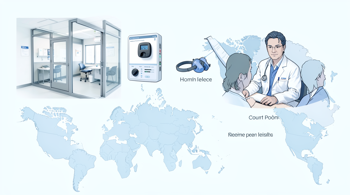
- Assessment model: doctor-led and diagnosis-driven
- Testing model: in-clinic studies and home testing
- Care areas: apnea, insomnia, pediatrics, movement disorders, and optimization
- Access model: physical clinics plus virtual consultations nationwide
5. Dorma Laval Sleep Clinic, Quebec
Dorma’s Laval clinic is located inside Summit Health at 800 Boulevard Chomedey, Suite C-400, Laval, Quebec. The supplied information describes WatchPAT home sleep testing, virtual appointments, CPAP consultations, and follow-up after testing or equipment setup. It states that many results are ready within about 72 hours, but this is a provider-published expectation rather than an independently verified performance measure. The model emphasizes diagnosis without an overnight laboratory stay. 10
| Service | Published description |
|---|---|
| Home testing | WatchPAT device records breathing and oxygen patterns |
| Consultation | Virtual appointments are available |
| CPAP support | Device, mask, use, and maintenance guidance |
| Follow-up | Ongoing review after testing or setup |
Risks, eligibility, and ongoing care
A clinic comparison cannot determine which treatment is appropriate for an individual. Home testing, laboratory polysomnography, CPAP, oral appliances, surgery, and implantable therapies have different eligibility requirements and clinical limitations. The Connecticut Sleep Apnea Center describes custom oral appliances as an option for diagnosed obstructive sleep apnea when CPAP is not tolerated, while Weiner Sleep Surgery focuses on surgical and implantable alternatives, including Inspire and Genio systems. 8 7
Important friction points include referral requirements, insurance rules, geographic distance, equipment adjustment, and the need for continuing monitoring. AASM accreditation is a useful quality signal, but it does not guarantee a particular outcome for every patient. Prospective patients should verify clinician credentials, accreditation status, testing requirements, treatment eligibility, follow-up arrangements, device maintenance responsibilities, and whether a proposed intervention is appropriate for the diagnosed type and severity of sleep apnea. 4
What the comparison shows
The five examples represent distinct care models rather than interchangeable facilities. Emory emphasizes accredited academic sleep care and both home and laboratory testing. Cleveland Clinic documents pediatric expertise and advanced implantable treatment. HCA HealthONE presents a regional adult and pediatric network. Sleep Health Centre combines physical and virtual services across South Africa, while Dorma emphasizes home testing and remote support in Laval. These differences may matter as much as institutional reputation when assessing practical suitability. 1 5 3 6 10
- For accredited testing infrastructure, Emory is the clearest documented example in this group.
- For pediatric and advanced surgical expertise, Cleveland Clinic has the strongest supplied evidence.
- For regional network access, HCA HealthONE offers the broadest described facility model.
- For virtual or nationwide access, Sleep Health Centre and Dorma provide the most explicit descriptions.
- For CPAP alternatives, the supplied research identifies oral-appliance and implant-focused pathways that require specialist evaluation.
Sources
- Emory Healthcare, Sleep Center
- American Academy of Sleep Medicine, Accreditation Standards and Recognition
- Cleveland Clinic, Dr. Vaishal Shah provider profile
- HCA HealthONE, Sleep Disorders
- Sleep Health Centre South Africa
- Sleep Apnea Center of Connecticut, Wallingford
- Weiner Sleep Surgery, Jordan Weiner, MD
- Dorma Sleep Clinics, Laval Sleep Clinic
Authored by 24Trendz team