Home Recovery for Ankle Fusion: A Clinical Overview of Post-Operative Management
Understanding the Scope of Ankle Fusion Recovery
Ankle fusion, medically referred to as tibiotalar arthrodesis, is a surgical intervention designed to treat end-stage ankle arthritis by permanently joining the tibia and talus bones 4. This procedure is utilized when chronic joint degeneration, often caused by trauma or long-standing arthritis, results in severe, persistent pain that fails to respond to conservative treatments such as physical therapy, bracing, or medication 5. Because the surgery involves structural changes to the skeleton, the recovery trajectory is significant, typically spanning several months of structured rehabilitation 2. Most specialists describe the post-operative phase as a marathon rather than a sprint, requiring diligent adherence to weight-bearing restrictions and immobilization protocols 2.
The primary objective during the recovery phase is to ensure the successful creation of a bone bridge across the joint surfaces, which are secured via hardware such as plates, screws, or rods 4. Clinical data indicates that approximately 90% of these surgeries result in successful fusion of the ankle bones 4. However, patient outcomes are heavily dependent on post-operative compliance, particularly regarding the non-weight-bearing (NWB) status mandated during the initial weeks 8. Successfully managing this period requires careful home preparation and a clear understanding of the evolving physical constraints throughout the 6 to 12-month healing arc 8.
The Initial Phase: Non-Weight-Bearing Protocols
Immediately following the procedure, patients are placed in a cast or a specialized post-operative walking boot to stabilize the joint 1. For the first 8 to 12 weeks, patients are generally strictly non-weight-bearing 1. During this time, the use of assistive mobility devices such as crutches, knee scooters, or wheelchairs is required to prevent accidental loading of the operated limb, which could compromise the stability of the fixation hardware 1. Clinical observations suggest that using crutches can lead to secondary musculoskeletal issues in 68% of short-term users, prompting many patients to explore alternative devices like knee scooters to maintain mobility while adhering to strict NWB rules 9.
Home management during this phase is centered on edema control and incision protection. Elevation of the operated leg above heart level is strongly advised, particularly during the first two weeks post-surgery, to minimize inflammation and pain 3. Wound care is equally critical; incisions must be kept clean and dry at all times 3. Medical professionals typically instruct patients to avoid submerging the limb in water until stitches are formally removed and the surgical site is fully closed 3. These environmental and behavioral controls form the foundation of a safe recovery, preventing post-operative infections and promoting optimal tissue healing 3.
Rehabilitation and Muscle Maintenance
While the ankle joint itself is immobilized, maintaining the strength of the surrounding kinetic chain is vital for a successful transition to walking. Physical therapy usually focuses on preserving muscle tone in the hip, knee, and core regions during the period where the ankle cannot bear weight 3. These targeted exercises prevent muscle atrophy that often occurs during prolonged periods of immobility and prepare the body for the mechanical demands of loading the limb once the fusion has consolidated 2.
The role of physical therapy evolves as the patient moves into the progressive loading stage. As the bones heal, the rehabilitation plan shifts from purely protective measures to functional strength training 2. Patients are encouraged to use supportive devices such as insoles in the contralateral foot to maintain balance and prevent secondary complications like plantar fasciitis, which can arise when the gait is naturally altered due to the immobilization of the fused ankle 1. Consistent, supervised therapy is frequently linked to higher patient satisfaction and faster restoration of functional mobility post-fusion 2.
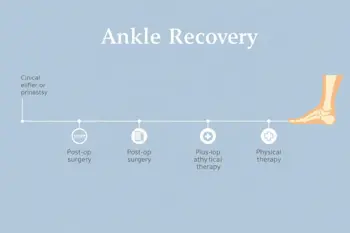
Monitoring Progress Through Imaging
Monitoring the progress of the fusion requires regular radiographic evaluation. Doctors frequently use X-rays to assess the internal state of the bone bridge and ensure that the hardware remains securely positioned 6. The transition to partial or full weight-bearing is never based on a set calendar date alone, but rather on objective, radiographical evidence that the bones have successfully integrated into one solid unit 8. Patients should anticipate multiple clinical check-ins during the 6 to 16-week window as they transition through the protective phases of healing 1.
These X-ray assessments serve as the final authority on when a patient can progress from a boot to standard footwear. Attempting to accelerate this timeline by loading the limb before the bone is fully consolidated risks non-union, where the bones fail to heal together, often requiring further surgical intervention 4. Consequently, the most important aspect of clinical oversight during home recovery is the adherence to these specific, scan-verified milestones rather than subjective feelings of readiness 8.
Lifestyle Adjustments and Long-Term Outlook
While the primary goal of ankle fusion is to eliminate the severe, persistent pain of end-stage arthritis, the procedure does fundamentally alter the mechanics of the foot 5. Because the tibiotalar joint loses all motion, the remaining biomechanical movement of the foot must be compensated for by the subtalar and midfoot joints 5. Many patients experience an initial adjustment period as they adapt to a new gait pattern, which may initially appear slightly altered compared to pre-arthritis baseline movement 7.
Long-term lifestyle modifications are often necessary to protect the health of adjacent joints. Research indicates that 40% to 50% of patients may develop some degree of degeneration in adjacent joints over 20 years, as these joints assume the motion previously provided by the ankle 7. High-impact activities such as running or jumping may be restricted long-term, though many patients remain capable of engaging in a wide array of daily activities, including walking and light exercise, without significant discomfort 6. Smoking cessation is strongly advocated for any patient undergoing this procedure, as nicotine significantly inhibits bone healing success rates 9.
When to Seek Professional Guidance
Patients are typically advised to contact their surgical team immediately if they experience symptoms that deviate from standard post-operative expectations. Warning signs include excessive redness, warmth, or discharge around the incision site, which may indicate an infection, or sudden, unmanageable pain that does not respond to prescribed analgesics and ice therapy 2. Additionally, if a patient perceives a change in the fit of the cast or boot, or experiences a sudden mechanical shift, professional evaluation is required to ensure the hardware has not been compromised 8.
The journey to full activity is a long-term commitment. While the fusion provides a stable, pain-free foundation for walking, the patience required during the first several months remains the single greatest predictor of overall clinical success 2. By remaining vigilant regarding wound care, following weight-bearing protocols, and participating fully in the prescribed physical therapy regimen, patients generally achieve high levels of satisfaction with the outcomes of their procedure 4.
Sources
- Michigan Foot Doctors, Ankle Fusion Recovery Week-by-Week Guide 2026
- Newman Feet, Ankle Fusion Recovery Timeline: What to Expect
- Cleveland Clinic, Ankle Fusion Recovery Information
- Joints Health Hub, Comprehensive Guide to Ankle Arthrodesis
- Michigan Foot Doctors, Ankle Fusion Surgery: What to Expect & Recovery
- OrthoInfo, Ankle Fusion Post-Operative Monitoring
- Michigan Foot Doctors, Ankle Fusion Vs. Replacement Arthritis Treatment 2026
- Penn Medicine, Ankle Arthritis and Fusion Recovery Protocols
- Freedom Leg, Ankle Surgery Recovery: What Your Discharge Paperwork Didn't Explain
Authored by 24Trendz team