Early symptoms of Lyme Disease you should know: Clinical signs, timing, and warning patterns
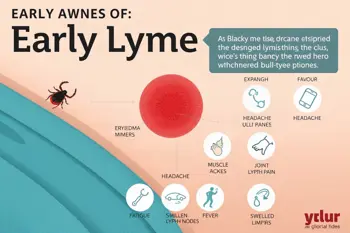
Early symptoms of Lyme Disease you should know include an expanding rash, fever, chills, headache, fatigue, muscle aches, joint pain, and swollen lymph nodes. These signs commonly appear 3 to 30 days after a bite from an infected blacklegged tick, although a tick bite may be unnoticed. 2
When early Lyme symptoms usually begin
Early Lyme disease generally develops within 3 to 30 days after an infected tick bite. The timing can make recognition difficult because people may not connect a new illness with outdoor exposure that occurred days or weeks earlier. Blacklegged ticks, also called deer ticks, can be as small as a poppy seed in their immature stage, and their bites are often painless. 5
Only about 25% to 30% of patients are able to recall a tick bite, according to the cited clinical reference. That means the absence of a remembered bite does not rule out Lyme disease. Exposure history remains relevant after hiking, gardening, camping, walking through tall grass, or spending time near wooded areas, particularly in regions where Lyme disease is more common. 5 3
The expanding rash and why appearance varies
The most characteristic early skin finding is erythema migrans, a red area that begins near the bite site and gradually expands over several days. It may become large, reaching 12 inches across or more, and the center may fade to create a target-like appearance. The rash can feel warm, but it is usually not intensely itchy or painful. 2 11
A classic bull’s-eye pattern is not required. The lesion may be uniformly red or bluish, and multiple red spots or multiple expanding rashes can occur. Harvard Health notes that the bull’s-eye appearance may be less visible on darker skin, while a clinical family medicine source reports that some people develop no rash at all. 1 2
Flu-like symptoms to recognize
Early Lyme disease often produces a general sense of illness that can be mistaken for influenza, another infection, stress, or poor sleep. Reported symptoms include fever or chills, headache, unusual fatigue, muscle aches, joint aches, and swollen lymph nodes. No single symptom proves that Lyme disease is present, so the combination of symptoms and possible tick exposure matters. 3
- Fever or chills, sometimes with a feverish feeling. 6
- Headache and fatigue that feels unusual or disproportionate to recent activity. 3
- Muscle aches, joint pain, or a generally achy feeling. 10
- Swollen lymph nodes, which may accompany the rash or flu-like illness. 9
Lyme disease without a visible bite or rash
Not seeing a tick does not eliminate the possibility of Lyme disease. Nymphal blacklegged ticks are difficult to spot, and many people do not feel the bite. Ticks may attach in hard-to-see areas such as the scalp, armpits, or groin, which can also make later identification challenging. 4
Likewise, the absence of a rash is not conclusive. Sources differ on the proportion of patients who develop a rash, but they agree that some infected people do not notice one. A person with unexplained flu-like symptoms after likely exposure should report the outdoor setting, approximate timing, known tick contact, and any skin changes to a clinician. 2 7
Signs that may indicate early spread
Lyme disease can produce additional symptoms when infection spreads beyond the initial skin manifestation. Possible findings include more than one expanding rash, facial weakness or drooping, nerve pain, palpitations, dizziness, or shortness of breath. These symptoms require clinical attention because they may involve the nervous system or heart rather than only the skin. 12
Later complications can include facial paralysis, irregular heartbeat, arthritis, additional rashes, and neurological problems. Such findings do not establish Lyme disease by themselves because several illnesses can cause similar symptoms, but they increase the importance of providing a complete exposure history and receiving a medical assessment. 6 16
How clinicians assess possible Lyme disease
Diagnosis generally combines symptoms, physical examination, likely tick exposure, geographic risk, and laboratory testing when appropriate. Flu-like symptoms alone are nonspecific, while an expanding erythema migrans rash can be a particularly important clinical finding. Testing decisions depend on the presentation and timing, so a negative or unavailable test does not replace professional interpretation of the overall picture. 13 5
Prompt medical evaluation is appropriate when an expanding rash or unexplained flu-like illness follows possible tick exposure. Early antibiotic treatment is usually effective and helps reduce the chance of complications involving the joints, nerves, or heart. Tick removal and prevention remain important because ticks can transmit other infections, some of which may spread after shorter attachment periods than Lyme disease. 8 6 7
Sources
- Family Doctor, “Lyme Disease”
- Medscape Reference, “Lyme Disease”
- The Well by Northwell, “Lyme Disease Symptoms: What Lyme Disease Actually Feels Like”
- Geisinger, “Don’t Ignore These Lyme Disease Symptoms”
- Labcorp, “Lyme disease: Recognize symptoms, early detection, treatment”
- Centers for Disease Control and Prevention, “Signs and Symptoms”
- Mayo Clinic, “Lyme Disease: Symptoms and Causes”
- Acibadem Hospitals Group, “Understanding Lyme Disease”
- U.S. National Library of Medicine, MedlinePlus, “Lyme Disease”
- Centers for Disease Control and Prevention, “Lyme Disease Rashes”
- Mayo Clinic, “Lyme Disease: Symptoms and Causes”
- National Institute of Allergy and Infectious Diseases, “Lyme Disease”
- Infectious Diseases Society of America, Lyme Disease Guidelines
- Johns Hopkins Lyme Disease Research Center, “Lyme Disease Symptoms”
- Cleveland Clinic, “Lyme Disease”
- Yale Medicine, “Lyme Disease”
Authored by 24Trendz team