Home recovery for bone fracture: Clinical insights into the healing timeline and management protocols
A fractured bone is a significant orthopedic event that demands structured care to ensure proper healing and the restoration of function 1. Whether a bone break is managed via conservative methods like casting and bracing or follows a surgical procedure involving plates and screws, the recovery process is a phased journey that occurs primarily within the home environment 1, 6. Understanding the physiological stages of repair and the associated management requirements is essential for families and patients tasked with navigating the post-injury period 3, 6.
The Physiological Timeline of Bone Healing
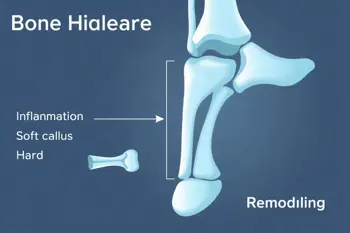
Bone repair is a complex, continuous biological process that generally unfolds over several months 5, 6. The initial inflammatory phase, lasting from hours to about one week, involves the formation of a blood clot and hematoma at the injury site, which provides the foundation for subsequent bone tissue growth 1, 5. During this time, patients typically experience localized redness, swelling, and pain 5. The secondary phase, known as the reparative stage, spans from several weeks to months as the body forms a soft callus of cartilage, which eventually transitions into a hard, mineralized callus 1, 5.
While the hard callus provides enough stability for limited usage, the final remodeling phase can take months or even years 5. During this long-term phase, the bone structure is refined and strengthened as it adapts to physical stress 5. While common benchmarks suggest a recovery window of six to twelve weeks for many adult fractures, these timelines remain estimations 6, 8. Individual healing rates are influenced by factors such as age, overall health status, smoking habits, and the specific location of the fracture within the body 6, 9, 10.
Foundational Home Management Strategies
Effective home management relies on consistent adherence to clinical guidance, particularly concerning the protection of the immobilization device. Whether utilizing a plaster cast, functional brace, or splint, it is critical to keep the area clean and dry 1, 3. In regions with high ambient heat or humidity, patients must be particularly vigilant about moisture buildup within casts to prevent skin complications 1. Maintaining stability of the fracture is non-negotiable in the early weeks, as premature weight-bearing or excessive activity can lead to displacement of the bone or hardware 7, 11.
Standard initial protocols for pain and swelling management, often referred to as RICE, remain the cornerstone of early recovery: rest, ice application (typically 15 to 20 minutes with a cloth barrier), compression, and elevation 7, 12. Elevation is particularly important to prevent fluid accumulation around the injured limb, while isometric exercises-where muscles are contracted without joint movement-help prevent excessive atrophy while the limb is immobilized 7, 17. All physical activity should be strictly aligned with physician-approved protocols to avoid the risk of re-injury 11, 15.
Nutritional Support for Bone Mineralization
The physiological process of bone remodeling requires specific nutritional inputs to support the synthesis of new tissue 14. Clinical literature consistently identifies adequate intake of calcium and Vitamin D as essential components of the healing process 14. A balanced diet rich in protein is also highly recommended to support muscle maintenance and soft tissue repair during the immobilization period 8. Patients should monitor their nutritional intake to ensure these requirements are met, as deficiencies may potentially hinder the rate of bone union 14.
Rehabilitation and Mobility Restoration
The conclusion of immobilization does not signal the immediate end of the recovery journey 4, 6. Once a cast or splint is removed, patients often face residual symptoms including muscle weakness, joint stiffness, and reduced range of motion 4, 6. Physiotherapy plays a critical role in this stage, focusing on restoring functional strength and confidence in the injured limb 4. Early mobilization, conducted under clinical guidance, is vital to prevent long-term functional loss and to ensure that the brain regains trust in the mobility of the affected area 6, 17.
Monitoring for Clinical Complications
Patients and caregivers must remain vigilant for warning signs that indicate potential complications during the recovery process. Immediate medical attention is required if a patient experiences persistent or worsening pain, new numbness, tingling, or changes in skin color around the injury site 6, 12, 16. Coldness in the limb or a loss of sensation can signal issues with circulation or nerve compression that necessitate urgent orthopedic review 16. Furthermore, any fever or systemic symptoms should be addressed promptly to rule out infections, particularly following surgical fixation 6.
Reducing Future Fracture Risks
For many individuals, particularly older adults, recovery provides an opportunity to address the underlying factors that contribute to fragility fractures 9. Managing comorbidities that affect balance, such as vision changes or medication side effects, is a key component of long-term care 9. Home safety modifications are frequently advised to prevent secondary falls, which pose a high risk for patients with reduced coordination or bone density 16. Smoking cessation remains the single most impactful lifestyle modification for improving bone health, as nicotine usage restricts blood supply and is clinically linked to delayed bone union or non-union 8, 13.
Sources
- Dr. Ankur Singh: Bone Fracture Recovery at Home Guide
- Cleveland Clinic: Bone Fractures (Broken Bones) Overview
- Manipal Hospitals: Bone Fracture Healing Process
- Tez Health: Post-Fracture Physiotherapy at Home
- Mass General Brigham: Bone Fracture Healing Time
- Acibadem Health Point: Fracture Fixation Recovery
- Fracture Club: Daily Care Schedule Post Fracture
- Royal Osteoporosis Society: Broken Hips, Wrists and Other Bones
- Banner Health: Geriatric Fractures and Recovery
- Trinity Home Care: Post-Fracture Recovery with Home Care
- Mount Sinai Health System: Fracture Aftercare
- MedlinePlus: Managing Fracture Complications
- Mayo Clinic: Smoking and Bone Healing
- Johns Hopkins Medicine: Nutrition for Fracture Healing
- American Academy of Orthopaedic Surgeons: Rehabilitation Guidelines
- National Institute on Aging: Preventing Falls and Fractures
- WebMD: Understanding Bone Healing Phases
Authored by 24Trendz team