First warning signs of Crohn's disease that you should recognize: A clinical guide to early symptoms
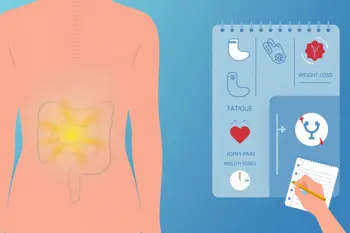
The first warning signs of Crohn's disease that you should recognize may be subtle, intermittent, or mistaken for a temporary stomach problem. Recurring diarrhea, abdominal pain or cramping, weight loss, fatigue, appetite changes, and symptoms affecting the joints, skin, eyes, or mouth can occur, but no single symptom confirms Crohn's disease. 1
How early Crohn's symptoms may appear
Crohn's disease is a chronic inflammatory bowel disease that can affect any part of the digestive tract, from the mouth to the anus. Symptoms vary according to the location and severity of inflammation, so one person may mainly experience bowel changes while another first notices fatigue, joint soreness, or appetite loss. The condition can also move through periods in which symptoms become more noticeable and periods in which they ease. 1
Early symptoms are not always dramatic. Repeated episodes that return after seeming to improve may be more informative than one isolated day of discomfort. Cleveland Clinic identifies ongoing diarrhea, belly pain or cramps, extreme tiredness, loss of appetite, unexpected weight loss, fever, blood in the stool, and mouth sores among possible symptoms. These signs also occur in other conditions, which is why their persistence and combination matter. 3
Diarrhea, urgency, and abdominal pain
Persistent or recurring diarrhea is one of the most recognizable gastrointestinal warning signs. Crohn's-related diarrhea may occur with abdominal cramping and can be accompanied by urgency or frequent bathroom trips. The exact pattern differs because inflammation may involve different sections of the digestive tract. Bloody diarrhea is possible, although blood is not present in every case. Ongoing bowel changes that interfere with work, school, sleep, or regular activities warrant clinical attention. 1 5
Abdominal pain may be diffuse or concentrated in a particular area, including the lower right abdomen when the lower small intestine is involved. Pain can accompany diarrhea, reduced appetite, or nausea, and its severity does not always reflect the full extent of intestinal inflammation. Crohn's disease commonly affects the lower small intestine, the large intestine, or both, but it can occur elsewhere in the digestive tract. 3 5
Weight loss, appetite changes, and nausea
Unexplained weight loss is a key warning sign, especially when it occurs without a deliberate change in diet or activity. Weight may fall when abdominal symptoms reduce food intake, when appetite declines, or when intestinal inflammation interferes with normal nourishment. Weight loss becomes more concerning when it occurs alongside repeated diarrhea, abdominal pain, fatigue, or fever rather than as an isolated change. 1 5
Reduced appetite, nausea, and vomiting can accompany Crohn's disease. These symptoms may make eating difficult and can reinforce weight loss over time. Nausea and appetite loss are not specific to Crohn's disease, but their recurrence with bowel symptoms creates a pattern worth documenting for a healthcare professional. A symptom record can include meal-related discomfort, stool changes, weight trends, and episodes of vomiting or fever. 1
Fatigue, fever, and anemia-related clues
Fatigue may be an early or ongoing feature of Crohn's disease. It can occur in connection with chronic inflammation or anemia, which is listed among the possible symptoms by the National Institute of Diabetes and Digestive and Kidney Diseases. Fatigue is more significant when it persists despite adequate rest or appears with reduced exercise tolerance, dizziness, weight loss, or other signs of intestinal illness. 1 9
Fever can accompany active inflammation, and some people experience general illness during symptom flares. Fever alone does not identify Crohn's disease, since infections and other inflammatory conditions can produce it. However, recurring fever combined with diarrhea, pain, appetite loss, or unexplained weight loss should not be dismissed as an ordinary digestive upset. Blood in stool also deserves medical assessment because it may reflect inflammation or ulceration in the digestive tract. 3 5
Symptoms outside the digestive tract
Crohn's disease can produce manifestations beyond the intestine. Joint pain or soreness, eye redness or pain, and skin changes such as red, tender bumps are recognized associated symptoms. Mouth sores may also occur and can sometimes be noticed before more obvious gastrointestinal symptoms. These findings have many possible causes, but their appearance alongside recurring digestive complaints can provide important information during a medical evaluation. 1 3 4
Extraintestinal symptoms may be overlooked because they do not seem connected to digestion. Joint stiffness, painful skin lesions, eye discomfort, or repeated mouth ulcers should be recorded with the timing of diarrhea, pain, fatigue, and weight changes. The presence of one outside-the-gut symptom does not establish inflammatory bowel disease. Instead, the combination of symptoms may help distinguish a persistent inflammatory pattern from an isolated stomach infection or another unrelated condition. 4 7
Patterns, risk factors, and medical evaluation
Crohn's disease can occur at any stage of life, although many people are diagnosed before age 30. A parent or sibling with Crohn's disease increases the likelihood of developing it, and smoking has been associated with approximately double the chance of developing the disease. These factors do not determine whether a person has Crohn's disease, and their absence does not rule it out. 1 2
There is no single symptom or single test that independently confirms Crohn's disease. Evaluation may involve a medical history, laboratory testing, colonoscopy, imaging, and sometimes video capsule endoscopy, depending on the suspected location and severity of disease. Because symptoms can resemble irritable bowel syndrome, infection, or other digestive disorders, recurring diarrhea, pain, bleeding, fatigue, fever, or unexplained weight loss should be discussed with a qualified healthcare professional rather than self-diagnosed. 5 7 6
Sources
- National Institute of Diabetes and Digestive and Kidney Diseases, Symptoms & Causes of Crohn's Disease
- Mayo Clinic, Crohn's disease: Symptoms and causes
- Cleveland Clinic, Crohn's Disease: Symptoms & Treatment
- Everyday Health, Early Symptoms of Crohn's Disease
- Merck Manual Consumer Version, Crohn Disease
- American Medical Association, What doctors want patients to know about Crohn's disease
- MSD Manual Professional Edition, Crohn Disease
- Aidy, Early Signs of Crohn's Disease: What to Watch For
- NCBI Bookshelf, StatPearls: Crohn Disease
Authored by 24Trendz team