Garcinia Cambogia to support weight loss with sustained-release formulation: Evidence, formulation limits, and safety review
Garcinia cambogia to support weight loss with sustained-release formulation is a formulation concept that combines a widely studied botanical ingredient with modified drug delivery. Current evidence does not establish that sustained release improves weight loss, while clinical research on Garcinia cambogia itself remains weak and inconsistent. The distinction between theoretical mechanisms, formulation performance, and demonstrated human outcomes is therefore central to evaluating the topic.
What Garcinia cambogia is proposed to do
Garcinia cambogia, also known as Garcinia gummi-gutta, is a tropical fruit whose rind contains hydroxycitric acid, or HCA. HCA has been proposed to inhibit ATP-citrate lyase, an enzyme involved in converting citrate into substrates used for fatty-acid synthesis. This mechanism provides a biochemical rationale for research, but a plausible mechanism does not demonstrate a clinically important reduction in body weight in humans. 5
Some reviews also describe possible effects on satiety and appetite regulation, including a proposed relationship with serotonin pathways. A research profile lists commonly studied HCA intakes in the range of 500 to 1,500 milligrams daily, but dosage descriptions should not be interpreted as proof of effectiveness or as individualized medical guidance. Extract concentration, product composition, and quality control can vary substantially between preparations. 4
What human weight-loss research shows
Clinical findings generally do not support substantial or reliable weight loss from Garcinia cambogia. A reported 12-week trial involving 135 adults with obesity found no significant weight-loss difference between Garcinia cambogia and placebo. A later evidence review summarized a meta-analysis of 12 randomized trials involving 706 participants and characterized the observed effect as small, with uncertain clinical importance. 4
Systematic reviews have reached a similarly cautious conclusion. The NIH Office of Dietary Supplements summarizes randomized-trial evidence as showing little or no meaningful benefit, while a Cochrane review found the evidence limited and insufficient for dependable conclusions. These findings mean that any claim of effortless, substantial, or predictable weight loss is not aligned with the supplied clinical evidence. 68
Does sustained release change the evidence?
Sustained-release delivery is intended to release an active ingredient gradually rather than all at once. In principle, this approach could alter exposure over time and might influence gastrointestinal tolerability, absorption, or dosing patterns. Those are formulation hypotheses, not established outcomes for HCA. A modified-release profile cannot independently demonstrate greater fat loss, appetite control, adherence, or long-term safety. 1
The supplied formulation study concerns optimized sustained-release herbal tablets for metabolic syndrome, including in-vitro release and stability work. Its stated context involves herbal delivery for metabolic and cardioprotective effects, but the provided record does not establish a Garcinia cambogia-specific human weight-loss result. It therefore offers formulation context rather than direct proof that sustained-release HCA is superior to conventional Garcinia products. 1
Important differences between Garcinia compounds
Interpretation requires separating HCA from other compounds associated with the Garcinia name. A 2025 Frontiers in Chemistry review focuses on gambogic acid, described as a natural xanthone with a cage-like molecular structure and broad pharmacological activity. Gambogic acid is not interchangeable with HCA, the compound principally discussed in weight-loss supplements, so findings about its molecular pathways or nanodelivery strategies cannot be used as direct evidence for sustained-release HCA. 2
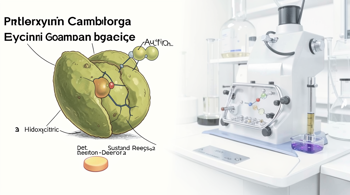
A separate 2026 review describes Garcinia cambogia phytochemistry as including HCA, flavonoids, anthocyanins, xanthones, benzophenones, organic acids, and polyphenols. It also emphasizes inconsistent clinical outcomes and concerns about hepatotoxicity. Botanical identity, extraction method, standardization, and the measured active constituent are consequently essential when comparing studies or evaluating a proposed sustained-release tablet. 6
Safety concerns and medicine interactions
Garcinia cambogia has been associated with gastrointestinal symptoms and headache, and published safety summaries describe potential liver-related concerns. LiverTox documents clinically apparent liver injury linked with Garcinia-containing products, including severe cases. The existence of rare serious events does not establish that every product causes liver injury, but it does make unexplained fatigue, jaundice, dark urine, abdominal symptoms, or other concerning changes reasons for prompt medical assessment. 9
Potential interactions are also relevant, particularly for people taking medicines that affect the liver or serotonin pathways. Mayo Clinic and Memorial Sloan Kettering Cancer Center both describe uncertain weight-loss effectiveness alongside gastrointestinal, hepatic, and interaction concerns. A sustained-release formulation may change the timing or duration of HCA exposure, but the supplied evidence does not show that this altered exposure removes these risks. 1213
What evidence a sustained-release product would need
A credible evaluation would require a well-controlled human trial comparing the sustained-release formulation with placebo, while controlling for the behavioral program used by participants. The study would need to measure sustained body-weight change, adherence, adverse events, liver tests, and actual HCA exposure. Without these outcomes, an in-vitro release curve or stability result can show how a tablet behaves in testing, but not whether it produces meaningful or durable weight loss. 1
One completed trial listed 90 targeted participants with prediabetes and obesity and examined Garcinia cambogia rind powder across anthropometric, glycemic, lipid, hepatic, and renal measures. The supplied registry summary reports completion but does not provide outcome data, so it cannot be treated as evidence of benefit or harm. Evidence assessment should therefore distinguish registered studies, completed studies, published results, and independently replicated clinical findings. 3
Regulation, labeling, and practical interpretation
Dietary supplements are not approved by the U.S. Food and Drug Administration for safety or effectiveness before marketing in the same manner as approved medicines. Responsibility for compliance rests with manufacturers, and product quality may vary in ingredient identity, HCA amount, contaminants, and release performance. Consumers and clinicians should treat labels, standardized assay claims, and sustained-release descriptions as information requiring verification rather than as evidence of clinical success. 10
Regulatory scrutiny has also addressed deceptive Garcinia cambogia advertising. The Federal Trade Commission charged marketers over unsupported claims of substantial weight loss, illustrating the gap that can arise between promotional language and controlled research. The most defensible conclusion is that Garcinia cambogia has a proposed biochemical mechanism but weak clinical support, and sustained release remains an unproven delivery modification rather than an established weight-loss advantage. 115
Sources
- International Journal of Pharmacognosy and Herbal Drug Technology, Development and Optimization of Sustained-Release Herbal Tablets for Metabolic Syndrome
- Frontiers in Chemistry, Multi-targeted pharmacological actions and nanodelivery strategies of Garcinia cambogia
- NCT07419074, Hypoglycemic Potential of Garcinia Cambogia Rind Powder Among Prediabetic Obese Patients
- Supplement Science, Garcinia Cambogia: Does It Work? Evidence Review
- National Center for Complementary and Integrative Health, Garcinia cambogia
- NIH Office of Dietary Supplements, Weight Loss Health Professional Fact Sheet
- PubMed, Systematic review and meta-analysis of Garcinia cambogia and HCA
- Cochrane Library, Herbal medicines for overweight and obesity
- NIDDK LiverTox, Garcinia cambogia
- U.S. Food and Drug Administration, Using Dietary Supplements Safely
- Federal Trade Commission, Garcinia cambogia advertising enforcement
- Mayo Clinic, Garcinia cambogia
- Memorial Sloan Kettering Cancer Center, Garcinia
- Cleveland Clinic, Does Garcinia cambogia work?
Authored by 24Trendz team