Symptoms of hives and chronic urticaria: A Clinical Overview of Dermatologic Manifestations
Hives, medically referred to as urticaria, represent a common dermatologic condition characterized by the emergence of itchy, raised welts on the skin 1, 3. Affecting approximately 20% of the population at some point in their lives, these lesions are the result of histamine release from mast cells, often occurring as a response to an allergic reaction, infection, or other physical stimuli 1, 4. Understanding the physical presentation and classification of these symptoms is essential for differentiating between transient acute episodes and persistent chronic conditions 4, 6.
Physical Presentation of Hives
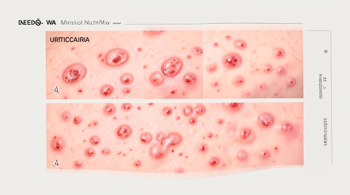
The hallmark symptom of urticaria is the development of wheals, which are transient, raised bumps on the skin surface 3, 6. These welts can range significantly in size, from as small as a pencil eraser to as large as a dinner plate, and may appear anywhere on the body 1, 3. When pressure is applied to a hive, the center often turns white, a process known as blanching 3. The appearance of these lesions is influenced by individual skin tone, often manifesting as red or pink on lighter skin, while appearing as the same color as the surrounding skin on brown or black skin 1, 3.
- Individual lesions typically resolve within 24 hours without leaving permanent skin discoloration or scars 2.
- New welts may continue to form as older ones fade, leading to a shifting or migratory pattern across the body 3.
- The lesions are typically pruritic, meaning they cause a sensation of intense itching that can be highly disruptive to daily routines 1, 2.
Defining Chronic Urticaria
While many cases of hives are short-lived and self-limiting, the condition is categorized as chronic when symptoms persist for six weeks or longer 1, 4. Chronic urticaria is further divided based on the etiology of the symptoms 2. Chronic spontaneous urticaria occurs without any identifiable external trigger, whereas chronic inducible urticaria is linked to specific physical stimuli such as pressure, temperature changes, or vibration 2, 7. Patients with this condition often experience a cycle of recurring hives that can severely impact sleep, emotional well-being, and overall quality of life 2, 4.
The Relationship Between Hives and Angioedema
Approximately 40% of individuals suffering from chronic urticaria also experience concurrent angioedema, which involves swelling that occurs deeper in the skin or mucous membranes 2, 4. Unlike the surface-level welts of hives, angioedema commonly affects regions with loose connective tissue, such as the eyelids, lips, genitals, hands, or feet 2, 4. While hives are typically pruritic, angioedema may be accompanied by a burning or painful sensation, and the swelling may persist longer than the 24-hour window characteristic of standard wheals 1, 2.
Recognizing Emergency Symptoms
Although the majority of hive-related symptoms are not life-threatening, it is vital to distinguish routine urticaria from severe allergic reactions like anaphylaxis 1. Immediate medical intervention is necessary if hives are accompanied by symptoms such as difficulty breathing, difficulty swallowing, or significant swelling of the tongue or throat 1, 3. These signs can indicate systemic distress that requires urgent evaluation in an emergency department setting, particularly if the patient experiences dizziness, fainting, or rapidly escalating physical symptoms 1.
Diagnostic Considerations
The diagnosis of chronic urticaria is primarily based on a comprehensive medical history and clinical examination 2, 6. Because acute urticaria is typically self-limiting, extensive laboratory testing is rarely required unless there is a specific suspicion of food or drug-related hypersensitivity 4, 6. For chronic cases, clinicians may perform basic investigations, including a complete blood count, erythrocyte sedimentation rate, and C-reactive protein levels, to identify potential underlying inflammatory or systemic conditions 2, 7. This systematic approach ensures that other dermatologic conditions with similar appearances, such as urticarial vasculitis or autoinflammatory syndromes, are effectively excluded 6.
Management of Symptoms
Treatment strategies for chronic urticaria aim to achieve complete symptom control and normalize the patient's quality of life 6. The standard pharmacological approach involves the use of H1 antihistamines, with second-generation agents generally preferred due to their reduced sedating effects compared to first-generation options 4. In cases where standard dosing is insufficient, clinical guidelines suggest a stepped approach, which may involve increasing the dose of antihistamines up to four times the standard dosage 4. While there is no definitive cure for many forms of chronic urticaria, daily management can successfully mitigate the frequency and severity of outbreaks 7, 8.
Sources
- Cleveland Clinic: Hives (Urticaria)
- StatPearls (NCBI): Chronic Urticaria
- American Academy of Allergy, Asthma & Immunology: Hives (Urticaria)
- American Family Physician: Acute and Chronic Urticaria
- Mayo Clinic: Hives Symptoms and Causes
- Medscape: Diagnosis and Management of Urticaria Guideline
- Leeds Teaching Hospitals NHS Trust: Chronic Urticaria
- Allergy & Asthma Network: Chronic Spontaneous Urticaria
Authored by 24Trendz team