Warning signs of deep vein thrombosis: Clinical identification and medical perspective
Deep vein thrombosis (DVT) is a medical condition that occurs when a blood clot, known as a thrombus, develops within a vein located deep inside the body 1. These clots are most frequently localized in the large veins of the lower legs or thighs, although they can manifest in the arms, pelvis, abdomen, or other regions 2. Recognizing the early warning signs of DVT is essential, as the condition can lead to life-threatening complications if left untreated 1. Clinical data suggests that DVT affects approximately one in every 1,000 individuals annually 4.
Common Clinical Symptoms
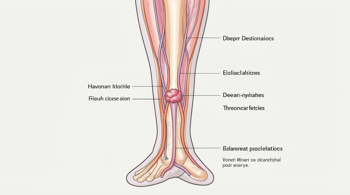
The presentation of DVT can vary significantly between individuals, and some patients may remain asymptomatic, meaning they experience no physical manifestations at all 1. When symptoms are present, they typically manifest on one side of the body 2. A primary indicator is localized swelling, which may affect the calf, thigh, or the entire leg 4. This swelling is frequently accompanied by a persistent, heavy ache or a throbbing sensation that may intensify while walking or standing 4.
Patients often report pain or tenderness that is sometimes mistaken for a pulled muscle 9. Unlike a muscle injury, this pain tends to be constant rather than intermittent and does not necessarily improve with rest 10. Physical changes in the skin are also common diagnostic markers. These include visible redness or a darker discoloration of the skin surrounding the affected area 2. Additionally, the skin over the site of the clot may feel noticeably warmer to the touch compared to surrounding tissue 4.
Understanding the Mechanism of DVT
The formation of a deep vein clot is generally attributed to three primary factors: injury to the vein lining, hypercoagulability of the blood, or a significant decrease in the speed of blood flow 1. When blood flow becomes slow or blocked, it increases the likelihood of a thrombus forming 2. While superficial veins are located just beneath the skin's surface, deep veins are situated within muscular structures and alongside bone, making clots in these areas more difficult to detect without specialized imaging 3.
The severity of DVT is often categorized by its location and the potential for the clot to propagate. Most proximal DVT cases involve the femoral or popliteal veins, and a portion of these clots may extend further into the iliofemoral veins 5. While distal or calf vein clots occur, they are generally associated with a lower risk of large emboli compared to those that originate in the proximal deep veins of the thigh or pelvis 5. Chronic DVT can lead to venous insufficiency, where the veins struggle to return blood to the heart effectively 2.
Major Complications: Pulmonary Embolism
A critical concern regarding DVT is the risk of a blood clot breaking free from its original site and traveling through the bloodstream to the lungs, a phenomenon known as a pulmonary embolism (PE) 3. PE is considered a life-threatening emergency because the traveling clot, or embolus, can obstruct vital pulmonary arteries, significantly impacting oxygen delivery and placing severe strain on the heart 9. Medical professionals often use the term venous thromboembolism (VTE) to encompass both DVT and the resulting PE 3.
The warning signs of a potential pulmonary embolism differ from those of a localized DVT and require immediate emergency care. These symptoms include the sudden onset of unexplained shortness of breath, sharp chest pain that may worsen during deep inhalation, and a rapid heart rate 4. In rare cases, if a clot passes through a small opening in the heart, it may travel to the brain, potentially causing a stroke 8. Because of these risks, prompt diagnosis and anticoagulant treatment are essential protocols for managing the condition 5.
Identified Risk Factors
While DVT can occur in anyone, certain demographics and medical circumstances increase susceptibility. Age is a significant factor, with the risk of developing DVT increasing as individuals reach age 60 and older 2. Lifestyle and situational factors play a major role in venous blood stasis. For instance, prolonged periods of inactivity, such as extended bed rest after surgery or long-duration travel, are well-documented triggers for clot formation 2. The physical trauma associated with recent fractures in the pelvis or hips also elevates the risk profile 2.
Additional factors include clinical conditions such as cancer, heart or lung disease, and the use of certain medications, including hormone replacement therapy or oral contraceptives 4. Pregnancy and the postpartum period, specifically the six months following childbirth, are also periods of heightened risk 2. Furthermore, individuals with a family history of blood clots or those who have previously experienced a DVT or pulmonary embolism remain at a higher statistical probability of future occurrences 4.
Diagnostic Processes
Because symptoms of DVT can be subtle or non-existent, clinical diagnostic procedures are necessary to confirm the presence of a clot. Doctors typically begin with a thorough evaluation of the patient's medical history and a physical examination of the affected limb 7. A primary diagnostic tool used in clinical settings is the duplex ultrasound, which utilizes sound waves to visualize blood flow and identify potential obstructions in the veins 5.
In some instances, clinicians may utilize D-Dimer blood testing to screen for DVT. A negative D-Dimer result is often helpful for excluding the presence of a clot, while a positive result is considered non-specific and usually necessitates further investigation with imaging to confirm the diagnosis 5. Other diagnostic methods, though used less frequently depending on the context, include venography, which involves injecting a contrast dye into the veins followed by X-ray imaging to visualize blood flow patterns 7.
Management and Prevention
The primary therapeutic goal in treating DVT is to prevent the clot from increasing in size and to minimize the risk of it breaking loose and causing a pulmonary embolism 3. Anticoagulant medications, commonly referred to as blood thinners, are the standard pharmacological intervention to achieve these outcomes 5. These treatments are intended to prevent further clotting rather than dissolving the existing thrombus, which the body typically reabsorbs over time 3.
Depending on the clinical scenario, patients may be prescribed anticoagulants for several months, and in some cases, healthcare providers may recommend the use of compression stockings to manage venous pressure for up to two years 1. Lifestyle modifications and preventative measures, such as maintaining movement during long trips and managing underlying health conditions, are emphasized for patients identified as being at higher risk 7. Long-term follow-up is important to monitor for signs of post-thrombotic syndrome, a complication that can cause chronic leg pain, persistent swelling, and potential skin ulcerations 6.
Sources
- Cleveland Clinic: Deep Vein Thrombosis (DVT) Symptoms & Treatment
- Penn Medicine: Deep Vein Thrombosis (DVT) Symptoms and Causes
- Merck Manual: Deep Vein Thrombosis (DVT) Overview
- NHS Inform: Deep vein thrombosis (DVT)
- MSD Manual: Deep Venous Thrombosis (DVT) Professional Edition
- Harvard Health: Leg clots (aka deep-vein thrombosis) health hazard
- Family Doctor: Deep Vein Thrombosis
- UC Davis Health: What is a DVT? Symptoms, dangers and when to get help
- World Thrombosis Day: What is Deep Vein Thrombosis
- Nebraska Medicine: How do you know if you have a blood clot?
Authored by 24Trendz team