Signs you may have a urinary tract infection: A Clinical Guide to Symptoms and Warning Signs
Signs you may have a urinary tract infection often begin with burning when urinating, a persistent urge to go, frequent urination, or passing only small amounts of urine. This guide reviews those symptoms, explains how bladder infections differ from kidney infections, and identifies changes that warrant medical assessment.
Common urinary symptoms
A strong or persistent urge to urinate is one of the most recognizable symptoms of a UTI, even when very little urine is produced. People may also need to urinate more often than usual, experience pain or burning during urination, or feel unable to empty the bladder completely. These symptoms commonly occur when bacteria cause inflammation in the bladder or urethra. 1
The combination of urgency, frequency, and burning is more informative than any single symptom alone, although symptoms can vary between individuals. Some people report leaking small amounts of urine, while others mainly notice discomfort during urination. A healthcare professional may use the symptom pattern together with urine testing because other conditions can produce similar complaints. 2
Changes in urine appearance and odor
Urine associated with a bladder infection may appear cloudy, dark, or unusually strong-smelling. Pink, red, or visibly bloody urine can indicate blood in the urinary tract, a finding that should not be dismissed as a routine change. The presence of altered urine does not establish the cause by itself, but it is a recognized feature of bladder infection symptoms. 2
Strong-smelling urine can occur with a UTI, but odor alone is not enough to confirm an infection. The more clinically meaningful pattern is odor or cloudiness occurring alongside burning, urgency, frequency, pelvic discomfort, or blood. Persistent or worsening changes should be discussed with a healthcare professional, particularly when they occur with pain or systemic symptoms. 1
Pain and pressure linked to a bladder infection
Lower abdominal or pelvic pain is another possible sign, often felt around the center of the pelvis or above the pubic bone. The discomfort may be described as pressure, tenderness, or an ache that accompanies the need to urinate. These sensations are associated with inflammation in the lower urinary tract, where bladder infections are most commonly located. 3
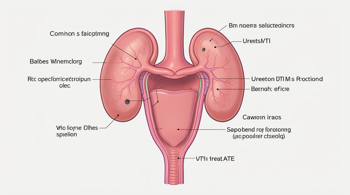
A bladder infection is one type of UTI, while infections can also affect the urethra, ureters, or kidneys. The terms are often used interchangeably in everyday conversation because the symptoms overlap, but the location matters clinically. Lower abdominal discomfort with urinary symptoms generally differs from the back, side, or groin pain associated with possible kidney involvement. 4
Warning signs of possible kidney involvement
Fever and chills, nausea or vomiting, and pain in the back, side, or groin can indicate that an infection has reached one or both kidneys. Kidney infections are more serious than uncomplicated bladder infections and can cause severe illness if treatment is delayed. These warning signs call for prompt medical evaluation rather than relying on symptom observation alone. 2
Low back or flank pain becomes especially concerning when it occurs with urinary burning, urgency, cloudy urine, or fever. A kidney infection may involve systemic symptoms because the infection is no longer limited to the lower urinary tract. Medical assessment commonly includes analysis of a urine specimen, and urine culture may help identify the responsible bacteria. 6
Symptoms in older adults and children
Older adults may not always show the classic pattern of burning or frequent urination. Sudden confusion, increased forgetfulness, agitation, unusual sleepiness, or a decline in daily functioning may occur alongside a UTI, although these changes have many possible causes. Because behavioral changes are not specific to infection, they require a broader medical evaluation rather than an assumption that a UTI is responsible. 1
Children can have burning, urgency, frequency, cloudy or bloody urine, and stomach or back pain. They may also develop fever, vomiting, diarrhea, irritability, reduced activity, or new daytime wetting after toilet training. In a child, symptoms can be less specific than in an adult, so a clinician may need to evaluate the overall pattern and obtain urine testing. 3
When symptoms should be evaluated
Anyone with symptoms of a bladder infection should contact a healthcare professional, especially when symptoms persist for more than a couple of days or become worse. Diagnosis is not based solely on urine color or odor. Clinicians may consider the symptoms, examine a urine sample, and use culture findings to guide treatment when appropriate. 2
Immediate medical attention is appropriate for fever or chills, nausea or vomiting, back or side pain, groin pain, or a significant decline in general condition because these features may signal kidney infection. Blood in the urine, recurrent symptoms, pregnancy, childhood illness, and new confusion in an older adult also warrant professional evaluation. Untreated infection can spread upward from the bladder toward the kidneys. 1
Sources
- Penn Medicine, Urinary Tract Infection: Symptoms and Causes
- National Institute of Diabetes and Digestive and Kidney Diseases, Symptoms and Causes of Bladder Infection in Adults
- FamilyDoctor.org, Urinary Tract Infection
- Cleveland Clinic, Bladder Infection vs. UTI
- NCBI Bookshelf, Acute Cystitis
- Merck Manual Professional Edition, Bacterial Urinary Tract Infections
Authored by 24Trendz team