Best Knee Sleeve for Joint Support and Mobility: A Comprehensive Technical Analysis
Choosing an appropriate knee sleeve requires an understanding of how compression, material thickness, and structural design interact to support joint health and mobility. While often utilized interchangeably, these products serve distinct purposes depending on the intensity of activity and the specific nature of joint discomfort 1. The market features a wide spectrum of options, from lightweight knit compression garments designed for all-day comfort to heavy-duty 7mm neoprene sleeves engineered for maximum stability during peak-load athletic performance 2. Understanding these nuances is critical for selecting a device that provides meaningful support without unnecessarily restricting range of motion 3.
Understanding Knee Sleeve Material and Design
Material composition is a primary factor in determining the performance characteristics of a knee sleeve. Traditional designs frequently utilize neoprene, a synthetic rubber known for its ability to retain heat and provide consistent, firm compression 4. For example, professional-grade sleeves often utilize a 7mm thick SBR/Neoprene blend to maximize joint warmth and mechanical stability during heavy lifting sessions 5, 6. Neoprene provides a substantial structural base, though it can become less comfortable during extended, high-intensity aerobic activity due to its limited breathability 7.
In contrast, modern knit compression sleeves, often constructed from nylon, polyester, and elastane blends, offer a balance between moisture-wicking properties and targeted pressure 8. These designs often feature 4-way stretch capabilities that mold to the natural anatomy of the knee, providing support while maintaining high levels of mobility 9. Advanced versions incorporate silicone inserts or lateral stabilization rods to guide the kneecap and reduce strain on the patellofemoral joint without the bulk of thicker neoprene materials 10.
Categorization by Thickness and Application
The thickness of a sleeve serves as a reliable indicator of its intended use case. Industry standards typically categorize sleeves into three primary tiers based on millimeter thickness:
- 3mm Sleeves: Designed for agility, running, and endurance, providing light compression without restricting fast, high-rep movements 11.
- 5mm Sleeves: Often considered the versatile middle ground, these are suitable for hybrid training where both joint protection and a wide range of motion are required, such as CrossFit or general gym workouts 12.
- 7mm Sleeves: Engineered for maximum stability, these are the standard for heavy squats, powerlifting, and 1RM (one-rep max) attempts where preventing excessive joint translation is a priority 13.
Choosing the correct thickness is a functional decision based on the specific mechanical needs of the user during training. While a 7mm sleeve may offer superior confidence during a heavy squat, its stiffness can potentially impede performance in activities requiring fluid movement and speed 14.
The Role of Compression in Joint Health
Compression is the fundamental mechanism through which these sleeves operate. By applying consistent, external pressure to the joint, these devices enhance proprioceptive feedback, which allows the wearer to maintain better alignment and form during complex physical tasks 15. Medical-grade compression-frequently measured in mmHg (millimeters of mercury)-is designed to improve local blood circulation, which helps manage joint edema and swelling after exercise 16. This increased flow of oxygenated blood can also contribute to a reduction in the perception of post-exercise soreness 17.
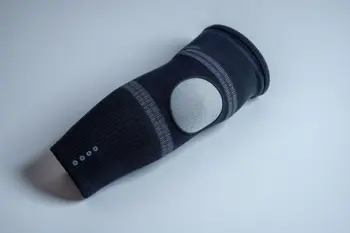
It is important to note that compression garments rely on proper sizing to be effective. Sleeves that are too tight may impede circulation, while those that are too loose will fail to provide adequate stabilization or the necessary proprioceptive feedback to be useful during training 18.
Anatomical Considerations and Stabilization Technology
For individuals dealing with specific patellar tracking issues, standard compression may not be sufficient. In such cases, sleeves incorporating ergonomic silicone pads are often employed to stabilize the kneecap, acting as a physical guide to keep it in a natural position during flexion and extension 19. Furthermore, some high-performance sleeves integrate lateral rods to provide an additional layer of guidance through the knee joint, which can be beneficial for reducing strain during lateral movements or activities involving repeated jumping 20.
These features represent an advancement over simple compression tubes, moving into the realm of assistive bracing. However, they remain distinct from orthopedic medical braces, which are typically designed for recovery from severe ligamentous injuries rather than general maintenance and joint support 21.
Maintenance and Sizing Realities
Effective utilization of a knee sleeve requires attention to sizing and care. Most manufacturers provide specific charts based on circumference measurements, typically taken 10cm below the kneecap or around the center of the joint with a straight leg 22. Relying on general sizing labels (S, M, L) is often insufficient, as fit accuracy is paramount for maintaining the sleeve in a secure position during exercise 23. Many modern sleeves now include reinforced anti-slip bands or silicone grips to prevent the sleeve from sliding down during high-repetition movements 24.
Maintenance is equally vital for longevity. Neoprene and synthetic blends are prone to bacterial growth and odor if not cleaned properly. Manufacturers generally recommend machine washing in cold water on a delicate cycle, using an inside-out approach to protect the fabric, and strictly avoiding harsh chemicals like bleach, which can degrade the elastic properties of the garment 25.
Clinical Perspective: Support Versus Rehabilitation
From a clinical standpoint, knee sleeves are most effective when utilized as a temporary, supportive tool. They do not replace the necessity of rehabilitative exercises designed to strengthen the musculature surrounding the knee, such as the quadriceps, hamstrings, and gluteal muscle groups 26. Dependence on a sleeve as a permanent structural replacement can lead to long-term issues if the underlying mechanical weaknesses-such as muscle imbalances or poor movement patterns-are not addressed through targeted physical therapy or strengthening protocols 27.
When used as part of a broader health and fitness strategy, however, a well-fitted knee sleeve can be an instrumental component in managing mild joint discomfort, facilitating better training recovery, and providing the confidence required to perform movements with proper form 28.
Sources
- Healthline: https://www.healthline.com/health/best-knee-sleeves
- Verywell Fit: https://www.verywellfit.com/best-knee-sleeves-4843940
- WebMD: https://www.webmd.com/pain-management/knee-pain/knee-braces-what-to-know
- Men's Health: https://www.menshealth.com/fitness/a38753298/best-knee-sleeves-for-lifting/
- CEP Running: https://ceprunning.com/products/max-support-knee-sleeve
- Rogue Fitness: https://www.roguefitness.com/rogue-7-mm-knee-sleeve-black-pair
- Runner's World: https://www.runnersworld.com/gear/a34241695/best-knee-braces-for-running/
- Kyvell: https://kyvell.com/products/knee-elite
- Copper Fit: https://copperfitusa.com/products/elite-knee-sleeve
- Teneo: https://teneoplus.com/products/neotec-v3
- Rogue Fitness: https://www.roguefitness.com/rogue-3-mm-knee-sleeve-black
- Velites Sport: https://usa.velitessport.com/products/power-5mm-neoprene-knee-sleeve
- Velites Sport: https://usa.velitessport.com/products/power-7mm-neoprene-knee-sleeve
- Mark Bell Sling Shot: https://markbellslingshot.com/products/strong-knee-sleeves
- Verywell Fit: https://www.verywellfit.com/best-knee-sleeves-4843940
- WebMD: https://www.webmd.com/pain-management/knee-pain/knee-braces-what-to-know
- Journal of Sports Sciences: https://www.tandfonline.com/doi/full/10.1080/02640414.2016.1206783
- REI Co-op: https://www.rei.com/learn/expert-advice/knee-braces.html
- Hospital for Special Surgery: https://www.hss.edu/conditions_knee-pain-treatments.asp
- CEP Running: https://ceprunning.com/products/max-support-knee-sleeve
- Cleveland Clinic: https://health.clevelandclinic.org/should-you-wear-a-knee-brace/
- Mark Bell Sling Shot: https://markbellslingshot.com/products/sling-shot-knee-sleeves-2-0
- REI Co-op: https://www.rei.com/learn/expert-advice/knee-braces.html
- Teneo: https://teneoplus.com/products/neotec-v3
- Copper Fit: https://copperfitusa.com/products/elite-knee-sleeve
- Cleveland Clinic: https://health.clevelandclinic.org/should-you-wear-a-knee-brace/
- Garage Gym Reviews: https://garagegymreviews.com/best-knee-sleeves
- WebMD: https://www.webmd.com/pain-management/knee-pain/knee-braces-what-to-know
Authored by 24Trendz team