Ways to manage PCOS at home: A clinical guide to daily care
The ways to manage PCOS at home center on practical routines for food, movement, sleep, stress, and symptom monitoring. Home care can improve some symptoms and support metabolic health, but it does not replace diagnosis, prescription treatment, or clinical monitoring for irregular bleeding, fertility concerns, severe symptoms, or possible diabetes. 1
Build a sustainable eating pattern
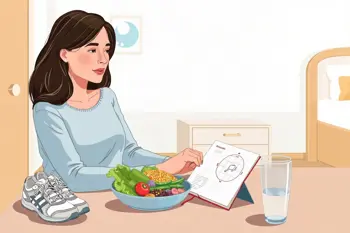
There is no single diet that works for every person with PCOS. Clinical nutrition guidance emphasizes minimally processed foods and patterns that can support insulin sensitivity, cholesterol levels, energy, and hormone-related symptoms. A Mediterranean-style pattern commonly includes vegetables, leafy greens, legumes, whole grains, and other nutrient-dense foods. The most useful approach is one that can be maintained consistently rather than a highly restrictive plan that is difficult to continue. 7
Reducing added sugars, refined carbohydrates, and heavily processed foods may help limit sharp blood-sugar changes, particularly when insulin resistance is present. Meals can be structured around vegetables, a fiber-rich carbohydrate, and a protein source, with portions adapted to individual needs. Food choices should not be treated as a test of willpower, and body size alone does not determine whether a person has PCOS or insulin resistance. 1
Use movement to support metabolic health
Regular physical activity is a central part of PCOS self-care because it can support insulin sensitivity, weight regulation, cardiovascular health, and general wellbeing. A practical home routine may combine aerobic activity, such as walking or similar cardiovascular exercise, with strength training. The appropriate starting point depends on current fitness, symptoms, injuries, available time, and personal preference. Consistency is more important than following an extreme exercise schedule. 2
Movement can be useful even when weight does not change. People with PCOS have different goals, including more predictable periods, improved energy, better glucose control, fertility support, or improved mood. Weight changes, when desired or clinically appropriate, should be gradual and individualized rather than pursued through severe restriction or excessive exercise. A clinician can help determine whether symptoms reflect PCOS, another condition, or a treatment-related issue. 1
Approach weight changes without extreme targets
Weight regulation can be difficult with PCOS, partly because the condition may involve insulin resistance, altered androgen activity, and metabolic changes. Some clinical sources report that a modest reduction of about 5% to 10% of body weight can improve menstrual regularity, ovulation, or metabolic markers for some people, but this is not a universal requirement for improvement. People who are not seeking weight loss can still benefit from balanced meals, activity, sleep, and medical monitoring. 3
Self-care should avoid promising a cure or implying that every symptom will resolve through weight loss. PCOS affects people across body sizes, and treatment is individualized according to symptoms, reproductive plans, metabolic risk, and personal priorities. If weight changes are being considered, a healthcare professional or registered dietitian can help avoid inadequate nutrition, unsafe restriction, and unrealistic expectations while identifying whether medication or another intervention is appropriate. 4
Prioritize sleep and stress management
Sleep hygiene is a relevant home-care strategy because insufficient or irregular sleep can affect glucose metabolism, appetite, energy, and the ability to maintain daily routines. A consistent sleep and wake schedule, a predictable evening routine, and attention to sleep quality may support broader PCOS management. Sleep concerns should not automatically be attributed to PCOS, particularly when loud snoring, persistent daytime sleepiness, or unrefreshing sleep suggests that screening for sleep apnea may be appropriate. 1
Stress management can include yoga, meditation, breathing exercises, gentle movement, structured relaxation, or counseling support. These practices are not substitutes for PCOS treatment, and claims that they directly “balance” hormones should be treated cautiously. Their practical value may be helping manage distress, improve sleep, and make healthy routines more sustainable. PCOS can affect mood, relationships, body image, and quality of life, so anxiety or low mood deserve clinical attention rather than being dismissed as ordinary stress. 5
Track cycles, symptoms, and health measures
Recording menstrual dates, bleeding patterns, acne, hair growth, scalp hair changes, pain, sleep, mood, activity, and relevant medication effects can make consultations more informative. Tracking may help identify changes over time and clarify which symptoms matter most to the individual. PCOS symptoms vary widely: some people mainly experience irregular periods or fertility concerns, while others report acne, excess hair growth, fatigue, or difficulty managing weight. 1
Home tracking cannot confirm PCOS because diagnosis generally involves reviewing symptoms, medical history, physical findings, laboratory testing, and sometimes ultrasound. There is no single diagnostic test. Professional assessment may also include checks of glucose, blood pressure, cholesterol, triglycerides, hormone levels, and possible alternative explanations for symptoms. Period records are especially useful when cycles are irregular, but they should supplement rather than replace medical evaluation. 2
Know the limits of supplements and home care
Myo-inositol, berberine, chromium, and other supplements are discussed in PCOS care, with research suggesting that some may affect insulin resistance, androgen measures, ovulation, or metabolic outcomes. Evidence and product quality vary, and supplements can interact with medicines or be unsuitable during pregnancy or while trying to conceive. A supplement should not be assumed safe because it is labeled natural, and it should be reviewed with a qualified healthcare professional before use. 3
Medical treatment may be needed for irregular periods, acne, excess hair growth, insulin resistance, fertility concerns, or elevated metabolic risk. Options described in clinical resources include combined birth-control pills for some people not trying to become pregnant, anti-androgen medicines for selected symptoms, and metformin in appropriate situations. Medical review is particularly important for prolonged or unusual bleeding, severe symptoms, fertility difficulties, or signs of diabetes. 4
Sources
- Acibadem Hospitals Group, “PCOS Self-Care: A Complete Clinical Guide for Patients”
- Mayo Clinic, “Polyendocrine metabolic ovarian syndrome (PMOS): Diagnosis and treatment”
- GoodRx, “10 Natural Remedies for PCOS”
- Temple Health, “Managing PMOS (Formerly PCOS): What You Should Know”
- Welbeck, “Taking Control of PCOS: Self-care Tips and Medical Treatments for Reducing Symptoms”
- Jean Hailes, “Living with PCOS”
- Stony Brook Medicine, “Nutrition Management for PCOS”
Authored by 24Trendz team