Early symptoms of Lyme disease you should know: A clinical overview of diagnostic indicators
Lyme disease, a bacterial infection transmitted by the bite of infected blacklegged ticks, remains a primary vector-borne concern in the northern hemisphere 6. Annually, approximately 476,000 cases are estimated to occur in the United States, highlighting the importance of identifying early clinical signs to prevent long-term health complications 6, 8. Because many early indicators are nonspecific, individuals often mistake them for common viral illnesses, which can lead to delayed diagnosis and treatment 1, 3.
The Clinical Significance of Skin Manifestations
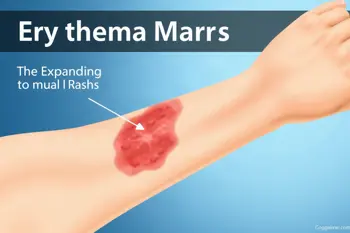
The most widely recognized indicator of early Lyme disease is erythema migrans, a skin rash occurring in approximately 70% to 80% of infected individuals 2. This rash typically manifests at the site of the tick bite between 3 and 30 days post-exposure 2, 4. While public awareness often emphasizes the classic bull’s-eye or target pattern, clinical reality is more nuanced; the rash frequently lacks this specific appearance and may present as a solid red, expanding patch 1, 2. On darker skin tones, the bull's-eye pattern may be significantly less visible, complicating self-identification 1.
Beyond visual appearance, erythema migrans is characterized by its tendency to expand gradually over several days, potentially reaching diameters of 12 inches or more 2. The lesion may feel warm to the touch, though it is typically not associated with intense pain or itching 2, 4. In instances where the infection disseminates through the bloodstream, patients may develop multiple erythema migrans lesions across different areas of the body, rather than a single site of emergence 2.
Systemic and Flu-like Early Symptoms
In addition to dermatological changes, patients frequently report systemic, flu-like symptoms during the early stages of infection 3. These manifestations often include fever, chills, significant fatigue, and persistent headaches 2, 3, 4. Muscle and joint aches are also common clinical findings that contribute to the nonspecific presentation of the disease, making it difficult for clinicians to distinguish Lyme infection from other common viral conditions based solely on patient reporting 3, 5, 7.
Fatigue associated with early Lyme disease is often described by patients as distinct from typical exhaustion, sometimes manifesting as a feeling that precludes normal daily functioning 3. Swollen lymph nodes are another indicator that may accompany these systemic symptoms, providing a further sign of immune system activation 2, 3. Because these symptoms do not inherently suggest a specific diagnosis, they are frequently misidentified as stress or a standard viral illness, particularly if the patient remains unaware of a tick bite 3, 5.
Diagnostic Challenges and Exposure Risks
One of the primary obstacles to prompt medical evaluation is the nature of the tick vector itself. Blacklegged ticks-also known as deer ticks-can be as small as a poppy seed, particularly during their nymph stage, making them exceptionally difficult to detect on the skin 5, 6. Research indicates that only 25% to 30% of patients can accurately recall a specific tick bite, meaning many cases are managed without a known point of transmission 6, 7.
Furthermore, clinical diagnosis is complicated by the limitations of early laboratory testing. During the first few weeks of infection, blood tests designed to detect antibodies against the Borrelia bacteria may yield negative results because the immune system has not yet produced a detectable level of antibodies 6. Consequently, healthcare providers are often advised to rely on a combination of patient history, clinical examination, and recognized symptoms, such as the expanding rash, rather than waiting for serological confirmation to initiate treatment 4, 9.
The Necessity of Contextual Awareness
Understanding the geographic and behavioral context of potential exposure is vital for assessment. While Lyme disease has been reported in all 50 U.S. states, the highest concentration of cases occurs in the Northeast, the Mid-Atlantic, and the Upper Midwest, with additional activity noted in parts of Northern California 2, 7, 9. Engaging in outdoor activities such as hiking, gardening, or walking through tall grass increases the risk of encountering these vectors, particularly from spring through fall 3, 5, 7.
| Symptom Category | Common Early Manifestations |
|---|---|
| Dermatological | Expanding erythema migrans (sometimes bull's-eye) |
| Systemic | Fever, chills, persistent fatigue |
| Musculoskeletal | Joint pain, muscle aches |
| Neurological/Other | Headache, swollen lymph nodes |
Consequences of Delayed Intervention
When early symptoms are ignored or misdiagnosed, the infection may progress, potentially leading to more severe health issues. Late-stage complications can involve the nervous system, heart, and joints 2, 4. Documented secondary manifestations include facial palsy, where muscles of the face appear to droop, as well as nerve pain, numbness, or tingling in the extremities 2, 4. In rarer, more serious instances, untreated disease can lead to irregular heart rhythms, palpitations, and chronic arthritis 2, 4, 10.
Given these risks, clinical guidelines emphasize that individuals experiencing unexplained, flu-like symptoms following time spent in high-risk environments should consult a medical professional, regardless of whether a tick or rash was identified 4, 9. Early antibiotic intervention is generally considered highly effective in preventing these debilitating later-stage conditions 4, 9.
Maintenance and Preventative Realities
Pathogen transmission typically requires that an infected tick remain attached to the host for at least 24 to 36 hours 5, 6. This time dependency underscores the importance of conducting thorough skin checks after returning from wooded or grassy areas 5. While there are various tools for tick removal, the primary goal is to extract the tick properly and promptly to minimize the duration of attachment 6, 8.
Ultimately, the variability of early symptoms necessitates a high level of vigilance in endemic regions. By remaining aware of the potential for atypical rash presentations and nonspecific systemic distress, individuals can better engage with medical professionals to address symptoms before they evolve into long-term complications 1, 4.
Sources
- Harvard Health: The problem with classic Lyme disease symptoms
- Family Doctor: Lyme Disease
- The Well by Northwell: The Warning Signs Of Lyme Disease
- UK Health Security Agency: What is Lyme disease and how is it diagnosed and treated?
- Geisinger: Don’t Ignore These Lyme Disease Symptoms
- Medscape: Lyme Disease
- Labcorp: Ask the expert: Your top questions about Lyme disease, answered
- Sharecare: How to spot the warning signs of Lyme disease
- Medical Xpress: Lyme disease: What to know about symptoms, treatment and prevention
- Acibadem Hospitals Group: Lyme Disease Symptoms: Signs, Stages, And Care
Authored by 24Trendz team