Warning signs of stomach cancer: Clinical context and symptoms that merit evaluation
Warning signs of stomach cancer often overlap with everyday digestive complaints, including indigestion, heartburn, bloating, nausea, and occasional abdominal pain. Early stomach cancer may cause no symptoms at all, so a symptom by itself cannot establish a diagnosis. Persistent, unexplained, or worsening changes are more important than a single episode and should be discussed with a qualified healthcare professional. 1
Why early stomach cancer can be difficult to recognize
Stomach cancer, also called gastric cancer, is an uncontrolled growth of abnormal cells in the stomach lining. The disease frequently produces vague symptoms, and some people have none during its early stages. Harvard Health notes that symptoms may be mistaken for stomach ulcers, infections, or other gastrointestinal disorders. The stomach can accommodate food as it stretches, which may allow a developing problem to progress without sharp pain or an obvious blockage. 2
The absence of symptoms does not confirm that the stomach is healthy, but it also does not mean that ordinary stomach discomfort is cancer. The American Cancer Society emphasizes that most listed symptoms are more likely to have causes other than stomach cancer. The clinical concern increases when symptoms do not resolve, become more frequent, interfere with eating, or occur alongside weight loss, bleeding, weakness, or difficulty swallowing. 1
Digestive warning signs to monitor
Persistent indigestion or heartburn may appear as ongoing burning, discomfort, or an upset stomach that does not improve as expected. Other possible digestive signs include vague pain or discomfort in the upper abdomen, nausea, abdominal bloating, and a feeling of unusual fullness after meals. These symptoms are nonspecific, meaning they can arise from several conditions, but continuing symptoms warrant assessment rather than repeated self-treatment without determining the cause. 3
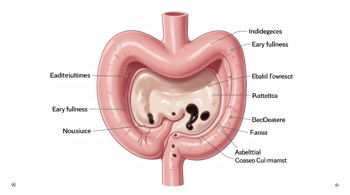
Early satiety, or feeling full after eating only a small amount, is another reported warning sign. A person may notice reduced meal size, loss of interest in food, or persistent tightness and bloating after eating. Gastric tumors can affect how the stomach accommodates food, although indigestion, stress, ulcers, and other conditions can produce similar sensations. The pattern, duration, and combination of symptoms provide more useful information than any isolated complaint. 1
Appetite, weight, and swallowing changes
Loss of appetite and unintentional weight loss are important changes to report because they may reflect reduced food intake, discomfort while eating, or difficulty processing meals. The American Cancer Society lists poor appetite and weight loss without trying among possible symptoms. Weight loss is particularly concerning when it occurs without a deliberate change in diet or physical activity, or when it accompanies persistent upper-abdominal discomfort, nausea, fullness, or indigestion. 1
Difficulty swallowing, known clinically as dysphagia, may occur when a tumor develops near the upper stomach or the junction with the esophagus. Roswell Park identifies difficulty swallowing and unexplained weight loss among symptoms that should alert a doctor, especially when they are new. Swallowing difficulty can also have several noncancerous causes, but progressive trouble with solid foods, liquids, or both should not be ignored. 6
Bleeding, dark stools, and vomiting
Blood in vomit or stool can indicate bleeding somewhere in the digestive tract. Vomit containing visible red blood or material resembling coffee grounds may reflect partially digested blood. Blood from the upper digestive tract can also make stool appear very dark, black, or tarry. These findings require prompt medical evaluation because bleeding can occur for reasons other than cancer, including ulcers and inflammatory gastrointestinal disease. 4
Stomach cancer may also be associated with vomiting with or without blood, according to the American Cancer Society. Dark brown or black stool can result when blood has been altered by digestive processes, while changes in stool color can sometimes be caused by foods or medicines. Regardless of the cause, black tarry stool, bloody vomit, or repeated vomiting should be communicated clearly to a healthcare professional, including when it began and how often it occurs. 1
Fatigue, weakness, and other possible signs
Persistent fatigue or weakness may occur when chronic digestive-tract blood loss contributes to anemia, or when appetite loss leads to inadequate nutrition. The American Cancer Society includes tiredness and weakness related to having too few red blood cells among possible stomach cancer symptoms. Fatigue is common and has many explanations, but unexplained weakness combined with dark stools, reduced appetite, weight loss, or abdominal symptoms deserves medical attention. 1
Abdominal swelling or fluid buildup can occur among reported symptoms, while yellowing of the skin or eyes, called jaundice, may appear if cancer has spread to the liver. These findings do not independently prove stomach cancer and may result from liver, gallbladder, nutritional, or other medical conditions. They are clinically significant changes that should be evaluated, especially when they develop with worsening digestive symptoms or unexplained decline in health. 1
When symptoms need medical assessment
A medical assessment is appropriate when indigestion, heartburn, nausea, vomiting, bloating, upper-abdominal pain, early fullness, appetite loss, or swallowing difficulty persists or worsens. The same principle applies to unexplained weight loss, fatigue, black stools, or blood in vomit. Medical history, examination, and symptom timing help distinguish routine gastrointestinal conditions from problems requiring additional investigation. No single symptom can diagnose gastric cancer. 1
Upper gastrointestinal endoscopy with biopsy is described in the supplied clinical research as the key diagnostic test for suspected stomach cancer. During evaluation, clinicians may consider symptom severity, bleeding, family history, reflux history, prior stomach conditions, and other risk factors. Harvard Health lists tobacco and alcohol use, diets high in smoked, salted, pickled, or processed foods, persistent stomach irritation or ulcers, previous stomach surgery, and multiple affected family members as factors associated with higher risk. 2 5
Sources
- American Cancer Society, “Signs and Symptoms of Stomach Cancer”
- Harvard Health, “Stomach Cancer”
- GW Cancer Center, “Gastric Cancer Symptoms”
- Prevention, “Subtle Signs of Stomach Cancer Doctors Say You Should Never Ignore”
- Acibadem Hospitals Group, “Stomach Cancer: Symptoms, Endoscopy and Treatment”
- Roswell Park Comprehensive Cancer Center, “Early Signs of Stomach Cancer”
Authored by 24Trendz team