Home recovery for hernia repair: A practical evidence-based guide
Home recovery for hernia repair begins after discharge, often on the same day for an uncomplicated operation, although the plan depends on the procedure, anaesthetic, and general health. A responsible adult should accompany a person home and remain with them for 24 hours after a general anaesthetic. This guide outlines practical recovery measures, normal symptoms, activity decisions, and complications that should not be ignored. 1
What to expect during the first 48 hours
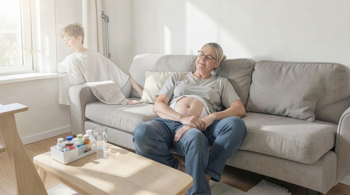
General anaesthetic can cause dizziness and tiredness for 24 to 48 hours. Bed rest is not usually required, but periods of rest should be balanced with gentle movement around the home. Short walks support circulation and help reduce the risk of blood clots. Pain or discomfort may increase as local anaesthetic wears off, so prescribed pain relief should be used exactly as instructed and within the stated daily dose. 1
- Arrange an adult companion after general anaesthesia.
- Stand and walk carefully, with support if dizziness is present.
- Keep essential medicines, fluids, and telephone access nearby.
- Avoid driving or making important decisions while affected by anaesthetic or opioid pain medicine. 4
Pain, bruising, and swelling
Mild or moderate soreness, bruising, and swelling around the incision can occur during normal healing. Pain control is generally more effective when prescribed medicine is taken regularly during the first few days rather than delayed until discomfort becomes severe. The dose on the label or discharge instructions must not be exceeded, and difficult-to-control pain should be reported to the surgical team. 1
A laparoscopic repair may produce temporary shoulder discomfort because carbon dioxide is used to expand the abdomen during the operation. The repair itself may also leave a firm lump beneath the scar because mesh or permanent stitches can reinforce the abdominal wall. These findings can be unsettling, but the treating surgeon should assess symptoms that worsen, persist unexpectedly, or differ from the discharge guidance. 2
Incision care and hygiene
Incision care should follow the written instructions supplied by the operating team because dressings, glue, and stitches differ between procedures. The wound should be observed for increasing redness, drainage, separation, or worsening tenderness. Keeping the area clean and dry as instructed helps protect the healing incision. Bathing or swimming should generally wait until the wound has healed and the surgeon has confirmed that soaking is appropriate. 4
- Check the wound during routine personal care without repeatedly disturbing dressings.
- Report spreading redness, pus-like drainage, fever, or increasing wound pain.
- Do not apply creams, powders, or antiseptics unless specifically advised.
- Attend the planned follow-up so healing and the repair can be assessed. 5
Walking, lifting, and returning to work
Recovery should progress gradually rather than being based only on how comfortable the skin feels. Walking is encouraged early, while heavy lifting and strenuous activity should be avoided until the surgeon provides individual clearance. Restrictions vary according to whether the repair was open or laparoscopic, the hernia’s size and location, the type of work, and symptoms during movement. 3
| Activity | General recovery principle |
|---|---|
| Walking | Begin gently and increase distance as tolerated. |
| Desk work | Return when sitting, standing, and travelling are manageable. |
| Manual work | Discuss lifting demands and timing with the surgeon. |
| Gym or sport | Resume progressively after clinical clearance, not solely because pain has improved. 6 |
Food, fluids, and constipation prevention
Constipation may follow surgery because of opioid pain medicines, reduced activity, and anaesthesia. Fluids, gentle walking, and clinician-approved stool softeners or laxatives may help, particularly when opioid medicines are being used. Avoiding straining is important because pressure on the abdominal wall can increase discomfort. Any bowel-management medicine should be checked against the discharge instructions, especially when other medicines or medical conditions are present. 8
- Drink according to the surgical team’s advice and medical restrictions.
- Increase activity gradually rather than remaining inactive for prolonged periods.
- Follow the recommended bowel regimen if prescribed.
- Seek advice for persistent constipation, severe abdominal swelling, vomiting, or inability to pass stool or gas. 8
Warning signs and follow-up decisions
Some symptoms require prompt medical assessment rather than observation at home. Concerning signs include fever, worsening redness or drainage, uncontrolled pain, persistent vomiting, inability to urinate, severe abdominal swelling, chest pain, or shortness of breath. The appropriate contact may be the surgical team, an urgent medical service, or emergency services, depending on severity and local instructions. 5
Follow-up is used to review wound healing, pain, activity progression, and possible problems such as infection, recurrence, or a persistent bulge. Recovery guidance is not identical for open, laparoscopic, robotic, inguinal, and ventral repairs, so a generic timetable cannot replace the surgeon’s instructions. Smoking cessation is also encouraged because remaining smoke-free supports the broader recovery plan. 1
Sources
- Guy’s and St Thomas’ NHS Foundation Trust, “Recovery after hernia repair surgery”
- The Dudley Group NHS Foundation Trust, “Advice for patients after laparoscopic hernia repair”
- NHS inform, “Inguinal hernia repair”
- MedlinePlus, “Inguinal hernia repair, adult, discharge”
- Cleveland Clinic, “Hernia Repair”
- Mayo Clinic, “Hernia: Diagnosis and treatment”
- American College of Surgeons, “Recovering from Surgery”
- Mount Sinai, “Inguinal hernia repair, adult, discharge”
Authored by 24Trendz team