How to stretch with lower back pain safely: A clinical guide to mobility and recovery
Lower back pain is a nearly universal human experience, with recent data suggesting that nearly all adults will encounter it at some point, and over 25% of the population may be experiencing symptoms at any given time 1. While often linked to factors such as sedentary lifestyles, muscle strains from lifting, or postural stress, the condition remains the single leading cause of disability worldwide 2. Understanding how to engage in safe, controlled movement is essential for managing stiffness and restoring function without exacerbating underlying issues 3.
Understanding the Role of Movement in Spinal Health
For most cases of non-specific lower back pain, which accounts for approximately 85% to 90% of occurrences, gentle and repeated motion is often more effective than static, intense stretching 6. Movement helps reduce muscle guarding, promotes circulation to healing tissues, and helps calm the nervous system's protective pain response 5, 6. Rather than forcing the spine into extreme ranges of motion, the objective is to introduce controlled, rhythmic movement that addresses the muscles and joints supporting the lumbar spine, such as the hips, glutes, and hamstrings 4, 9.
Safety Foundations and When to Avoid Stretching
Before initiating any stretching routine, it is vital to distinguish between general tightness and conditions requiring clinical intervention. Stretching should never be performed if the pain is accompanied by symptoms such as progressive leg weakness, numbness or tingling in the groin or saddle area, unexplained weight loss, fever, or changes in bowel and bladder control 4, 7. These indicators necessitate prompt medical evaluation to rule out severe structural or neurological concerns 8. Furthermore, individuals with a history of spinal surgery, osteoporosis, or diagnosed disc herniations should consult a healthcare provider for a personalized approach 7, 10.
Commonly Referenced Gentle Movements
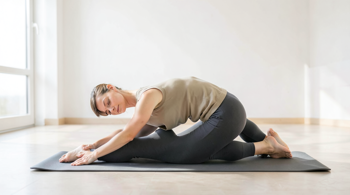
Many physical therapy frameworks utilize a sequence of foundational movements designed to mobilize the spine without high-intensity strain. These typically include the knee-to-chest stretch, which targets spinal extensors, and the cat-cow maneuver, which promotes overall spinal flexibility 5, 9. Other frequently cited movements include the child’s pose, pelvic tilts, and the figure-four stretch for gluteal release 4, 5. Each of these movements should be performed slowly, maintaining deep, controlled breathing, and stopping immediately if any sharp, radiating, or worsening pain occurs 4, 7.
| Movement Type | Primary Target Areas | Focus for Safety |
|---|---|---|
| Pelvic Tilt | Core and Lumbar connection | Maintain gentle, slow rhythm |
| Knee-to-Chest | Spinal extensors and glutes | Avoid pulling with excessive force |
| Cat-Cow | Spinal mobility | Move within a pain-free range |
| Figure-Four | Piriformis and glutes | Keep the head and neck relaxed |
Guidelines for Practical Application
A safe stretching session generally lasts between 8 and 10 minutes and may be performed once or twice daily, depending on individual comfort levels 4. The goal is to achieve a sensation of mild tension rather than pain 4, 7. Experts advise against bouncing into a stretch, as this can trigger a protective contraction in the muscles, potentially aggravating the localized area 7. Maintaining proper form-often by keeping the spine in a neutral, comfortable position-is more beneficial than attempting to maximize the depth of the stretch 4.
The Importance of Professional Assessment
Because lower back pain can stem from diverse sources, such as nerve impingement or disc degeneration, a one-size-fits-all stretching program may be ineffective or counterproductive 1, 2. Physical therapists or chiropractors are equipped to categorize pain based on sensitivity-such as flexion sensitivity, where forward leaning causes pain, or extension sensitivity, where arching backward causes discomfort 2. A supervised, conservative care plan often yields superior outcomes by tailoring specific exercises to the patient’s diagnosis, activity level, and recovery timeline 3, 8.
Lifestyle Integration for Long-Term Recovery
Stretching is most effective when integrated into a broader strategy that includes posture management, regular low-impact activity like walking, and proper sleep support 3. Addressing habits that lead to shortened hip flexors or weakened glutes, such as prolonged sitting, can prevent the cycle of stiffness from recurring 5, 9. By viewing stretching as a tool to improve daily mobility rather than a standalone cure, individuals can create a more sustainable path to managing lower back health and preventing future episodes of discomfort 5, 8.
Sources
- Cedars-Sinai: The Best Stretches and Exercises for Lower Back Pain
- Prevention: 9 Stretches for Lower Back Pain Physical Therapists Recommend
- Acibadem Health Point: Stretches for Lower Back Pain: A Practical Guide
- VC Chiro: Stretches for Lower Back Pain: What Helps vs What Irritates
- California Pain Consultants: Back in Action: Top Stretches for Lasting Lower Back Pain Relief
- Limitless PT: Lower Back Pain Stretches: 8 PT-Recommended Moves for Relief
- My Fitness Yoga: How to Stretch Your Lower Back Safely: A Step-by-Step Guide
- Medximity: Back Pain Relief Stretches: A Guide to Gentle Movement for a Healthier Spine
- Daily Burn: Best Stretches for Lower Back Pain: A Daily Routine for Relief
- Simply Well Chiropractic: 5 Simple Stretches to Relieve Back Pain at Home (No Equipment)
Authored by 24Trendz team