Scenic Alaska cruise itineraries departing from US ports: a planning guide Editorial planning framework for route selection, glacier access, and seasonal timing
Scenic Alaska cruise itineraries departing from US ports are consistently described as destination-driven, with the route and glacier access shaping the day-by-day experience more than onboard entertainment. Published Alaska cruise planning guidance emphasizes that two corridor choices dominate outcomes: the Inside Passage, which is comparatively protected and calmer, versus the Gulf of Alaska, which often supports a different mix of glacier days and open-water conditions. 1
Understanding the two core route templates from US departure ports
Alaska itineraries typically sort into two main route designs: Inside Passage round-trips and Gulf of Alaska routes that tend to feel more open-water oriented. Cruise planning references describe the Inside Passage as protected coastal waterways running through Southeast Alaska and along British Columbia, with scenery delivered through narrow channels, dense spruce forests, waterfalls, and frequent wildlife viewing. 1
These same references describe operational patterns that matter for travelers departing from US ports. Inside Passage cruises are described as almost always round-trip sailings from Seattle or Vancouver, departing north through the corridor and returning to the same port after roughly a one-week loop. 1 Planning documents also note that cruise length is commonly about seven nights, with options extending to 10- and 14-night schedules and cruisetour add-ons for Denali and the Yukon. 2
| Route type | Planning implication | Typical operational pattern noted in research |
|---|---|---|
| Inside Passage | Protected waterways and recurring scenery from a consistent corridor | Often round-trip from Seattle or Vancouver; return after about seven nights 1 |
| Gulf of Alaska | Different scenic emphasis and potentially different glacier-day mix | Described as route family that can connect US-side and BC-side ports via one-way formats 2 |
Departure port reality: Seattle as a US homeport, plus other US and access patterns
Published cruise guidance identifies Seattle and Vancouver as the dominant starting points for Alaska sailings, while also noting that some itineraries operate from US ports beyond Seattle. One research summary states that most Alaska cruises depart from Seattle or Vancouver, with a smaller number departing from San Francisco or Los Angeles. 2 Another planning layer frames Seattle as the default US homeport for passport-simple logistics, returning to the same terminal and avoiding positioning flights used for some open-jaw patterns. 7
For planning, Seattle’s port structure matters because it drives practical decisions at the boarding level even when the route is similar. Published Seattle-specific planning coverage describes multiple terminals during the 2026 Alaska season and an operating cadence that runs through October 11, with the season opening April 17 and projecting busy vessel calls. 7 This has a secondary effect: it can influence cabin choice and timing expectations because popular cabin categories and glacier-focused itineraries can fill well in advance. 8
For travelers evaluating “scenic” emphasis, it is also useful to separate “embarkation city” from “glacier viewing access.” Research mentions that some glaciers are approached by ship without docking, meaning excursion scheduling and day-of visibility can differ from port-day expectations. For example, Hubbard Glacier is described as a major cruise sightseeing destination that is not a port where ships dock, with guests observing from the ship during scenic cruising. 16
Glacier viewing planning: Glacier Bay access limits and alternative glacier days
Glaciers typically dominate itinerary selection criteria, but access constraints can change which sailings deliver Glacier Bay specifically. Research sources describe Glacier Bay National Park as a premier cruise destination with strict ship-entry quotas, which effectively limits access to a smaller number of cruise lines and dates. 3 This is a key “fit” variable for scenic planning because the difference between Glacier Bay and other tidewater or fjord glacier days changes how the itinerary is experienced and how shore options are framed. 3
Planning references also track alternative glacier approaches that are common in the broader itinerary market. One cruise-planning guide emphasizes that the Inside Passage season often includes days at Glacier Bay or Hubbard Glacier, with both serving as headline glacier experiences. 8 Another itinerary planner highlights that a sailing from Whittier includes a “scenic cruising” day for Hubbard Glacier rather than a docked port day. 16
Because scenic cruising is visibility dependent, multiple sources emphasize that weather and clarity can influence glacier outcomes and wildlife spotting opportunities. A 2026-focused Alaska planning guide describes the best overall timing for Alaska cruises as late June through early August, tying this to warm conditions, long daylight, and wildlife viewing, which indirectly supports better viewing windows for glaciers and marine wildlife. 5
Choosing scenic port patterns: Juneau, Ketchikan, Skagway, and Sitka in context
Many Alaska cruise itineraries share a core set of signature port calls, but scenic value depends on how each port is used during the sailing. Research summarizes typical Alaska ports as Ketchikan, Juneau, Skagway, and Sitka, each offering distinct excursion categories such as whale watching and helicopter glacier tours. 9 Another Inside Passage-focused reference also lists Juneau, Ketchikan, and Skagway as iconic stops embedded in Inside Passage sailings. 10
Specific itinerary descriptions add operational detail that can help forecast what “scenic” means day by day. A Whittier-based example itinerary describes Sitka as a port of call that blends Alaska Native heritage and Russian history within a rugged coastal setting shaped by offshore islands and open Pacific waters. 16 The same example describes Skagway as set in a narrow glacial valley with steep mountains rising close to town, giving the port a distinct historic character. 16
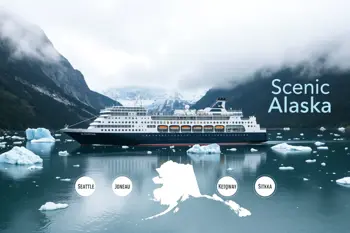
Planning documents also point to scouting differences within seemingly similar itinerary titles. One destination-focused series explains that the same port name can map to different docking locations and that scenic cruising may include Glacier Bay, Hubbard Glacier, or Dawes Glacier depending on the specific sailing. 4 From a compliance-proof planning standpoint, this is important because it reduces the risk of treating an itinerary brochure as an interchangeable set of port names. 4
Seasonal timing for US-departing sailings: May to September, plus shoulder-season tradeoffs
The Alaska cruise season is repeatedly described as May through September, with mid-summer carrying the highest demand. One planning guide describes the typical Alaska cruise season as May through September, and identifies June through August as the most popular months. 6 Another guide reiterates that cruises typically run from May through September, with planning recommended early because the season sells out faster than longer-running warm-water markets. 5
Timing decisions are also framed as balancing weather, crowds, wildlife opportunities, excursion availability, and daylight. A dedicated planning guide describes “no single best month,” while also noting an operational baseline that mid-summer has the warmest weather and longest daylight and that wildlife activity improves through the season. 6 A general research synthesis similarly states that peak wildlife viewing occurs in June and July and that shoulder season months of May and September can involve lower cruise fares but higher probabilities of cooler, rainier weather. 6
- Late June to early August is described as having the warmest weather, longest daylight, and best wildlife viewing in a 2026-focused planning guide. 5
- May and September are described as shoulder windows with cooler and rainier conditions more likely, despite less peak crowding. 6
- Wildlife viewing is described across a May through September window, supporting multi-month planning rather than a single-week strategy. 8
Itinerary duration and structure: 7-night templates, one-way formats, and cruisetour add-ons
Duration planning affects how much scenic time is available and how often the day is structured around a port call versus open-water cruising. Research summaries repeatedly describe seven-night itineraries as the most popular format, while also acknowledging 10- and 14-night options and cruisetour packages that add land time. 2 One planning guide emphasizes that a 7-day cruise can strike a balance for first-time travelers because it usually includes multiple port days and scenic days at sea without feeling overly compressed. 17
One-way and open-jaw formats can redistribute scenic time by changing where the sailing starts and ends, including transitions between Vancouver and Alaskan gateways. Research notes that one-way cruises between Vancouver/Seattle and Anchorage or Whittier allow deeper land-based exploration, including the possibility of extending with post-cruise land tours to Denali National Park or Fairbanks. 9 Another research snippet on Princess’s 2028 program frames one-way “Voyage of the Glaciers” itineraries between Whittier and Vancouver as featuring iconic ports such as Juneau, Ketchikan, and Skagway, plus opportunities to combine cruise with a land tour. 18
These structural differences can also affect risk and planning friction. One travel planner overview frames Alaska as not a typical cruise and highlights six major planning decisions that differentiate itinerary outcomes: choosing the right month, selecting the route, picking the ship size, understanding glacier access, budgeting beyond base fare, and deciding whether to add Denali. 6
Operational friction points and risk factors: weather, excursion planning, and access constraints
Scenic Alaska cruise itineraries departing from US ports can vary widely due to factors that are not always controlled by itinerary selection. Weather variability is repeatedly cited as a key variable, because Alaska conditions can shift rapidly and influence deck viewing and shore activity comfort. One planning guide for Alaska emphasizes layers and waterproof gear needs and frames Alaska weather as unpredictable across rain, wind, and sunshine. 14
Excursion capacity and availability also create planning friction. Cruise planners note that popular shore experiences can sell out quickly and that excursion booking choices can determine whether certain scenic activities are feasible during a specific port day. This is directly relevant for “scenic” expectations because the highest-impact activities often align with glacier viewing and wildlife. 17
Finally, regulatory oversight and environmental access constraints can affect which glacier experiences appear in a given sailing. Glacier Bay’s strict quotas are explicitly described in planning research, meaning that even within the same general region, not every itinerary will include Glacier Bay. 3 Additionally, market friction like cabin sell-through behavior is described in booking guidance, with advice to book early for glacier-view cabins and to anticipate that specific cabin categories can become unavailable before summer starts. 8
Sources
- https://cruisekick.com/guides/alaska-cruise-guide/
- https://nortonmediaenterprise.com/alaska-cruise-guide/
- https://www.nps.gov/glba/planyourvisit/cruise-ships.htm
- https://mrnmrsnobody.com/alaska-cruise-destination-guides/
- https://www.cruiseshiptracking.com/blog/alaska-cruise-planning-guide
- https://oceansafoot.com/alaska-cruises/
- https://stoplookingstartbooking.com/articles/seattle-alaska-cruise-planning-guide-2026
- https://oceansafoot.com/alaska-cruises/
- https://cruiseonearth.com/how-to-plan-an-alaskan-cruise/
- https://www.royalcaribbeanblog.com/2026/03/26/what-alaska-inside-passage-cruise
- https://cruisesolutioner.com/best-alaska-cruise-itinerary/
- https://cruisesolutioner.com/best-alaska-cruise-itineraries-best/
- https://island-traveler.com/2026/06/30/alaska-cruise-tips-for-2026-routes-packing-shore-plans/
- https://mrnmrsnobody.com/alaska-cruise-planning-guide/
- https://cruisesolutioner.com/best-itinerary-for-a-7-day-alaskan-cruise/
- https://alaskanakcruises.com/routes/whittier_alaska_seven-seas-explorer_2026-06-24_7_day/
- https://cruisesolutioner.com/best-alaska-cruise-itinerary/
- https://www.seatrade-cruise.com/ports-destinations/princess-opens-sales-for-8-ship-2028-alaska-season
Authored by 24Trendz team