Best Lumbar Support Belts for Lower Back Support: A Clinical and Technical Overview
Lower back pain remains a significant global health issue, affecting an estimated 619 million adults worldwide and contributing to substantial losses in productivity and mounting healthcare expenses 1. For many individuals, the use of a lumbar support belt is a primary consideration when seeking to manage symptoms or find stabilization during daily activities 1. While these devices are designed to provide compression, warmth, and postural reminders, they do not function as a standalone cure for the underlying conditions causing discomfort 1. Understanding the mechanical and clinical utility of these supports is essential for informed decision-making.
Clinical Perspectives on Lumbar Support Utility
Orthopedic specialists frequently emphasize that while at-home supports such as braces, heating pads, and creams can assist with minor back pain, a professional diagnosis is paramount 1. Persistent or severe pain requires medical evaluation to rule out structural injuries or chronic conditions that bracing alone cannot address 1. Clinical guidelines often suggest that remaining active and gradually returning to normal routines is preferable to prolonged bed rest for uncomplicated cases 1. Furthermore, Cochrane reviews have noted that there is insufficient evidence to suggest that lumbar belts reliably prevent or treat low-back pain in the general population 1. Consultation with a physical therapist or clinician is recommended to determine if a specific brace aligns with an individual's treatment plan 1.
Technical Engineering of Modern Lumbar Braces
Advancements in orthopedic support technology have led to the development of various stabilization systems. Many contemporary models, such as those employing dual-pulley traction or multi-point compression, aim to redistribute vertical loads and reduce pressure on intervertebral discs 1. Features like integrated aluminum stays or bionic lumbar grids are designed to lock the lower back into neutral alignment during heavy lifting or extended standing 1. By providing a combination of flexible memory-metal stays and high-density tension straps, these devices attempt to neutralize downward pressure without severely limiting the wearer's range of motion 1.
Key Features and Selection Criteria
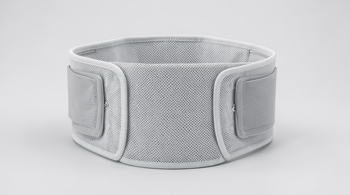
When selecting a support belt, the design must account for the specific anatomical needs of the user. Effective braces typically feature breathable, lightweight fabrics that allow for extended daily wear without causing excessive heat accumulation 1. Key technical attributes to consider include:
- Adjustable compression systems: Allows users to fine-tune the level of intra-abdominal pressure based on their current level of activity 1.
- Anatomical fit: Properly designed braces should replicate the spine's natural curve to ensure meaningful support rather than simply acting as a restrictive layer 1.
- Breathability: Use of vented mesh or air-knit material helps maintain hygiene and comfort during physical tasks or work shifts 1.
- Low-profile construction: Designs that fit discreetly under clothing are often preferred for daily, non-clinical environments 1.
Distinguishing Between Lumbar and Sacroiliac Supports
A critical distinction exists between standard lumbar braces and sacroiliac (SI) belts. Lumbar braces generally target the area from the mid-to-lower spine, providing broad support and stabilization for the lumbar vertebrae 1. In contrast, SI belts are designed to sit lower, specifically targeting the pelvis to limit movement at the sacroiliac joints 1. Selecting the incorrect type of support can lead to suboptimal outcomes; therefore, understanding the source of pain-whether it is spinal or pelvic-is crucial for selecting the appropriate device category 1.
Risks and When to Seek Urgent Care
While many users report improved comfort with the use of lumbar supports, caution is advised. A belt should never be worn so tightly that it restricts breathing, causes numbness, or exerts excessive pressure on the abdomen 1. Relying on a belt to mask symptoms can lead to the neglect of more serious underlying issues. Individuals experiencing specific "red flag" symptoms must seek immediate medical evaluation rather than attempting to manage the situation with over-the-counter supports. These warning signs include:
- Loss of bowel or bladder control
- Sudden weakness in the legs
- Saddle anesthesia (numbness in the groin or inner thigh area)
- Fever associated with back pain
- Rapidly worsening neurological symptoms 1.
Integration into Long-Term Treatment Plans
For those cleared by a healthcare provider for brace usage, integration into a broader treatment plan is the standard practice. Physical therapy and exercise remain central to addressing the muscle imbalances or postural issues that often contribute to lower back pain 1. Many modern braces, such as the LumboTrain, have been studied in occupational settings, where they have been shown to assist in return-to-work programs by encouraging proper muscle activity while providing intermittent massage via integrated gel pads 1. Ultimately, the value of a lumbar belt is measured by its ability to facilitate better ergonomics and comfort as part of a comprehensive recovery or maintenance strategy, rather than as a primary medical intervention 1.
Sources
- Yahoo Health, Copper Fit, Brace Direct, Amazon, NEENCA, Bauerfeind, Droid4x, FEATOL, Neurogena, Cochrane, NIAMS, NHS, Mayo Clinic, Cleveland Clinic, Johns Hopkins Medicine, Serola Biomechanics, Neo G, McDavid, DonJoy.
Authored by 24Trendz team